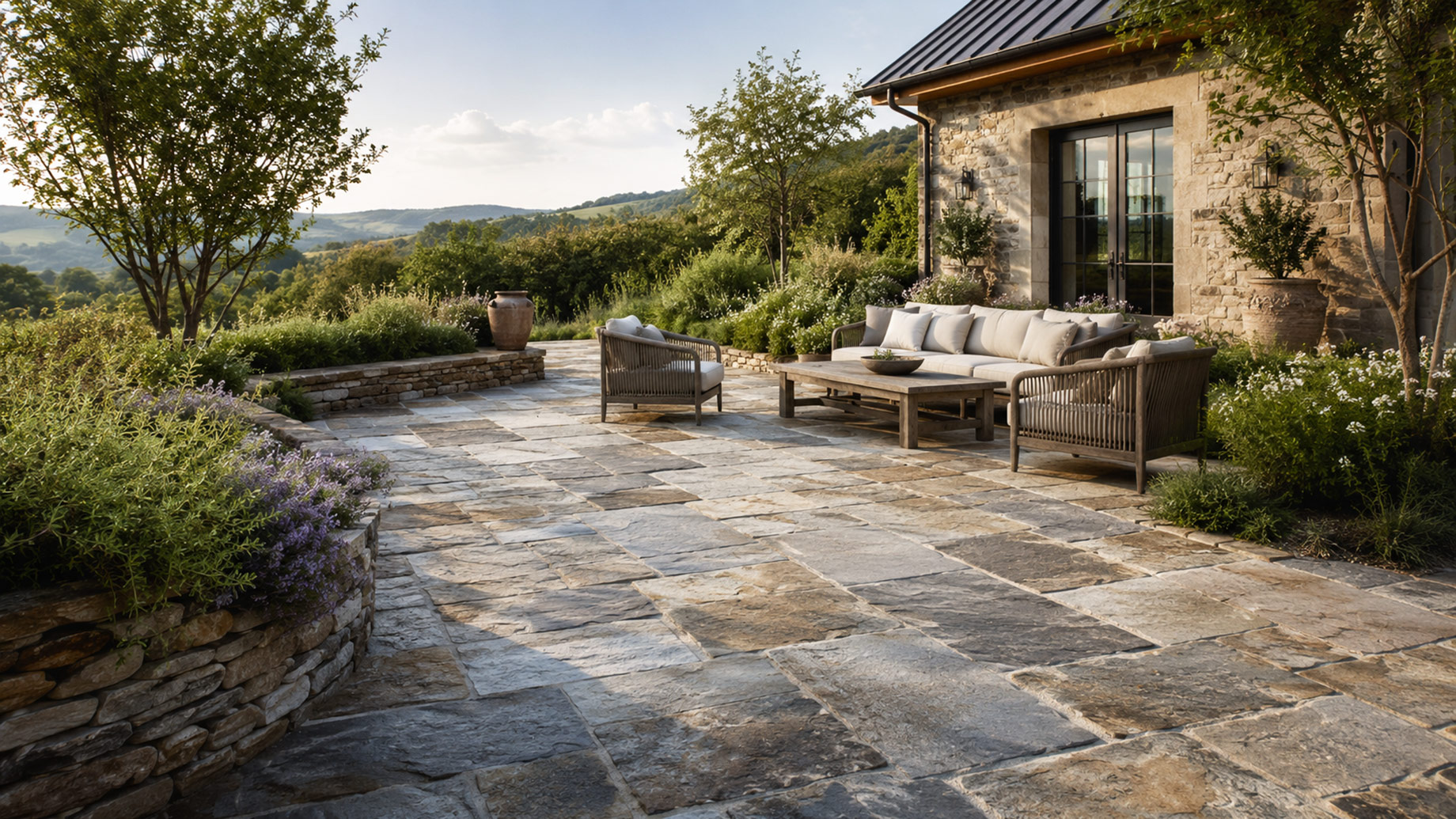
The most successful outdoor spaces rarely depend on novelty alone. They feel settled into their surroundings, with materials that respond to light, weather and daily use. Natural stone has long played this role in gardens, courtyards and terraces because each piece carries variation that manufactured uniformity cannot easily reproduce.
Reclaimed stone adds another layer. Its surface has already been shaped by time, footfall and exposure, creating a finish that can make a new landscape feel established from the beginning. Used thoughtfully, it can connect a contemporary renovation with the history of a building and give outdoor areas a sense of permanence.
Patina brings depth without decoration
Patina is not simply wear. It is the gradual softening of colour, texture and edges through use and weather. On reclaimed paving, subtle marks and tonal changes create visual depth without requiring a decorative pattern.
This makes the material particularly effective in large areas, where perfectly identical units can appear flat. Variation breaks up the surface and allows it to sit comfortably beside planting, brick, timber and rendered walls.
Designers should still seek a balanced mix. An area composed only of highly worn pieces may be difficult to use, while a random difference in thickness can complicate installation. Sorting and planning allow character to remain without sacrificing performance.
Provenance should inform the design
Reclaimed materials are often chosen for their history, but provenance has practical value as well as emotional appeal. Knowing the type, original use and likely condition of stone helps determine where it can be used.
Some pieces may suit a lightly used garden path, while others are appropriate for a main terrace. Dimensions, thickness and surface condition should be assessed before the layout is finalised. A design built around the actual material is usually more successful than trying to force a varied reclaimed batch into a rigid specification.
For projects considering Reclaimed Yorkstone Paving early discussion about available sizes and finish can shape the pattern, joints and overall character of the space.
Layout creates rhythm
Natural stone can be laid in regular courses, varied lengths or more informal arrangements. The right choice depends on the architecture and the desired mood. A formal courtyard may benefit from controlled lines, while a rural garden can accommodate more variation.
Joints contribute strongly to the final appearance. Narrow, precise joints create a refined effect, while slightly broader joints can suit weathered material and older settings. Drainage and movement still need to be considered, so visual preference should be resolved alongside technical design.
Mocking up a small area before full installation is valuable. It reveals how colours sit together and whether repeated sizes are creating an unintended pattern.
Transitions deserve as much thought as the terrace
A beautiful paved area can feel disconnected if its edges are unresolved. Steps, door thresholds, gravel paths, lawns and planted borders all need deliberate transitions. Reclaimed stone can be used to form generous steps, edging or informal routes that carry the material into the wider landscape.
Level changes should be comfortable and visible. Drainage falls must direct water away from buildings without creating awkward slopes. Around doors, the relationship with damp-proofing and existing levels requires particular care.
Material choice should suit everyday use
An outdoor space is not only viewed; it is walked across, furnished and exposed to food, soil and weather. Surface texture needs to provide suitable grip, especially in areas likely to become wet. Very uneven pieces may be unsuitable beneath dining furniture unless they are carefully selected and laid.
Maintenance expectations should be realistic. Natural stone changes with use and may develop further patina. Owners who want every mark removed may find this frustrating, while those who value gradual ageing will see it as part of the appeal.
Cleaning methods should suit the stone. Harsh chemicals and aggressive pressure washing can alter surfaces or damage joints. A restrained maintenance approach usually preserves character more effectively.
Reuse can support responsible design
Reclaimed stone extends the useful life of an existing material and can reduce demand for newly processed products. Its environmental value should still be considered in context, including transport, wastage and the work needed to prepare it.
Longevity is a major advantage. A material that can perform for decades, be lifted and potentially used again supports a different model from short-lived finishes that are difficult to repair. Good installation is essential to realising that benefit.
Installation determines whether character lasts
Premium material cannot compensate for a poorly prepared base. Ground conditions, expected loads, drainage and stone thickness all influence the build-up. Reclaimed pieces may need individual bedding to create a stable finished surface.
The installer should plan falls and levels before laying begins, then maintain a coherent appearance while working with natural variation. Rushing this stage can lead to rocking slabs, trapped water and inconsistent joints.
A landscape that improves with age
The appeal of reclaimed natural stone lies in its ability to look at home without looking artificial. It can frame contemporary furniture, complement a period facade or create a quiet route through planting. Its visual strength comes from material authenticity rather than applied ornament.
Memorable outdoor spaces balance beauty with practical use. They drain well, feel comfortable underfoot and connect naturally with the building. Reclaimed stone can support all of those aims when it is selected carefully and installed with respect for its variation.
Instead of trying to freeze a garden at the moment it is completed, this approach allows the space to continue developing. Weather, planting and daily life add another chapter to a material that already has a history.
