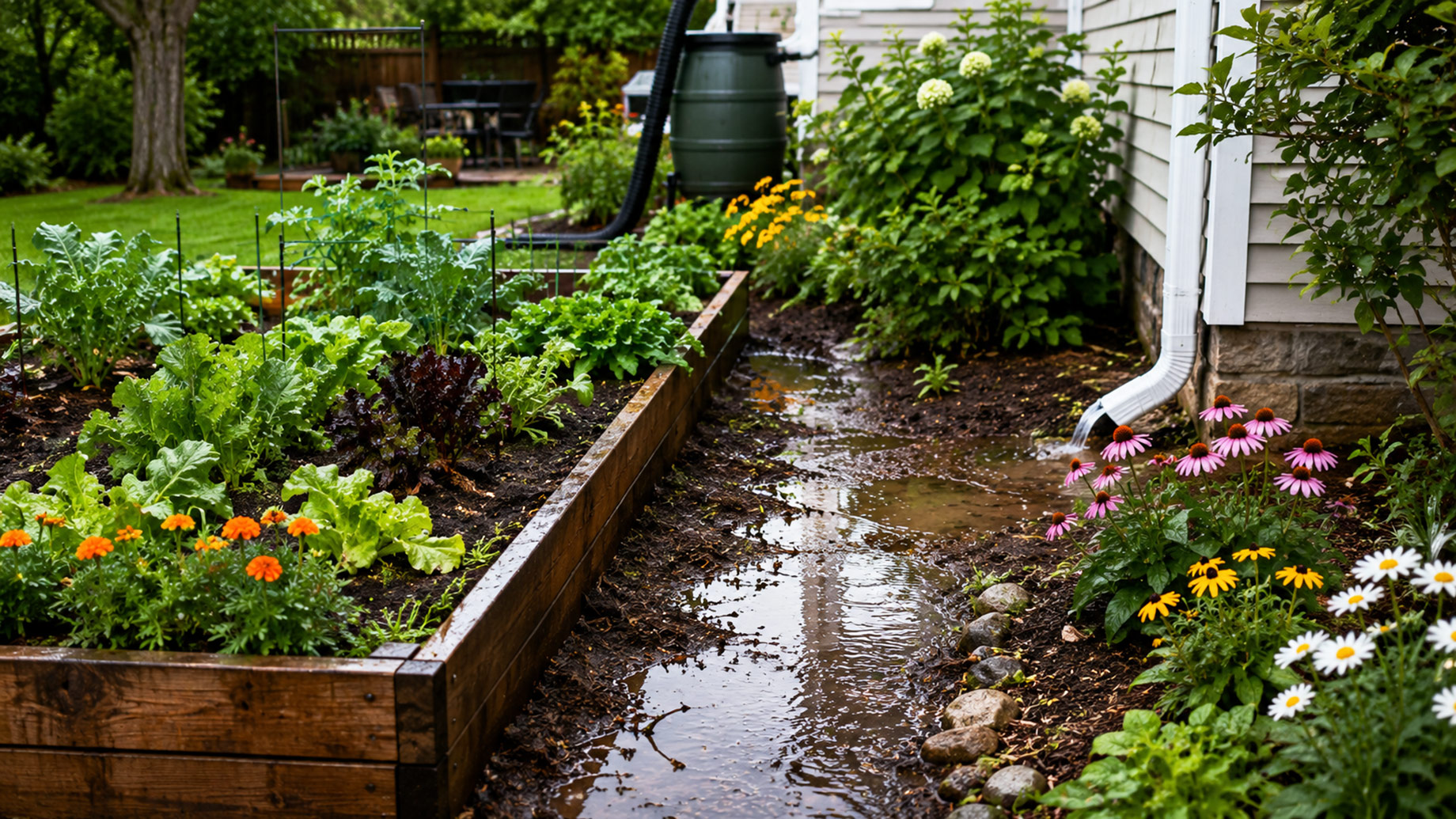
Summer gardening does more than improve curb appeal or provide fresh produce. Raised beds, vegetable plots, and flower borders can also reveal how water moves across a property. After repeated rainfall, these planted areas often make hidden drainage problems easier to see, helping homeowners identify grading, runoff, and roof-water issues before they damage the landscape or reach the foundation.
Raised Beds Reveal Where Water Collects
Raised beds improve root conditions by lifting soil above the surrounding grade. However, the ground around them can expose larger drainage patterns. Water pooling along one side may indicate a low spot, compacted soil, or a slope directing runoff toward the structure.
Watch the bed after steady rain. If one corner remains saturated while the rest drains normally, the surrounding grade may be uneven. Soil washing away from the downhill edge can also show that water is moving too quickly rather than soaking into the ground. Compacted soil reduces both water infiltration and drainage, making persistent wet areas particularly useful warning signs.
Vegetable Gardens Show How Soil Absorbs Water
Vegetable plants respond quickly to excess moisture. Wilting despite wet soil, yellowing leaves, shallow roots, and muddy paths may indicate poor infiltration rather than insufficient watering.
Repeated rainfall can also expose runoff entering from patios, driveways, or higher areas of the yard. Observing these patterns helps homeowners decide whether to adjust paths, improve soil, reshape beds, or redirect water before the next planting season.
Flower Gardens Make Erosion Easy to Spot
Flower borders often sit near foundations, walkways, and downspouts, making them useful indicators of drainage performance. Bare channels through mulch, displaced stones, exposed roots, and soil splashed onto siding suggest that water is arriving with too much force.
The visible damage may be downstream from the actual source. A flower bed beside the house may appear poorly designed when the real problem is an overflowing gutter, a short downspout extension, or grading that directs water toward the foundation.
Inspect Roof Runoff Before Redesigning
Landscaping changes cannot fully correct drainage problems if roof water is poorly managed. Before moving beds, adding soil, or installing new edging, inspect gutters and downspouts during or immediately after rainfall. Look for overflow, slow drainage, leaking joints, and discharge points that empty directly into planting areas.
Homeowners searching for the best gutter cleaning Olympia, WA service can have leaves, needles, and debris removed so roof runoff follows its intended path. Clearing the system first provides a more accurate picture of how the landscape performs. Proper grading, gutters, and downspouts are all important for directing roof water away from below-grade areas.
Let the Garden Guide the Solution
A summer garden acts like a practical drainage test. Pooling identifies low areas, erosion traces runoff routes, and stressed plants reveal soil that stays wet too long. By documenting what happens after several storms, homeowners can separate isolated garden problems from property-wide drainage issues.
That information supports better decisions, whether the solution involves improving soil, extending downspouts, correcting the grade, or creating a rain garden that captures runoff and allows it to soak into the ground.
