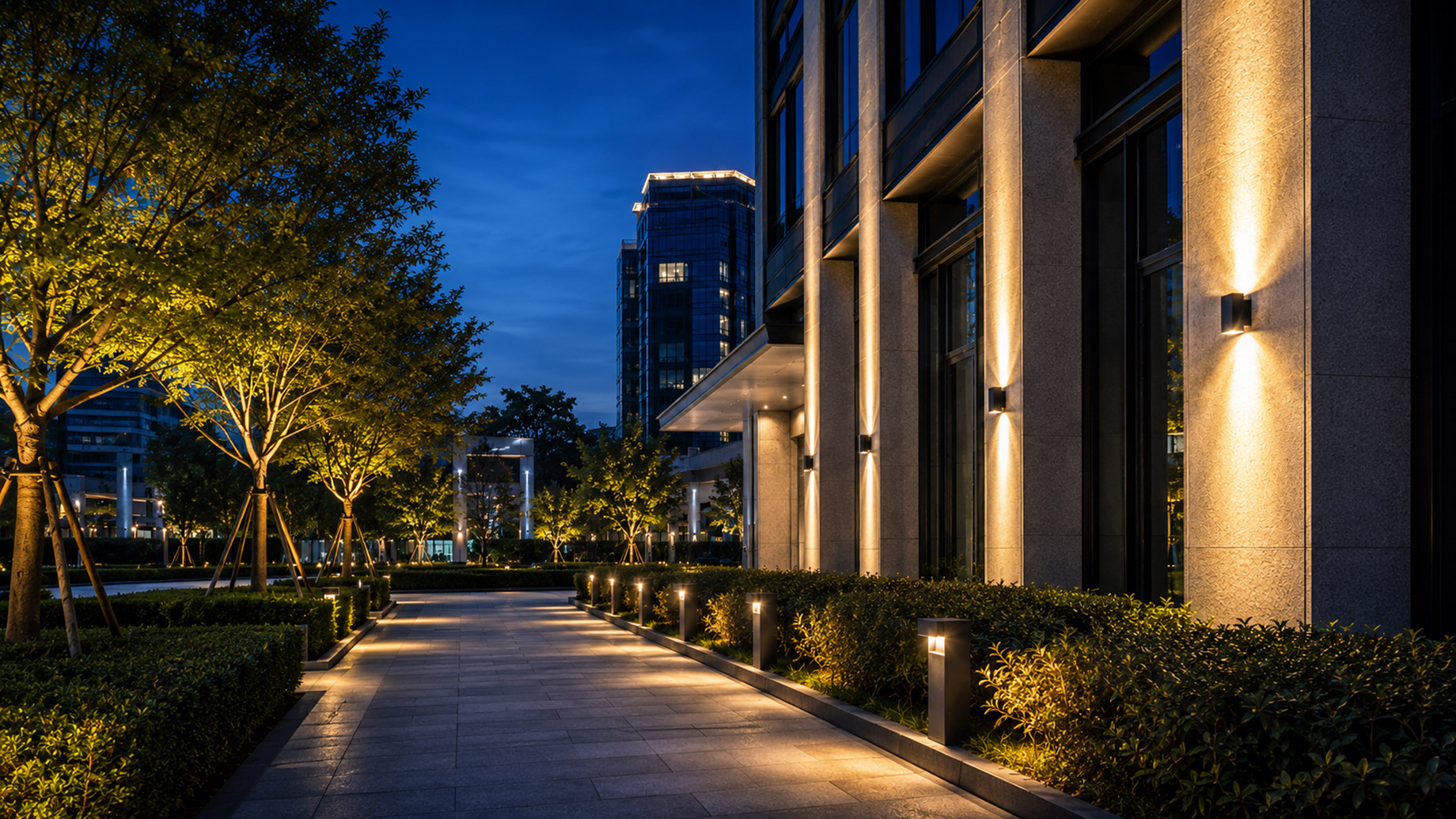
A successful outdoor lighting project begins long before the fixtures are installed. Every specification influences how a space looks, how safely people move through it, and how much time and money will be spent maintaining it in the years ahead. Whether you’re designing a commercial development, a public plaza, or a hotel facade, the lighting choices you make today can have a lasting impact on the project’s overall performance.
That is why specifying outdoor LED fixtures should never come down to price alone. A thoughtful approach considers durability, lighting quality, installation requirements, and long-term support. Drawing on experience gained through developing GCZICO outdoor lighting solutions, this article highlights the specification practices that help architects and contractors achieve reliable, long-term project performance. Looking beyond the initial purchase helps deliver projects that not only look impressive on day one but continue to perform reliably for years.
Start With the Purpose of the Lighting Project
Every outdoor lighting project has a different objective, and that should be the starting point for every specification. A fixture that works well for a building facade may not provide the right illumination for a public walkway or a bridge. Likewise, landscape lighting often prioritizes visual appeal, while municipal projects place greater emphasis on visibility, durability, and public safety.
Instead of searching for a one-size-fits-all solution, consider how the space will be used and what the lighting needs to accomplish. Is the goal to highlight architectural details, improve security, guide pedestrians safely, or create a welcoming atmosphere? Projects that require custom architectural lighting often have unique design and performance goals, making it even more important to define these priorities early. Doing so makes it much easier to select lighting systems that support both the project’s functional needs and its overall design vision.
Once those goals are clear, the next step is making sure the chosen fixtures can perform reliably in the environment where they will be installed.
Don’t Overlook Durability and Weather Resistance
Outdoor lighting has to perform in conditions that indoor fixtures never encounter. From heavy rain and intense sunlight to freezing temperatures and coastal air, the environment can have a significant impact on long-term performance. That makes durability just as important as lighting quality.
When specifying outdoor LED fixtures, look for appropriate IP ratings to confirm protection against water and dust. Materials also deserve close attention. Corrosion-resistant finishes, UV-stable coatings, and high-quality aluminum housings help fixtures withstand years of exposure without losing performance or appearance. A lighting system installed on a coastal hotel, for example, will require greater corrosion protection than one placed beneath a covered entrance.
Although durable fixtures may require a higher upfront investment, they often reduce maintenance, replacement, and repair costs throughout the life of the project. For commercial developments and public infrastructure, lower lifecycle costs can provide far greater value than short-term savings. This long-term perspective is one that GCZICO believes should guide specification decisions from the very beginning.
Durability keeps a fixture operating, but performance determines whether it delivers the desired visual effect.
Look Beyond Brightness and Focus on Lighting Performance
It’s easy to assume that brighter lighting produces better results, but that’s rarely the case. Effective outdoor lighting is about placing light where it is needed while creating a comfortable, balanced environment for the people using the space.
Choosing the right beam angle is an important first step. Narrow beams can emphasize architectural features, while wider beams provide consistent coverage across larger areas. Uniform light distribution also helps eliminate harsh contrasts and dark spots that can affect both aesthetics and safety.
Color temperature plays an equally important role. Warmer tones create an inviting atmosphere, while cooler light may improve visibility in commercial or municipal settings. Good glare control is just as essential, allowing buildings, landscapes, and public spaces to stand out without overwhelming visitors with excessive brightness. The objective is to enhance the architecture, not compete with it.
Even the highest-performing fixture can become a source of delays if installation and maintenance are overlooked during the planning stage.
Think About Installation and Future Maintenance Early
A lighting specification should not end with product selection. Considering installation and long-term maintenance from the beginning helps prevent delays, unexpected costs, and unnecessary rework once construction is underway.
Choose fixtures that are easy to access for inspection or servicing, particularly in high-rise buildings, bridges, and public spaces where maintenance can be more complex. Planning cable routing and confirming installation compatibility early also helps contractors complete work more efficiently while reducing the risk of changes during construction.
For larger developments, product consistency is another key consideration. Using fixtures with uniform performance and appearance creates a cohesive visual result and simplifies future replacements if they become necessary. Planning ahead saves valuable time during installation while making future maintenance safer, faster, and more cost-effective.
Choose a Manufacturer That Supports the Entire Project
The success of an outdoor lighting project depends on more than the fixtures themselves. A knowledgeable manufacturer can become a valuable project partner, offering guidance that helps architects and contractors avoid costly issues before construction even begins.
Look for suppliers that provide technical consultation during the planning stage, along with customization options when standard products are not the right fit. Lighting design assistance, CAD drawings, and accurate project documentation can simplify installation while reducing the likelihood of specification changes or on-site errors.
Strong quality control, dependable delivery schedules, and responsive after-sales support are equally important. When installation questions arise or unexpected challenges appear during commissioning, timely technical assistance helps keep projects on schedule and minimizes costly disruptions. These are qualities that companies such as GCZICO continue to prioritize when supporting complex architectural and infrastructure projects.
Better Specifications Lead to Better Project Outcomes
Successful outdoor lighting projects are the result of thoughtful planning at every stage. By balancing design goals, durability, lighting performance, installation requirements, and long-term reliability, architects and contractors can create projects that continue to deliver value long after completion. When evaluating lighting suppliers, look beyond the product itself and consider the expertise, technical support, and partnership they bring throughout the entire project lifecycle.
