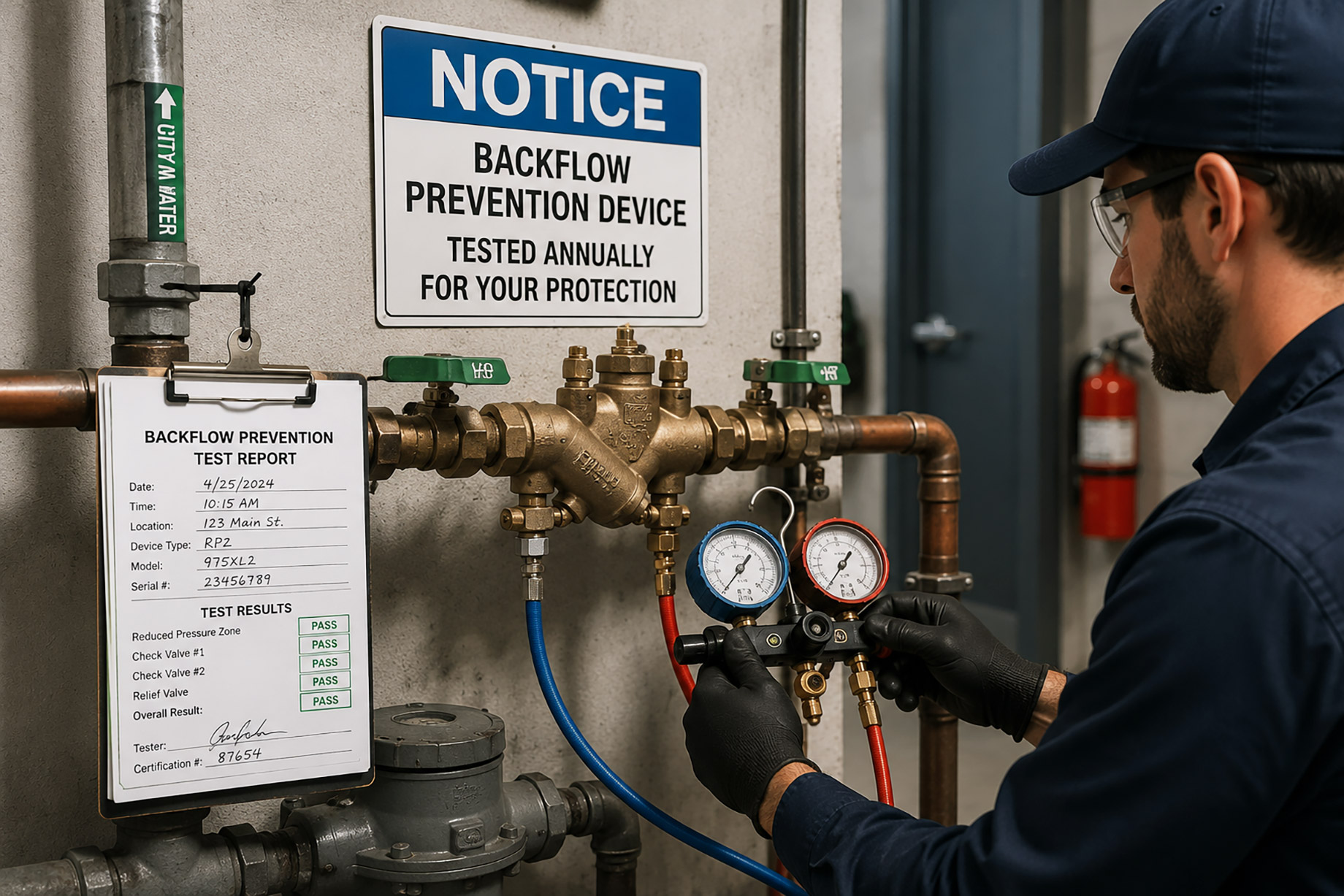
Backflow testing isn’t exactly the most exciting topic on a Tuesday morning. Still, if something goes wrong with your water supply, it matters a lot who was supposed to handle it. Whether you’re renting an apartment or managing a commercial lease, knowing who carries legal responsibility for backflow testing can save you from fines, health hazards, and some seriously frustrating disputes.
This post breaks it all down, what backflow testing actually is, how local laws split responsibility, and what you should do based on your situation.
1. A Quick Look at What Backflow Testing Involves
Backflow happens when water flows in the opposite direction from what’s intended. Basically, contaminated water can get pushed back into your clean water supply. This can occur due to sudden pressure changes in the main water line, and the results can range from bad-tasting water to serious health risks.
Backflow prevention devices are installed on water systems to stop this from happening. Testing those devices regularly ensures they’re still working correctly. Most municipalities require these tests on a set schedule, often once a year, and failure to comply can result in hefty fines or even a shut-off notice from the water authority.
The device itself is usually tied to the property’s main water connection, which is why ownership and control of the property play such a big role in figuring out who’s on the hook for testing.
2. How State and Local Laws Typically Assign Responsibility
Most local water authorities and municipal codes place the duty of backflow testing on the property owner, not the tenant. When you schedule San Diego Backflow Testing, for instance, the permit and compliance paperwork is almost always issued to the property owner of record, not whoever happens to be renting the space at the time.
That said, local codes vary quite a bit. Some jurisdictions are strict about holding only the property owner accountable. Others allow lease agreements to shift that responsibility to a commercial tenant, especially if the tenant operates heavy equipment or industrial systems that directly affect water pressure.
Residential tenants generally have less flexibility here. Most state landlord-tenant laws treat water safety maintenance as a landlord obligation, similar to keeping heating and plumbing functional. Transferring this duty to a residential renter is often legally void, even if it appears in a lease.
| Pro Tip: Always request a copy of the most recent backflow test report from your landlord before signing a long-term commercial lease. It tells you whether the system is current and whether any violations exist. |
3. What Your Lease Agreement Says and Whether It Holds Up
Leases can get creative about who handles maintenance. Commercial leases in particular tend to shift significant responsibilities to tenants, including things like HVAC servicing, fire suppression testing, and yes, sometimes backflow device maintenance.
If your commercial lease includes a clause that makes you responsible for backflow testing, it may be enforceable depending on your state. Courts have generally upheld these provisions in commercial settings when the language is clear and the tenant is a business rather than an individual renter.
For residential leases, it’s a different story. Landlords cannot legally offload water safety compliance onto tenants in most jurisdictions. A clause in your apartment lease saying you’re responsible for backflow testing would likely be struck down if it ever reached a courtroom.
Always read the maintenance and utilities sections of your lease carefully. If something looks off or unusually broad, it’s worth getting a quick review from a local real estate attorney before you sign.
4. Scenarios Where Tenants Could Get Caught in the Middle
Even when the law clearly points at the landlord, tenants can still get caught in messy situations. If a landlord ignores a failed backflow test and the water authority shuts off service to the building, you, as a tenant, are dealing with the practical consequences even if you’re not legally at fault.
In commercial settings, if your business operations caused the backflow device to fail, say, due to pressure changes from industrial equipment you installed, the landlord’s insurance company may look to you for reimbursement. That’s a civil matter, not a regulatory one, but it can still cost you significantly.
Another scenario: some tenants operate food-service businesses or medical facilities where water quality is directly regulated. In those cases, your own licensing board may require you to maintain certain water safety standards independent of what your lease says. You could be cited by two different agencies simultaneously if testing lapses.
| Pro Tip: If you run a restaurant, dental office, or any facility with specific water-use regulations, verify backflow compliance independently and keep your own documentation, even if your landlord is the one paying for the testing. |
5. Steps to Take if You’re Unsure Who Handles This at Your Property
Start with your lease. Look for any clause related to plumbing maintenance, utilities, or water system upkeep. If the lease doesn’t mention it, the legal default in your state likely applies.
Contact your local water district and ask whether any backflow tests have been submitted for your address. They can usually tell you who holds the compliance account and whether it’s current.
Talk to your landlord directly. A simple written question, something like asking whether they have a current backflow test on file, creates a paper trail and often prompts action from a landlord who may have let it slide.
Wrapping It Up
In most cases, backflow testing falls squarely on the property owner. Tenants, especially residential ones, are typically not legally responsible for this type of compliance. Commercial tenants have more gray area, particularly when the lease language specifically assigns maintenance duties. Clear agreements regarding property expenses, maintenance obligations, and even matters related to deposit development can help prevent disputes between landlords and tenants
Knowing your local rules, reading your lease carefully, and keeping communication with your landlord in writing will protect you regardless of which side of the responsibility line you’re on. Water safety isn’t glamorous, but staying ahead of it is a lot easier than dealing with violations after the fact.
FAQ
Q1: Who is responsible for backflow testing, the tenant or the landlord?
Answer: In most cases, backflow testing is the responsibility of the property owner, not the tenant. Local laws typically place this duty on the landlord, especially for residential properties. However, commercial leases may sometimes transfer this responsibility to the tenant depending on the lease agreement.
Q2: What should I do if my lease includes a clause about backflow testing?
Answer: If your commercial lease states that you are responsible for backflow testing, this clause may be enforceable depending on your state. It’s important to read your lease carefully and seek legal advice if you have concerns about the language used or the responsibilities assigned.
Q3: Can tenants be held liable for backflow testing issues?
Answer: While tenants are generally not legally responsible for backflow testing in residential settings, they can still face practical consequences if a landlord neglects testing or maintenance. In commercial settings, tenants could be liable if their operations affect the backflow device’s functionality.
Q4: How can I verify if backflow testing has been done at my property?
Answer: You can start by checking your lease for any clauses related to plumbing maintenance. Additionally, contact your local water district to inquire about any submitted backflow tests for your address. If you need assistance, San Diego Backflow Testing can help ensure your property stays compliant.
Q5: What steps should I take if I’m unsure about backflow testing responsibilities?
Answer: Begin by reviewing your lease agreement for any relevant clauses. If it’s unclear, reach out to your local water authority for information on backflow testing compliance. Lastly, communicate directly with your landlord in writing to clarify who is responsible for backflow testing at your property.
