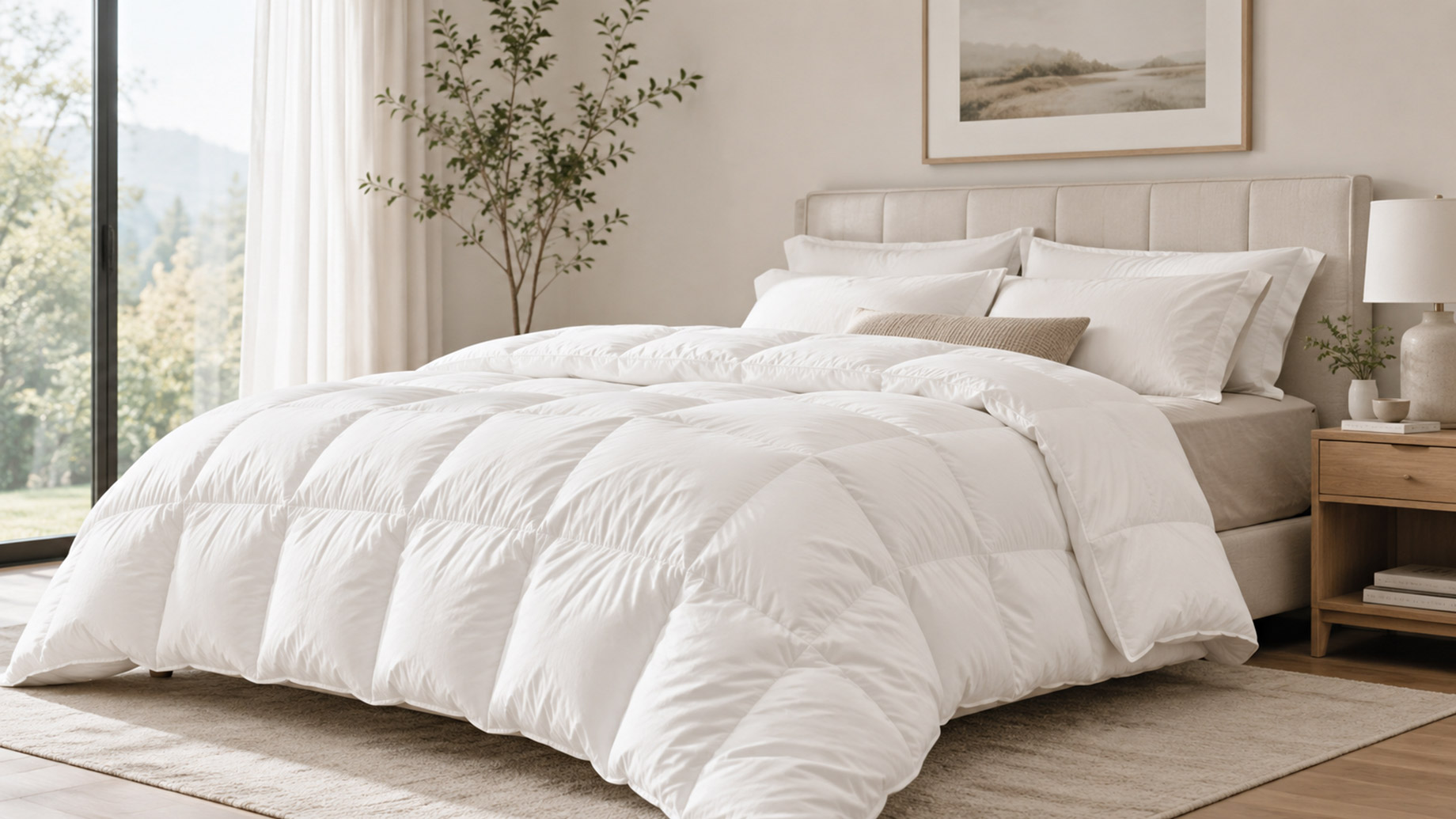
Rest improves when bedding supports heat balance, light pressure, and dry skin contact through the night. A cloud-style comforter should feel lifted, not heavy, with enough volume to insulate without trapping damp warmth. That effect comes from loft, fiber response, stitching, and fabric feel. Understanding these details can help sleepers find the right match for their needs.
For many sleepers, those details can mean fewer wake-ups, steadier body temperature, and a calmer bed surface that supports relaxation. A cloud comforter built around these qualities offers an airy feel without sacrificing warmth or structure. Here is what shapes that experience.
Airy Loft
A cloud comforter gets its airy feel from expanded fill, low drag, and fabric that falls gently over the body. A 700 fill power equivalent with 450 gsm fill weight points to cushioned height without dense compression. This structure adds insulation, softness, and visual fullness while avoiding the packed weight of many thick inserts.
Weight Without Drag
Light bedding can still feel protective. The difference lies in expansion, not bulk. Fill should hold air for warmth, then settle without restricting movement. This matters for side sleepers, couples, and anyone who turns often. Covers that move easily help prevent small disruptions from becoming full awakenings.
Breathability Basics
Breathability depends on how the shell and fill move warm vapor away from skin. Lyocell can help manage moisture near the sleep surface. The material absorbs quickly compared with cotton. Less humidity under covers may reduce clamminess, especially in rooms that swing between cool and warm overnight.
Why Moisture Matters
Body temperature drops during sleep, then rises closer to morning. According to MedlinePlus, the body cycles through several sleep stages each night, with temperature and breathing shifting throughout. Perspiration can disturb that rhythm when fabric holds dampness against skin. A drier microclimate helps limit sticking, chills, and heat buildup. That small zone beneath the comforter matters because it surrounds the body for hours.
The Shell
A 300 thread count sateen lyocell shell gives the cover a smooth, fluid hand. Texture matters because rough fabric can increase friction during movement. Sateen also drapes closely, helping reduce gaps near shoulders and hips. The surface feels quieter and less disruptive during position changes.
Fill That Stays Put
Loft needs consistency across the bed. If fill migrates, thin areas may create cold spots while crowded corners feel lumpy. A fixed stitching pattern helps keep insulation in place. Even distribution supports steady warmth, better shape retention, and a cleaner look after nightly use.
All-Season Use
An airy comforter should handle more than one temperature range. Warmth needs to feel present, while trapped heat stays limited. Midweight construction suits many homes because it covers cool nights without feeling oppressive in mild weather. Fewer bedding swaps can also simplify care.
Hot Sleepers
Hot sleepers often need moisture control and airflow more than reduced thickness. Softness can remain part of the experience. A breathable shell helps release damp warmth before bedding feels heavy. That balance allows plush coverage while reducing the humid pocket that may wake people early.
Sensitive Skin
Bedding rests against the face, neck, arms, and legs for long periods. Materials tested for harmful substances can help sensitive households choose with more confidence. OEKO-TEX Standard 100 Class 1 certification supports that concern. Hypoallergenic construction also suits people who avoid down, silk, or animal-derived fibers.
Planet-Conscious Fill
Material choices can affect comfort and resource use together. This style uses 100 percent GRS-certified, BPA-free recycled PET fill. Product details state that each comforter upcycles about 50 plastic bottles, depending on size. Recycled fiber can provide loft while reducing reliance on newly produced synthetics.
Vegan Comfort
A vegan comforter avoids down and silk while still offering puff and softness. Recycled polyester can mimic the raised feel many people associate with traditional inserts. That makes the bedding practical for homes that prefer synthetic or plant-forward choices. Care is often simpler than delicate natural fills.
Easy Care
Washable bedding supports skin hygiene because covers collect sweat, oils, and dust. Cold washing is recommended, followed by low heat drying or air fluff. A duvet cover can reduce full wash frequency. Corner loops help secure ties, keeping the insert aligned inside its outer layer.
Fit and Scale
Proper sizing affects warmth and movement. Excess fabric may bunch, while short coverage leaves shoulders or feet exposed. Listed dimensions include Twin or Twin XL at 90 by 70 inches, Full or Queen at 90 by 90 inches, and King or Cal King at 90 by 105 inches.
Trial and Returns
Comfort is hard to judge from images or a quick hand test. A 7-night at-home trial gives sleepers time to assess warmth, loft, texture, and breathability in normal conditions. The 50-night return window adds further room for evaluation. Real rest patterns offer better evidence than first impressions.
Conclusion
A cloud comforter creates an airy sleep experience through loft, breathable materials, moisture control, and stable construction. Strong versions feel full without dragging, warm without stuffiness, and soft without losing shape. Details such as lyocell fabric, secured fill, recycled fiber, and washable care all shape nightly comfort. For sleepers seeking a lighter bed feel with dependable warmth, this category offers a balanced, practical option.
