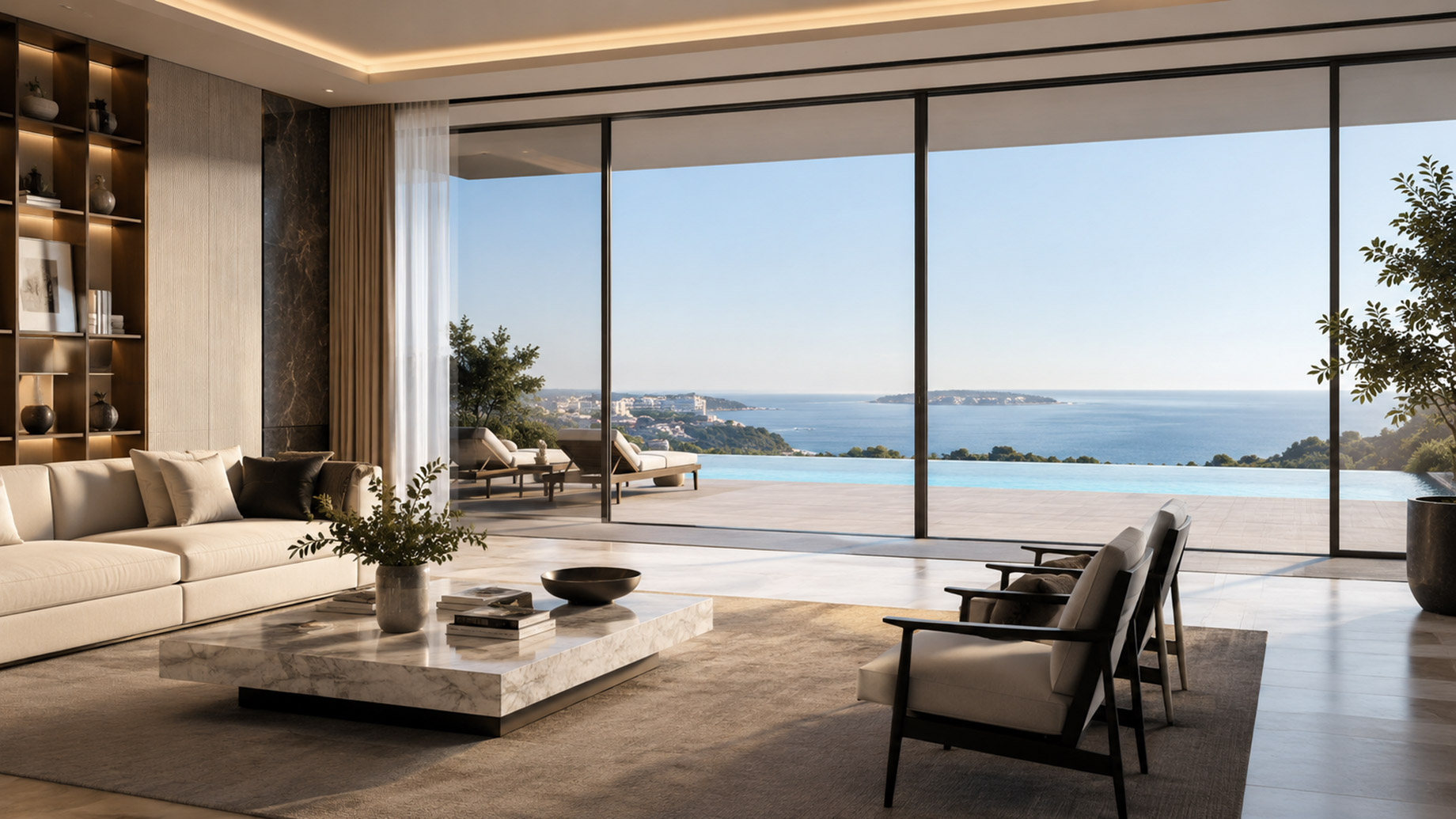
Luxury real estate has always been sold on more than square footage. A penthouse, private villa, branded residence, or resort-style development is not only a physical asset. It is a promise of how life will feel once the project is complete.
That creates a challenge for developers. In pre-construction sales, the buyer is often being asked to make a major decision before there is a finished residence to walk through, a completed lobby to enter, or a view corridor to experience from the terrace. Architectural drawings, floor plans, material schedules, and technical specifications are necessary, but they rarely communicate the full emotional value of a luxury property.
This is where architectural visualization has become an essential part of modern luxury real estate marketing. Through photorealistic renderings, interior visualization, exterior visualization, 3D floor plans, animations, and virtual presentations, developers can show buyers not only what is being built, but what kind of lifestyle the property is designed to support.
Why Lifestyle Matters in Luxury Real Estate Marketing
In the luxury segment, buyers are rarely motivated by function alone. They may compare ceiling heights, finishes, floor area, amenities, and location, but the final decision often depends on a more complete sense of belonging.
A buyer wants to understand the morning light in the primary bedroom, the atmosphere of the arrival sequence, the flow from the kitchen to the entertaining terrace, the scale of the living room, and the feeling of privacy around the pool or garden. These are lifestyle cues. They help a buyer imagine living in the property rather than simply evaluating it as a floor plan.
For developers, this matters because luxury buyers are often considering several competing opportunities at once. If one project can communicate its lifestyle more clearly than another, it has a stronger chance of staying in the buyer’s mind.
The Limits of Traditional Pre-Construction Sales Materials
Traditional sales materials still have value. Floor plans, brochures, architectural elevations, site plans, and finish schedules provide the factual foundation for a project. They help agents, brokers, buyers, and investors understand the technical details.
However, these materials place a heavy burden on the buyer’s imagination. A two-dimensional floor plan may show room dimensions, but it does not easily communicate volume, light, texture, atmosphere, or the relationship between spaces. A materials board may show stone, timber, metal, and fabric, but it does not show how those materials will feel together inside a completed residence.
For experienced developers and architects, these drawings are easy to read. For many buyers, they are not. Architectural visualization reduces that gap by translating technical information into a visual experience that is easier to understand.
How 3D Renderings Turn Design Into Desire
Photorealistic 3D renderings help developers present a property as a finished environment. The strongest renderings do not simply show rooms and façades. They communicate atmosphere.
An exterior rendering might show the residence at dusk, with warm interior lighting, landscaped gardens, architectural shadows, and a sense of arrival. An interior rendering might show the proportions of a living room, the relationship between furniture and architecture, and how natural light enters the space at a particular time of day.
These details matter because luxury buyers are not only judging design. They are judging experience. The right visualization can make a future residence feel credible, desirable, and emotionally complete before construction has finished.
Selling the Unbuilt View
Views are among the most important value drivers in luxury real estate. Oceanfront, skyline, mountain, waterfront, golf course, and city views can significantly influence buyer interest.
Before construction, however, views can be difficult to communicate. A buyer may visit a sales gallery or site, but the actual perspective from the completed residence may not yet exist. Architectural visualization can help bridge that gap by showing expected view lines, terrace experiences, glazing proportions, and the relationship between interior spaces and the surrounding setting.
For high-rise residences, this can be especially important. Buyers may want to understand how a view changes from one floor to another, how the city appears at night, or how the residence feels when seen from the main living area rather than from a generic exterior angle.
Interior Visualization Helps Buyers Understand Daily Life
Interior visualization is especially valuable because it helps buyers understand how the home will actually function. A luxury kitchen is not only a collection of appliances and finishes. It is a place for entertaining, family routines, private dining, or catered events. A primary suite is not only a bedroom. It may include a dressing area, spa-like bathroom, private terrace, and carefully controlled lighting.
Renderings can show how these spaces work together. They can clarify circulation, scale, furniture placement, and the emotional tone of each room. For luxury real estate developers, this is central to pre-construction sales because it allows buyers to imagine the rituals of daily life inside a property that has not yet been built.
Exterior Visualization Builds Confidence in the Overall Vision
Exterior visualization plays a different but equally important role. It helps buyers, investors, planning authorities, and project partners understand the building’s architectural identity.
For a luxury property, the exterior must communicate permanence, refinement, context, and distinction. It needs to show how the building sits within its landscape or streetscape. It also needs to show how amenities, arrival areas, terraces, gardens, pools, and outdoor spaces support the project’s positioning.
A strong exterior rendering can help a development feel established before it exists physically. That is valuable in early marketing campaigns, sales presentations, investor materials, and public-facing launch content.
Why Consistency Matters Across a Sales Campaign
Luxury development marketing usually requires more than one rendering. A complete campaign may include hero exterior views, amenity renderings, lobby visuals, residence interiors, terrace scenes, pool areas, spa facilities, dining spaces, and 3D floor plans.
These assets need to feel consistent. The architecture, materials, lighting, landscaping, furniture style, and brand atmosphere should support the same overall story. If the visuals feel disconnected, the project can appear less refined.
This is one reason developers often work with specialized visualization studios rather than treating renderings as one-off images. A coherent visual package helps create trust. It shows that the project has been considered as a complete environment, not just a collection of isolated spaces.
Architectural Visualization as a Sales Tool, Not Just a Design Tool
Architectural visualization is often discussed as a design communication tool, but in luxury real estate it is also a sales tool. It can support several parts of the sales process:
- Project launch campaigns
- Sales gallery presentations
- Broker and agent education
- Investor decks
- Website and landing page visuals
- Social media campaigns
- Print brochures and lookbooks
- Email marketing
- Public relations materials
- International buyer presentations
This flexibility matters because luxury real estate buyers may enter the sales process from different places. Some may discover the project online. Others may be introduced through a broker, private office, family office, or developer relationship. The visual material needs to work across all of those contexts.
Helping International Buyers Understand a Project Remotely
Luxury real estate is often marketed beyond the local buyer pool. International buyers may not be able to visit the site early in the process, especially during pre-construction. Even when they can visit the city, the finished residence may still be months or years away.
Architectural visualization helps make the project easier to evaluate remotely. Renderings, animations, virtual tours, and digital sales presentations can give buyers a clearer sense of the property before they travel or commit to a more detailed conversation.
This does not replace due diligence, site visits, contracts, or professional advice. It does, however, make the first stage of evaluation more effective. Buyers can understand the concept, lifestyle, and design direction before needing to interpret technical drawings on their own.
The Role of 3D Floor Plans in Luxury Property Marketing
A standard floor plan explains layout, but a 3D floor plan can make that layout more intuitive. It helps buyers understand the relationship between rooms, furniture, circulation, terraces, and views.
This is useful in large residences where scale can be difficult to interpret on paper. It is also helpful in multi-level homes, penthouses, villas, and branded residences where buyers need to understand how private, social, and service areas connect.
For developers, 3D floor plans can reduce confusion during sales conversations. They make it easier for buyers to compare units, understand differences between layouts, and identify which residence best suits their lifestyle.
Visualization Can Reduce Friction in the Decision Process
Luxury buyers are careful. They may involve advisors, family members, designers, lawyers, and financial professionals before making a decision. Any uncertainty in the presentation can slow the process.
High-quality visualization helps reduce that uncertainty. It gives buyers and their advisors a clearer picture of what is being offered. It can also help answer practical questions earlier: How large does the living area feel? Is the terrace suitable for entertaining? Does the kitchen connect naturally to the dining area? How private is the primary suite? What is the arrival experience like?
The clearer the visual information, the easier it becomes to move from interest to serious consideration.
Avoiding Overstatement in Luxury Renderings
There is also a responsibility attached to architectural visualization. Renderings should be aspirational, but they should not mislead. Luxury buyers expect polish, but they also expect accuracy.
Developers should be careful with unrealistic views, exaggerated room proportions, impossible lighting, or finishes that do not match the final specification. The strongest marketing visuals are persuasive because they are credible. They elevate the project without creating expectations that the finished property cannot meet.
This is especially important in the luxury market, where buyer trust is central to reputation. A beautiful rendering may attract attention, but a reliable rendering supports long-term confidence.
Where a Visualization Partner Fits Into the Process
The best results usually come when visualization is considered early, not added at the last minute. Developers, architects, interior designers, branding teams, and sales teams should align on the story the visuals need to tell.
For example, a project positioned around wellness may need renderings that emphasize natural materials, spa amenities, landscape integration, and calm private spaces. A city penthouse project may need stronger emphasis on skyline views, entertaining areas, arrival drama, and evening atmosphere. A branded residence may require strict consistency between architecture, interior design, hospitality cues, and brand standards.
A studio such as Ravelin3D architectural visualization can fit naturally into this process by helping translate architectural and interior design intent into visual assets that support pre-construction marketing, buyer education, and project storytelling.
What Developers Should Prepare Before Commissioning Renderings
A more efficient visualization process begins with clear inputs. Developers should usually prepare:
- Architectural drawings and floor plans
- Elevations and sections
- Interior design direction
- Finish schedules and material references
- Furniture and styling references
- Landscape plans
- Site context and view information
- Brand guidelines
- Target buyer profile
- Intended use for each visual asset
The more complete the brief, the easier it is to create renderings that are accurate, consistent, and useful across the sales campaign.
Architectural Visualization and the Future of Luxury Pre-Sales
As buyers become more digitally fluent, visual expectations continue to rise. A luxury property launch now competes not only with other real estate projects, but also with the visual standards of hospitality, fashion, automotive, architecture, and high-end lifestyle media.
This raises the bar for developers. Basic renderings may show what a project looks like, but sophisticated visualization shows why the project matters. It presents the architecture, interiors, amenities, location, and atmosphere as one complete lifestyle proposition.
For luxury real estate developers, that is the core advantage. Architectural visualization helps sell the unbuilt property by making the future feel tangible. It gives buyers a clearer way to understand the design, imagine the lifestyle, and develop confidence in the project before construction is complete.
In a market where perception, emotion, and trust carry significant weight, that clarity can make the difference between passive interest and serious buyer commitment.
