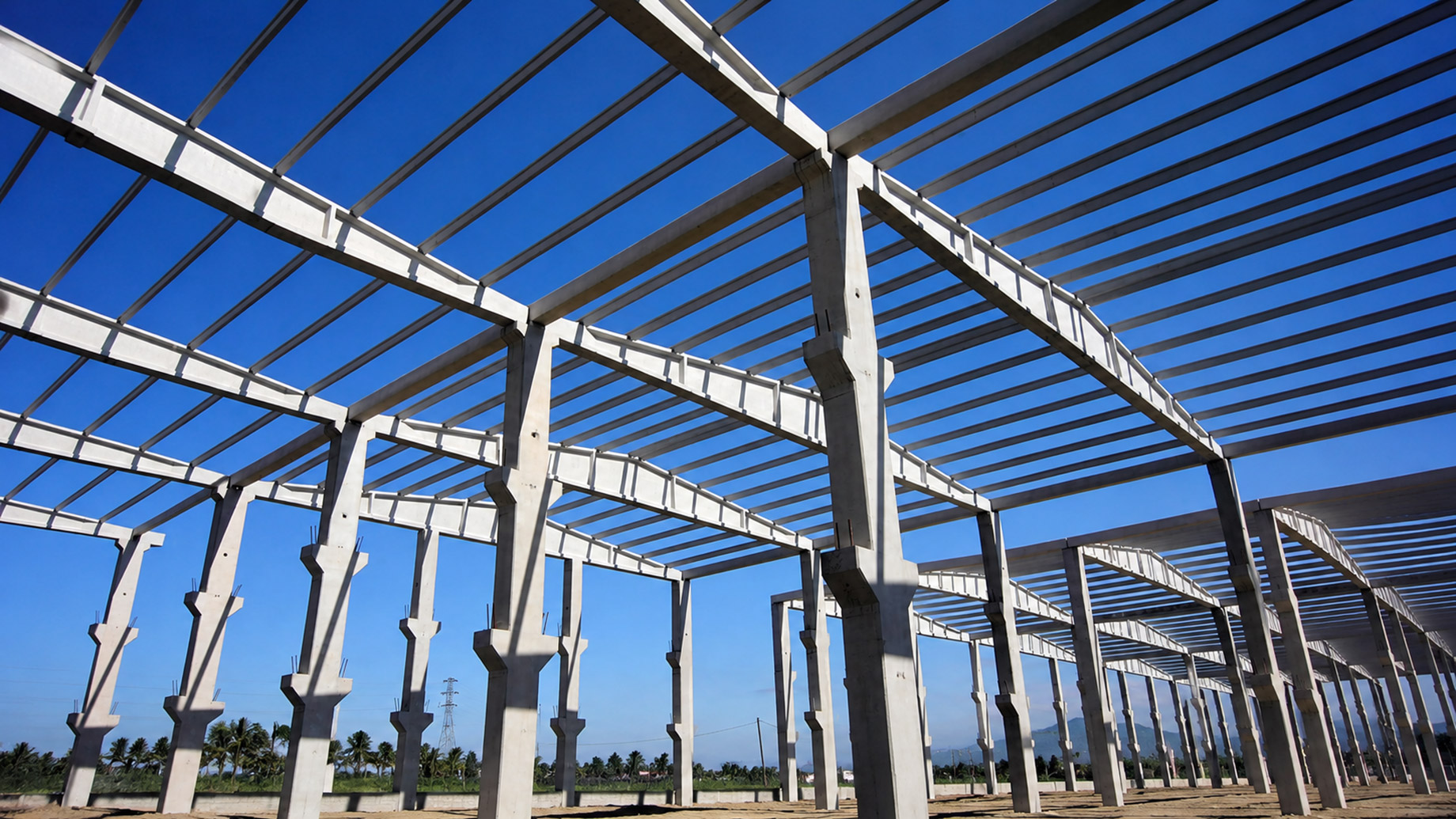
The continuous upgrading of commercial and industrial buildings has shifted the market’s focus. Today, businesses prioritize construction solutions that offer fast delivery, flexible space, and controlled costs. Traditional concrete buildings have long construction periods, high renovation costs, and limited expansion options, making it difficult for them to adapt to the dynamic needs of modern businesses.
PEMB construction effectively addresses these problems. With its high efficiency and sustainability, it has become a popular building method. This article will explain in detail the topic of what PEMB is, along with the core advantages and the complete construction process of these structures. With these insights, you can easily determine if PEMB construction is the right fit for your business project.
What Is PEMB?
The full name of PEMB is Pre-Engineered Metal Building. This structural solution is a standardized and prefabricated construction method. Unlike traditional construction methods that involve pouring and welding at the site, PEMB construction follows a systematic and standardized production process. All main steel structural components are uniformly prefabricated and precisely machined in the factory.
After quality inspection, the parts are transported to the construction site and assembled like building blocks. A complete PEMB structure mainly consists of a steel frame, roof cladding, wall systems, support accessories, and components for waterproofing and insulation. It is a systematic building solution suitable for various commercial and industrial scenarios.
Applications of PEMB Buildings
PEMB construction fits the needs of various industries and is highly versatile. Below are some common application scenarios.
- Industrial and manufacturing: Industrial projects are the main application field for PEMB construction. This type of PEMB building offers high ceilings and a large open space with a wide span and no columns. The open, unobstructed interior can accommodate large production equipment, bulk goods storage, and facilitate convenient production line layouts.
- Commercial Retail and Office: PEMB structures support customized exterior appearances. They can be paired with glass curtain walls or artistic facades to create a clean, modern, minimalist look. The interior layout can be freely customized, flexibly adapting to scenarios such as shopping centers and office buildings of small to medium sizes. The space can also be reconfigured later if business needs change.
- Agricultural Use: Agricultural sites demand high durability from buildings, and PEMB construction delivers excellent resistance to corrosion, aging, and harsh weather conditions. Daily maintenance is simple and available at a low cost. The open interior space is ideal for storing grain, farm equipment, and supplies. The solid steel structure protects contents from harsh weather throughout the year.
- Aviation and Transportation: These scenarios require exceptionally large, open spaces. The column-free design with a large span of PEMB structures meets this requirement perfectly. Therefore, they are often found in aircraft hangars and large vehicle maintenance workshops. Logistics distribution centers and similar facilities also benefit from this design.
PEMB structures can accommodate large equipment and operations, and their structural flexibility allows for future expansion or renovation as equipment upgrades or site expansion needs arise.
What Are the Advantages of PEMB Structures?
Compared with traditional fixed concrete buildings, PEMB construction offers outstanding advantages in the following areas.
Durability
High‑quality PEMB construction uses high‑strength galvanized steel structures. These materials are treated for corrosion resistance, rust prevention, and oxidation resistance. The overall frame offers excellent rigidity, allowing resistance to sun exposure and heavy rain over a long period.
Even in extreme weather like snowstorms or strong winds, the structure will not easily deform or break. Its service life far exceeds that of traditional concrete buildings. For long‑term fixed projects, PEMB construction can be a top choice.
Construction Efficiency
PEMB construction uses a fully prefabricated model. All components are standardized and produced in the factory. No pouring or curing at the site is needed. Work at the site only involves assembly, connection, and fixing. The construction period is greatly shortened compared with traditional buildings.
As a result, PEMB construction helps businesses quickly complete projects and start operations. If you need an even faster setup, consider clear span tents. They use a membrane structure for quicker assembly at the site. This makes them ideal for temporary or semi‑permanent use.
Cost‑Effectiveness
The streamlined construction process of a PEMB structure effectively reduces on‑site labor and material waste. More importantly, it allows flexible selection of component materials, building size, and supporting systems based on project budget and usage needs.
From a long-term financial perspective, PEMB may cost more upfront in materials, but overall project costs are lower thanks to less material, lighter weight, and faster installation. Regardless of project scale, it delivers maximum value for both commercial and industrial projects. Selecting an appropriate metal building insulation type can further enhance energy savings and operational efficiency over a long period.
Step-by-Step Guide to Executing a PEMB Construction
Executing a PEMB project requires a systematic approach to ensure structural integrity and construction efficiency. From initial planning and design to final inspection and maintenance, every detail must be carefully controlled to create a high‑quality PEMB structure. The complete construction steps are as follows.
Planning and Design
Before the actual construction begins, you need to clarify the building’s intended use and functional requirements. This allows you to accurately plan its span, height, internal layout, and more. Of course, referring to a professional metal building size guide can help reduce space waste.
Meanwhile, you should also consider space functional requirements and reserve enough room to avoid limitations for future expansion or renovation. Proper upfront planning helps the PEMB construction better meet operational needs over a long period.
Selecting the Right PEMB Solution
Following the initial planning phase, choosing the right pre-engineered metal building centers heavily on your operational environment. Roof design serves as a key factor here, directly affecting drainage, structural load, and overall appearance. Based on your local climate and usage needs, you can select from the four common roof variants below to customize your building solution.
- A flat roof comes with a slight built‑in drainage slope, which helps direct rainwater to the drains. However, if the design or installation is not done properly, water can accumulate. Water standing for a long period will accelerate the aging of roofing materials. A flat roof must have a reliable waterproofing layer to prevent pooling issues that can affect the building’s lifespan.
- A single slope roof uses a design sloped in a single direction that directs rainwater to a specific side of the building. This avoids water flowing where it is not wanted and also simplifies the drainage system layout. For building expansions or projects on sites close to property boundaries, a single slope roof can easily integrate with existing walls, reducing structural conflicts and construction difficulty.
- A gable slope roof has a symmetrical slope that balances the load on the steel frame. This classic pitched design distributes forces evenly and effectively spreads the weight of snow accumulation, reducing the risk of localized overload. This ensures structural stability under extreme snow and wind conditions. Therefore, it is one of the most common roof forms in cold regions or for buildings with a large span.
- An arched Roof features a clever curved slope design. Rainwater, debris, and snow slide off quickly along the curve and rarely accumulate. This greatly reduces the load on the roof. What’s more, the interior of an arched roof has no poles or columns, so large events or warehouse layouts are not restricted. For projects that need similar space with a large span but have a tighter schedule, a fabric hoop building offers a practical alternative.
Cost Estimation and Budgeting
The overall budget should be established before ordering any structural components. The budget should cover costs such as materials, labor, and transportation. In addition, you must carefully account for extra system expenses included in the metal building cost, such as foundation work, utility connections, fire protection, and climate control systems.
Itemizing these expenses in detail helps avoid budget overruns later in the project. Accurate budget planning allows you to strictly control PEMB construction costs and keep the project on track.
Site Preparation
Physical work begins immediately at the construction site to ensure that erection work proceeds without interruption. The construction site needs to be thoroughly cleared of debris. The ground should also be leveled and compacted. It is best to conduct a levelness test to ensure the ground is even. This helps with the precise installation and alignment of steel column bases. This meticulous foundational work successfully eliminates unexpected construction delays, costly rework, and budget overruns.
Delivery and On-Site Assembly
Following site readiness, factory prefabricated steel components made in the factory are shipped directly to the construction site as a ready assembly kit. Instead of measuring and cutting from scratch, the construction team simply bolts the framework together according to the preset drawings and installation procedures. This is where the advantage of metal building construction comes in through fast assembly with no need for complex fabrication at the site. This streamlined structural erection significantly compresses the project timeline while minimizing labor costs at the site.
Inspection and Maintenance
After final construction is completed, a comprehensive acceptance inspection must be carried out. The focus should be on verifying structural stability, waterproof sealing, and safety compliance. It is essential to ensure that the overall quality meets industry standards and there are no safety hazards.
Once the inspection is passed, a regular maintenance plan should be established. Periodically check the steel structure for corrosion protection, waterproofing, and fastener tightness, resolving any issues promptly. This will effectively extend the service life of the PEMB structure.
How to Determine if PEMB Construction Is Right for You?
When deciding between structural solutions, PEMB construction serves as an ideal choice for modern standardized commercial and industrial projects that require rapid completion and adaptable space on a budget.
However, if your specific project demands highly complex irregular shapes, extremely thick walls for bearing loads, or heavy load conditions over a long period, traditional reinforced concrete construction remains more suitable.
Conclusion
From factories and warehouses to commercial office buildings, PEMB construction is becoming a top choice for many commercial projects thanks to its fast construction, low cost, and flexible layout. Following the steps from planning and design to on‑site assembly and final inspection ensures a smooth project delivery.
If you need professional guidance on PEMB construction selection, custom design, and installation, feel free to contact Shelter Structures. Our professional team has extensive experience in metal building design and construction systems. In addition, we offer one‑stop custom solutions tailored to various sites and project needs.
