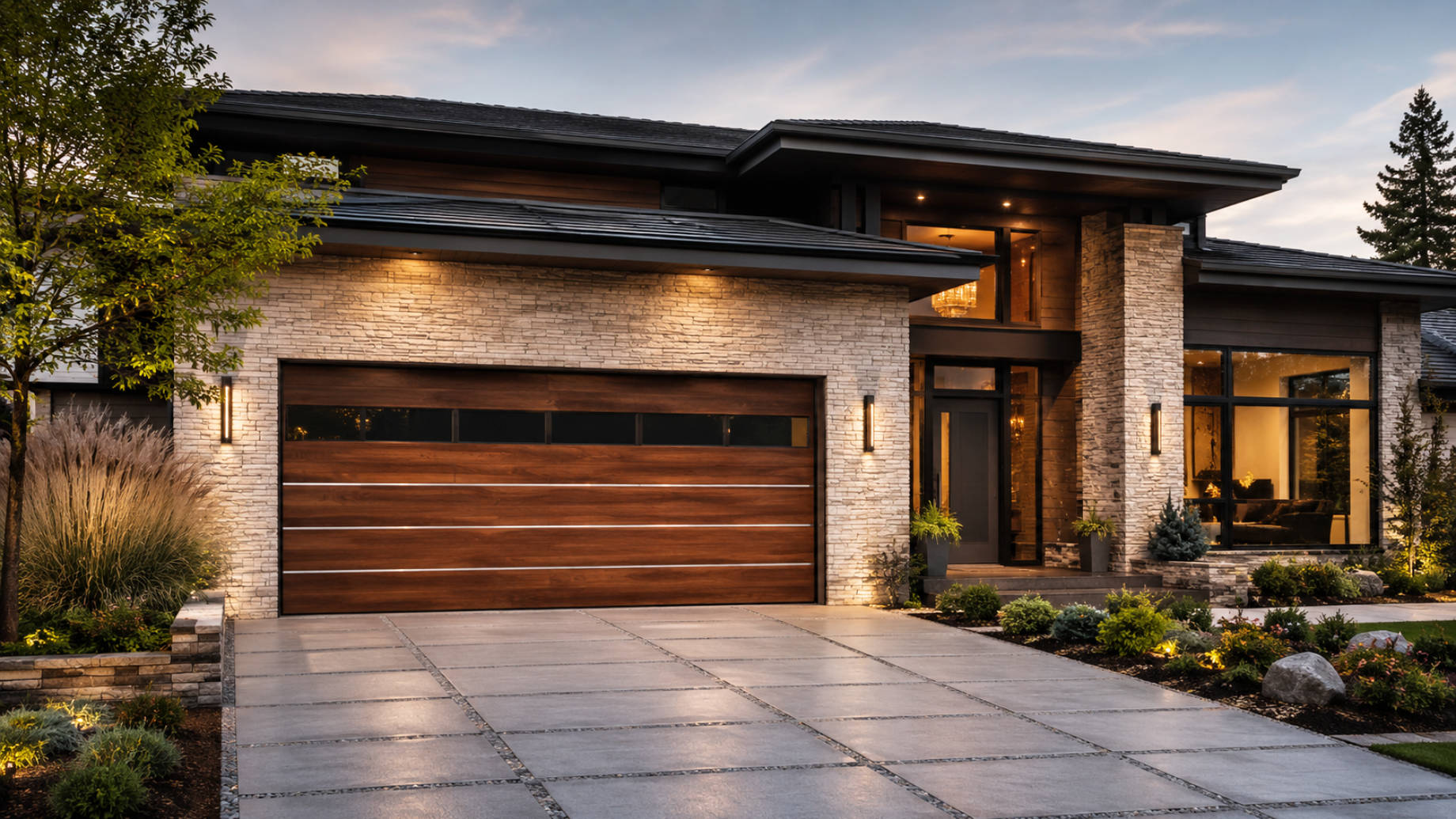
Walk down any prestige street, whether it is Dalkeith, Mosman Park, or Peppermint Grove, and notice where your eye actually lands. On most modern luxury homes, the garage is not tucked discreetly to the side. It sits front and centre, often taking up a third or more of the visible facade. Which means the garage door, that single large plane of material, is one of the most powerful first impressions a high-end property makes. Get it wrong and even an architectural masterpiece looks faintly embarrassed, like a beautifully dressed person in scuffed shoes. Get it right and the whole house seems to exhale, settling into the confidence its owners paid for.
For owners, agents, and developers working at the top of the market, this is not a minor detail. The garage door is one of the highest-impact, best-value upgrades available, and it consistently returns far more in perceived value and buyer response than it costs to fit. This article makes the case for treating the door as the architectural feature it is, and explains what separates a forgettable door from one that elevates a property.
The Facade Maths Nobody Talks About
Start with the proportions, because they are striking. On a typical double or triple garage frontage, the garage door can occupy a remarkable share of everything you see from the street. No other single element, not the front door, not the windows, not the landscaping, commands that much visual real estate in one uninterrupted surface.
That dominance cuts both ways. A cheap, dated, or poorly chosen door drags the eye and undermines everything around it, no matter how much was spent elsewhere. A considered door that complements the architecture does the opposite, pulling the facade together and signalling quality before anyone reaches the front gate. In a market where buyers form an opinion in the first few seconds, that surface is doing enormous work. Treating it as an afterthought is leaving value on the table.
Why the Garage Door Lifts a Home’s Value
Real estate professionals have long known that exterior improvements with high visual impact deliver some of the best returns, and the garage door is a textbook example. It is relatively affordable compared with a kitchen or bathroom renovation, yet it transforms the single largest element of the streetscape. That ratio of impact to cost is exactly what makes it such a smart move.
There is also the psychology of the buyer. A pristine, well-designed garage door reads as a sign that the whole home has been maintained and considered. It sets the tone for the inspection before the buyer has stepped inside, priming them to see quality throughout. A tired door does the reverse, planting a seed of doubt about what other corners might have been cut. For a luxury property, where the entire proposition rests on a feeling of effortless quality, that first signal is worth protecting.
What Separates a Luxury Door From a Standard One
Lifting a facade is not about spending the most money. It is about making the right choices in a few key areas. Here is where the difference is made.
Material and Finish
Material is the foundation of the look. Timber and timber-look finishes bring warmth and natural texture that suit both heritage and contemporary homes. Powder-coated aluminium and quality Colorbond steel offer clean, modern lines and exceptional durability in the Australian climate. The finish should feel deliberate, coordinated with the home’s palette rather than a default white panel chosen off a chart. The right material reads as part of the architecture, not as a product bolted onto it.
Proportion and Pattern
The way a door is divided matters as much as what it is made of. Panel proportions, the rhythm of horizontal or vertical lines, the presence or absence of glazing, all of this should echo the architecture behind it. A sleek minimalist home calls for clean, flush panels. A home with strong horizontal lines suits a door that repeats them. This is where a custom or architectural door pulls ahead of anything off the shelf, because it can be designed to belong.
Hardware and Automation
The details finish the picture. Concealed fixings, flush handles, integrated lighting, and smooth, quiet automation all contribute to the sense of refinement. A premium door should move silently and reliably, with smart-home compatibility increasingly expected at this level. A door that clatters and judders breaks the spell no matter how good it looks standing still.
Matching the Door to the Architecture
The single biggest mistake at the top of the market is a beautiful door that fights the house. Coherence is everything. A striking timber door that suits a warm, organic build would look wrong on a stark white minimalist facade, and vice versa. The goal is always a door that feels inevitable, as though it could not have been anything else.
This is why the door should be considered early, ideally during design, not chosen at the end from whatever is convenient. The most successful luxury facades treat the garage door as one of a small number of large gestures that define the street view, alongside the entry, the roofline, and the landscaping. When those elements speak the same language, the result feels expensive in the best sense. When the door is an afterthought, the eye catches the discord even if the viewer cannot name it.
From the Project Files: A Facade Transformed
To show how much a door can do, here is a project the Slide And Glide design team shared, with details changed at the owner’s request. A 1990s home in Cottesloe had been renovated to a high standard inside, but the street view still leaned on its original triple garage door, a dated, pale, heavily ribbed panel that made the whole frontage look its age.
Rather than touch the structure, the owners replaced the door alone. A custom sectional door in a deep charcoal with a clean, wide-rib profile and a slim line of frosted glazing along the top transformed the proportion and the mood of the entire facade. The owners admitted they had lived with the old door for years without ever really seeing it, and were quietly astonished at how much lighter the whole house felt once it was gone. The agent handling the eventual sale described the new door as the detail buyers commented on first, and the home presented as far more current than its build date. The cost was a fraction of a full facade renovation. The lesson the design team draws from jobs like this is consistent: when the budget is tight but the street view matters, the garage door is almost always the highest-leverage place to spend.
The Practical Case: Durability Is Part of Luxury
At this level, looks alone are not enough. A luxury door must also stay looking that way, and in the Australian climate that takes the right specification. Perth’s coastal suburbs in particular subject doors to relentless sun and salt air, which punish poor materials and cheap finishes. A door that fades, chalks, or corrodes within a few years actively detracts from a premium home.
Specifying quality materials, marine-grade or appropriately protected hardware, and finishes rated for the conditions is what keeps a door looking intentional for the long haul. Real luxury is not just the first impression on installation day. It is a door that still presents beautifully at the next sale, having quietly resisted everything the climate threw at it. That durability is inseparable from the value argument.
Working With the Right Specialist
Delivering a door that genuinely lifts a property takes more than a catalogue order. It takes someone who can advise on materials, proportion, and finish in the context of the specific architecture, then manufacture and install to a standard that matches the rest of the home. This is craft and judgement, not just supply.
An experienced local provider of architectural Garage Doors Perth homeowners trust will look at the whole facade, understand the design intent, and recommend a door that belongs to the house rather than one that merely covers the opening. They will also stand behind the installation and service it over time, protecting the investment. For an owner or developer chasing the best return on a high-end property, that expertise is what turns a good idea into a result you can see from the street.
Colour and the Streetscape
Colour is one of the most powerful and underused levers on a garage door. The default white panel is rarely the right answer on a considered home. Deep charcoals and blacks read as contemporary and recede elegantly, letting the architecture speak. Warm timber tones add richness and suit both heritage and modern builds. A colour drawn from the home’s own palette, picked up from the window frames, the roof, or the entry door, ties the facade together in a way that feels intentional and expensive.
The goal is harmony rather than contrast for its own sake. A door that coordinates with the broader scheme disappears into the design as a quality element, while a mismatched colour jumps out and cheapens everything around it. On a prestige home, this is a decision worth making with the same care given to the interior palette, because the garage door is on show to the whole street.
Timing the Upgrade Before You List
For owners and agents preparing a home for sale, the timing of a garage door upgrade matters. Because the door carries so much of the first impression, replacing a tired one before listing can lift the entire presentation at a modest cost, improving photography, inspection appeal, and the sense that the home has been maintained. In a competitive prestige market, that first impression can shape the offers that follow.
The key is to allow enough lead time, since a quality custom or architectural door is made to order and takes time to manufacture and install. Leaving it to the last week before listing rarely works. Planning the upgrade early in the sale preparation, alongside the landscaping and the painting, lets the door play its full part in the campaign rather than missing the launch.
Automation and the Finishing Touches
On a luxury home, the way a garage door moves is part of the impression it makes. A premium door should glide open quietly and smoothly, with no clatter or judder to break the sense of quality. Modern openers offer soft start and soft stop, near-silent operation, and smart-home integration that lets the door work with the rest of the house, from a phone app to an automated arrival sequence as the owner pulls into the driveway.
The smaller details complete the picture. Integrated lighting that washes the door at night, concealed fixings, flush or hidden handles, and sensors that respond before a hand touches anything all add to the feeling of effortless refinement. These are the touches that separate a merely attractive door from one that feels genuinely considered. On a property where the whole proposition rests on quality, getting the movement and the details right is what makes the door feel worthy of the home behind it.
The Bottom Line
On a luxury home, the garage door is not a utility. It is one of the largest and most visible architectural surfaces on the property, and it carries a disproportionate share of the first impression that drives perceived value. Treating it as the feature it is, choosing the right material, proportion, and finish to suit the architecture, is one of the smartest, highest-leverage moves available to anyone presenting a prestige home.
Curb appeal really does start at the garage. Get that single large surface right and it quietly elevates everything around it, from the moment a buyer pulls up to the moment they decide this is a home that has been done properly. That is value you can see before you ever open the front door.
