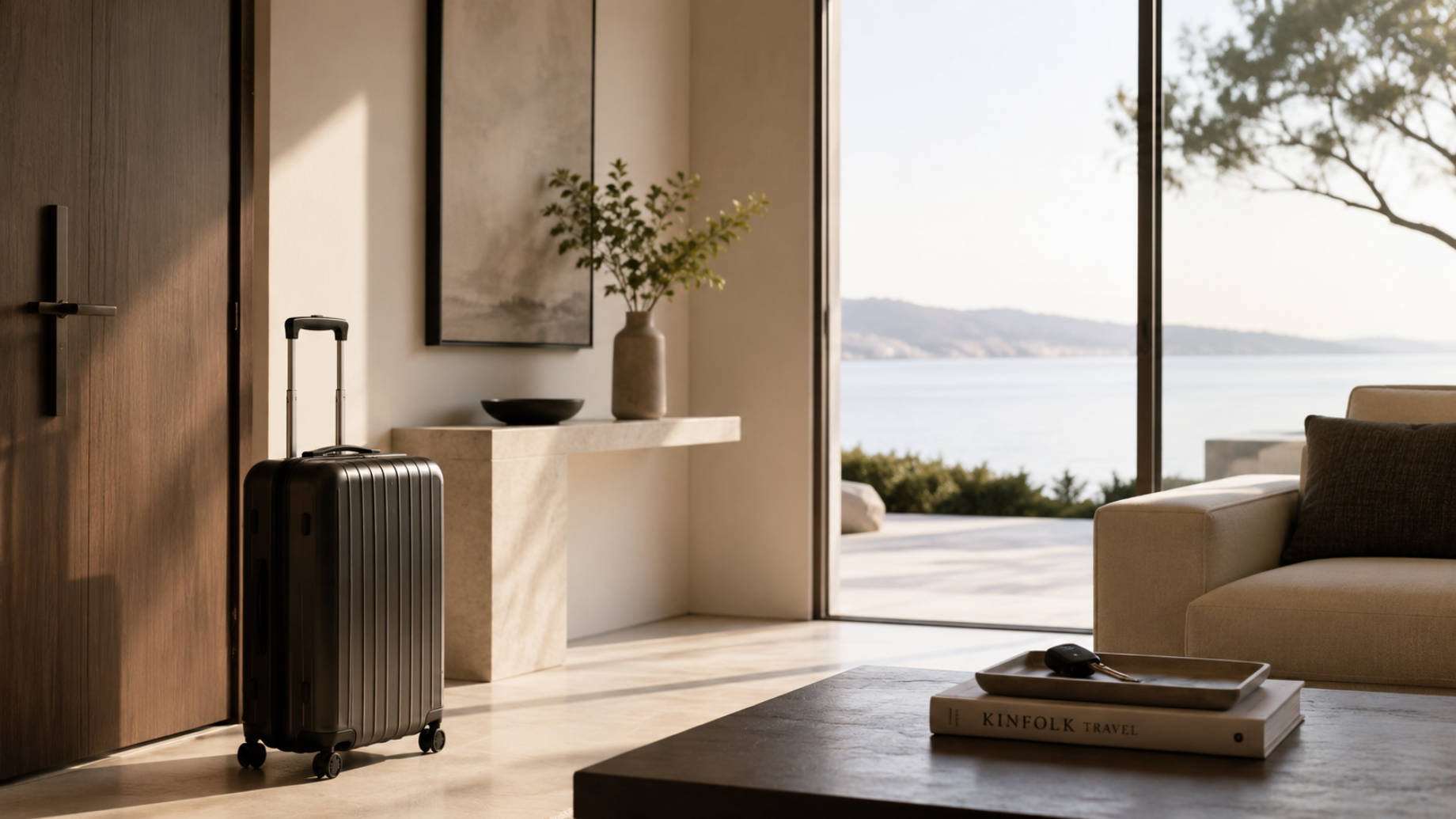
A well-designed home should do more than look impressive. For people who travel frequently, it should make departures easier, protect the property while it is unoccupied, and provide a calm, comfortable place to return to.
Creating a travel-friendly home does not require turning it into a hotel or filling it with complicated technology. The goal is to establish simple systems that reduce friction before, during, and after every trip.
What Makes a Home Travel-Friendly?
A travel-friendly home is organized around three priorities: convenience, security, and restoration. It should help residents pack efficiently, manage the property from a distance, and settle back into daily life without unnecessary work.
This approach is particularly valuable for homeowners who divide their time between cities, maintain a second residence, or travel regularly for business and leisure. Instead of treating travel and home life as separate experiences, the property becomes the stable foundation supporting both.
Design an Efficient Arrival and Departure Zone
The entrance is the natural place to create a transition between home and travel. A dedicated cabinet, bench, or closet can hold luggage, travel adapters, reusable bags, umbrellas, and other frequently used items. Keeping these essentials together prevents last-minute searches and makes unpacking more orderly.
A nearby charging drawer is also useful for power banks, headphones, and device cables. Important travel documents should be stored securely elsewhere, but having a consistent place for everyday accessories can make leaving the house considerably easier.
Use Smart Systems Without Overcomplicating the Home
Remote access can provide practical reassurance while a property is vacant. Smart locks, security cameras, lighting controls, leak sensors, and connected thermostats allow homeowners to check essential systems and respond to possible problems from another location.
The most effective setup is usually the simplest one. Choose devices that work within a unified platform, maintain secure passwords, and ensure that a trusted local contact can access the property if the technology fails. Automation should support the home rather than make it dependent on difficult-to-manage devices.
Create Storage That Reflects How You Travel
Travel gear often becomes scattered across closets, garages, and spare rooms. A dedicated storage area keeps suitcases, packing cubes, seasonal clothing, sports equipment, and destination-specific items together.
The organization can be arranged by trip type. Beach accessories may occupy one section, winter gear another, and business-travel essentials a third. This makes it easier to see what is available before buying duplicates or discovering that an important item is missing shortly before departure.
For broader inspiration on balancing everyday routines, home life, and time away, a lifestyle and travel blog can provide useful ideas that complement more property-focused planning.
Make the Home Easy to Leave Unoccupied
Before an extended trip, homeowners should be able to place the property into an “away” condition using a repeatable checklist. This may include adjusting climate settings, confirming that doors and windows are secure, arranging plant or landscape care, pausing selected deliveries, and checking plumbing or water-monitoring systems.
A written checklist reduces reliance on memory. It can also be shared with a house manager, family member, or trusted neighbor who may need to inspect the home during an absence.
For a second residence or larger estate, professional property management may be appropriate. The right arrangement depends on the property’s complexity, location, and expected length of vacancy.
Design the Return Experience
Frequent travelers often focus on departure and overlook the importance of coming home. A restorative return begins with a clean, uncluttered environment and a few practical preparations.
Fresh bedding, an organized kitchen, automated exterior lighting, and a comfortable place to set down luggage can make the transition easier. Some homeowners also reserve a small collection of pantry staples and household supplies specifically for their return, avoiding an immediate shopping trip after a long journey.
The bedroom and primary bathroom deserve particular attention. Quiet lighting, effective blackout treatments, comfortable linens, and an orderly bathing space can help the home feel restorative after disrupted schedules and long travel days.
Let Travel Inform the Interior Selectively
Objects collected during travel can add identity to a home, but restraint matters. Rather than displaying every souvenir, choose a limited number of meaningful pieces distinguished by their craftsmanship, materials, or personal significance.
Textiles, ceramics, artwork, books, and photography can communicate a connection to place without making the interior feel themed. Rotating selected pieces seasonally can also keep the home visually fresh while protecting more delicate objects from constant exposure.
Build a Lifestyle Around Movement and Stability
A travel-rich life works best when the home provides stability rather than additional maintenance. Thoughtful storage, reliable security, clear routines, and restorative interiors allow the property to support movement without becoming a burden.
The ideal home base is not merely a place to store possessions between trips. It is the environment that makes travel easier, preserves continuity, and offers a genuine sense of return.
