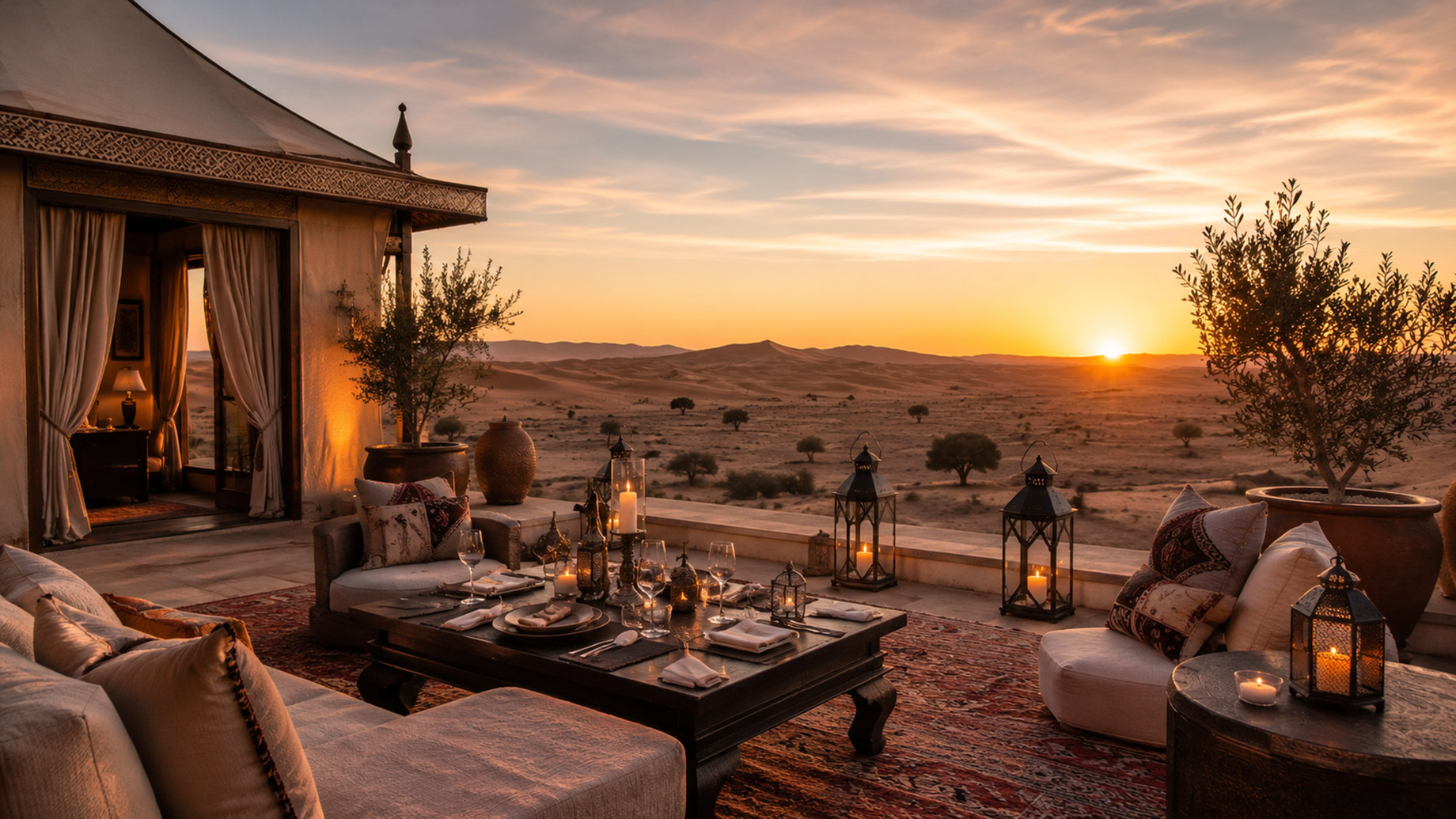
For years, luxury travel followed a familiar formula: Private islands in the Maldives, Alpine resorts in Switzerland, superyachts along the Amalfi Coast, exclusive safari camps in East Africa
But among affluent travelers in 2026, priorities are shifting in a surprisingly different direction.
Increasingly, luxury clients are looking for destinations that feel culturally immersive and emotionally restorative, yet remain relatively underexposed to mass tourism. Instead of chasing visibility, many are now chasing rarity.
Morocco has slowly become one of the clearest examples of this shift.
Before departure, many high-end travelers now review the latest information on the Morocco e-Visa for U.S. citizens well in advance, especially as luxury itineraries become more complex and countries continue to digitize entry systems for international arrivals.
But the real story is bigger than visa logistics. What’s happening is a redefinition of luxury travel itself.
The New Luxury Is Privacy, Space, and Cultural Depth
According to Virtuoso’s 2026 luxury travel trends report, affluent travelers are increasingly prioritizing “meaningful exclusivity” over overt extravagance.
That means demand is growing for experiences centered around:
- Architectural authenticity
- Remote landscapes
- Personalized access
- Slow travel itineraries
- Wellness-focused environments
- Cultural immersion
- Fewer crowds
Morocco delivers an unusually compelling combination of all seven.
Unlike destinations built primarily around international resort infrastructure, Morocco still feels deeply connected to its own rhythms. Even luxury properties often integrate local craftsmanship, regional cuisine, traditional design, and historic architecture in ways that feel more intimate than performative.
For high-net-worth travelers fatigued by interchangeable five-star experiences, that distinction matters.
The Rise of “Desert Luxury”
One of the fastest-growing segments in premium travel right now is remote desert hospitality.
Luxury desert tourism has expanded dramatically over the past three years, fueled partly by travelers seeking environments that feel cinematic, silent, and digitally disconnected.
Morocco’s Sahara region has become especially attractive for this reason.
Today’s luxury desert camps bear little resemblance to the rugged expedition-style accommodations of the past. Many now feature:
- Designer suites under canvas
- Curated private dining experiences
- Spa and wellness programming
- Astronomy-focused experiences
- Architectural lighting design
- Sustainable energy systems
- High-end photographic expeditions
And unlike some ultra-commercialized luxury destinations, the surrounding environment still feels genuinely vast.
For many affluent travelers, that emotional sense of scale has become increasingly valuable.
Luxury Travelers Are Avoiding Overtourism
Another major trend shaping the high-end travel market is crowd avoidance.
According to the World Travel & Tourism Council, luxury travelers are increasingly adjusting their itineraries away from destinations struggling with overtourism, infrastructure strain, and declining exclusivity.
Cities like Venice, Santorini, and parts of coastal Spain continue implementing visitor-control measures as local frustration with tourism density grows.
In response, many luxury advisors now actively recommend destinations that offer similar beauty with lower saturation.
Morocco benefits from this shift because it still offers extraordinary diversity within a relatively compact geography:
- Atlantic coastlines
- Snow-capped mountain ranges
- Ancient medinas
- Contemporary luxury resorts
- Vast desert landscapes
- UNESCO heritage sites
- Surf culture enclaves
- Private riads and estates
This allows travelers to create multi-environment itineraries without constant long-haul repositioning.
Architecture Is Driving Luxury Destination Choice
One interesting shift in affluent travel behavior is the growing importance of design-led hospitality.
Luxury travelers increasingly choose hotels not just for service but for architectural storytelling.
Morocco’s design heritage makes it exceptionally well-positioned for this trend.
Across Marrakech, Fez, and smaller boutique destinations, luxury properties increasingly showcase:
- Handcrafted zellige tilework
- Carved cedarwood detailing
- Contemporary Moroccan minimalism
- Restored courtyard riads
- Desert-modernist architecture
- Artisan collaborations
For travelers accustomed to globally standardized luxury brands, these environments feel distinctive rather than replicated.
Social media has amplified this trend as well. Design-focused hospitality now performs particularly strongly among younger affluent travelers seeking spaces that feel visually original rather than conventionally opulent.
Wellness Tourism Is Becoming More Experiential
Luxury wellness travel is also evolving beyond traditional spa resorts.
Travelers increasingly seek wellness experiences connected to the place itself rather than isolated treatments inside international hotel compounds.
Morocco naturally aligns with this movement through experiences tied to:
- Hammam traditions
- Desert stillness
- Mountain retreats
- Organic culinary experiences
- Surf-and-wellness culture
- Meditation-focused escapes
- Slow travel environments
According to the Global Wellness Institute, wellness tourism spending continues to outpace broader global tourism growth, with experiential wellness becoming one of the fastest-growing segments.
This is especially true among affluent travelers balancing high-stress professional lifestyles with intentional recovery-focused travel.
The Future of Luxury Travel May Be Less Obvious
For much of the past decade, luxury tourism emphasized visibility.
The “best” destinations were often the most photographed, algorithmically amplified, and socially recognizable. But affluent travelers increasingly appear drawn toward something quieter.
Places where luxury feels integrated into the environment and culture rather than imposed onto it.
Morocco’s appeal comes partly from this tension: it can feel highly refined without feeling over-engineered.
That distinction is becoming more valuable as luxury travelers grow skeptical of experiences designed primarily for content creation.
Luxury Is Becoming More Emotional Than Material
Perhaps the biggest shift happening in premium travel is psychological.
The modern luxury traveler increasingly values:
- Emotional calm
- Time autonomy
- Authentic atmosphere
- Environmental beauty
- Personal space
- Cultural access
- Slower pacing
Those are difficult qualities to mass-produce.
And they often emerge most naturally in destinations that still retain a strong sense of local identity.
That may explain why North Africa, once overlooked by many luxury travelers outside the ultra-experienced market, is slowly moving into the global spotlight.
Not because it became trendier.
Because it never became fully homogenized in the first place.
