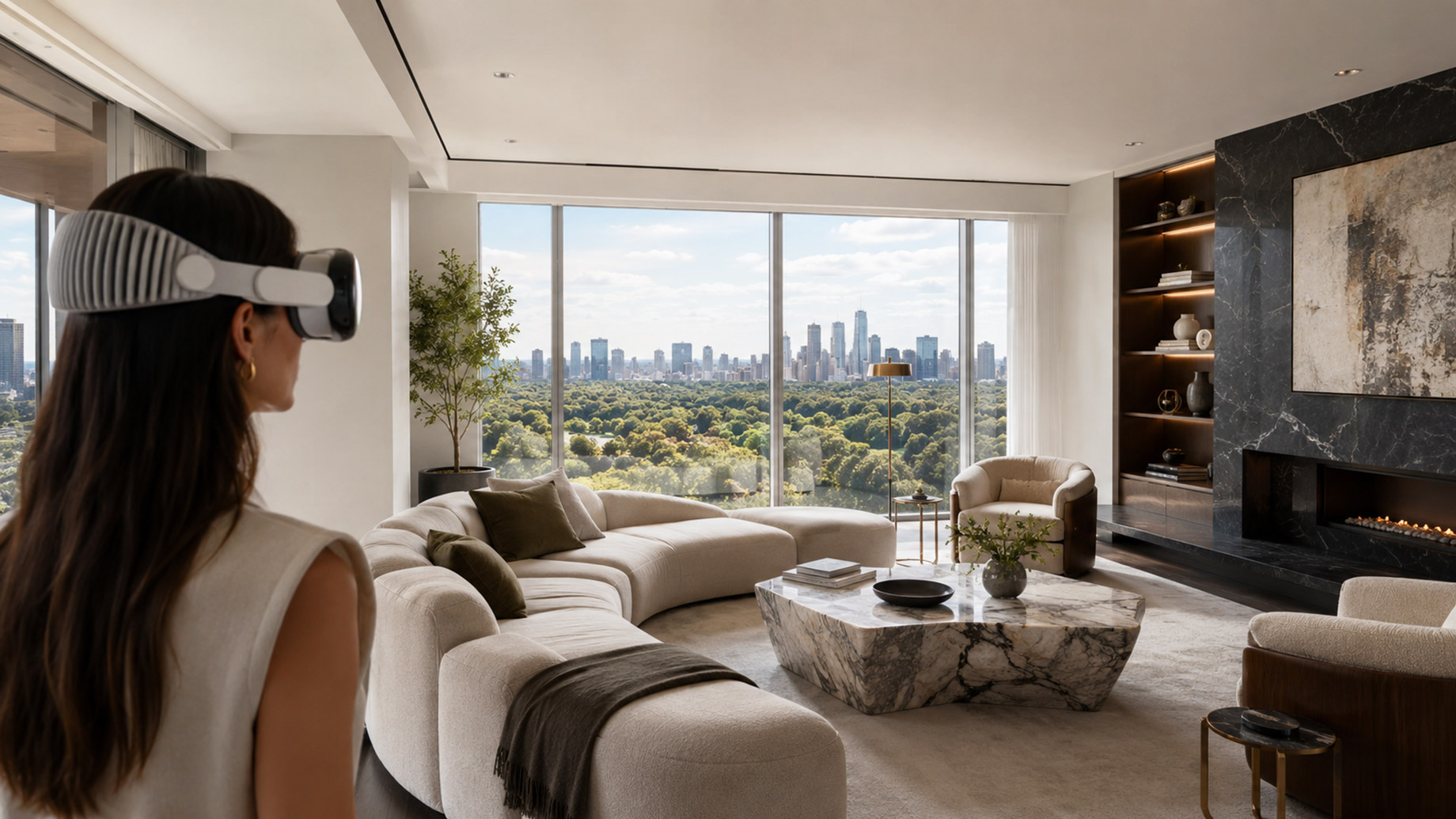
The luxury real estate market is undergoing a quiet revolution. As property values in premier markets continue to climb, sellers and agents are turning to advanced AI-powered visualization tools to present homes at their absolute best — without the six-figure price tag of traditional staging.
A growing number of AI-driven home design platforms now allow real estate professionals and homeowners to reimagine interiors with photorealistic renderings in minutes rather than weeks — and the results are reshaping how properties are marketed at every price point.
The Problem with Traditional Staging
For decades, luxury home staging has followed the same playbook: hire a designer, source furniture from rental warehouses, and spend anywhere from $20,000 to $150,000 transforming a property for showings. The process typically takes two to four weeks — time that translates directly into carrying costs for sellers sitting on multi-million-dollar listings.
Virtual staging emerged as a lower-cost alternative, but early solutions often looked artificial. Flat furniture overlays on empty rooms rarely convinced sophisticated buyers accustomed to walking through meticulously curated spaces.
The latest generation of AI tools has changed the equation entirely.
AI-Powered Design: From Concept to Photorealism
Today’s leading platforms use advanced image generation models to produce interior design visualizations that are nearly indistinguishable from professional photography. Rather than pasting generic furniture into a room, these tools analyze the existing space — its lighting, proportions, architectural details — and generate cohesive design concepts that feel intentional and lived-in.
For real estate professionals, the practical advantages are significant. A single property can be presented in multiple design styles — mid-century modern, coastal contemporary, minimalist Scandinavian — allowing agents to tailor marketing materials to different buyer demographics. What once required multiple staging rounds and tens of thousands of dollars can now be accomplished in an afternoon.
“We’ve seen agents use AI-generated room concepts directly in listing presentations,” said one Los Angeles-based luxury broker who asked not to be named. “Buyers respond to spaces that feel complete. Even when they know a home is vacant, seeing what it could look like makes the emotional connection happen faster.”
Beyond Staging: Design Inspiration at Scale
The applications extend well beyond individual listings. Real estate developers marketing pre-construction units are using AI visualization to produce hundreds of interior variations for model suites, helping prospective buyers envision personalized living spaces before a single wall is painted.
Online design idea galleries now showcase thousands of AI-generated room concepts — from bold accent walls and statement lighting to complete room transformations across dozens of style categories. For agents building listing content or homeowners planning renovations ahead of a sale, this kind of curated visual library has become an indispensable reference.
Interior designers, too, are incorporating AI tools into their client workflows. Rather than spending hours assembling mood boards from scattered sources, designers can generate multiple room concepts quickly, refine them with client feedback, and arrive at a final direction in a fraction of the traditional timeline.
The Market Impact
The numbers suggest the industry is paying attention. According to the National Association of Realtors, staged homes sell 73% faster on average than non-staged properties, and the rise of AI-powered alternatives is making staging accessible to a far broader segment of the market.
In luxury markets like Dubai, Miami, Los Angeles, and London — where presentation can make or break a sale — the competitive advantage of high-quality visualization is especially pronounced. Properties marketed with professional-grade imagery consistently attract more qualified showings and, in many cases, higher offers.
What Comes Next
As AI visualization technology continues to improve, the line between virtual and physical staging will blur further. Early adopters in the real estate industry are already exploring augmented reality integrations, where buyers can walk through a vacant property and see AI-generated furnishings overlaid in real time through their phones.
For sellers and agents looking to stay ahead, the tools are already here. AI-powered interior design visualization offers the most accessible entry point for elevating property marketing without the overhead of traditional staging. The question is no longer whether AI will reshape how luxury properties are presented — it’s how quickly the rest of the industry will catch up.
