Southern California is rarely one trip. The distance from the high desert of Joshua Tree to the harbor towns of San Diego covers more cultural ground than most states fit into a full week of travel.
For first-time visitors planning beyond Los Angeles, a quick map of the regions helps decisions land cleanly. Each town has its own season, its own pace, and its own reason to visit.
The Low Desert: Palm Springs and the Coachella Valley
The Coachella Valley sits about two hours east of Los Angeles. Palm Springs is the anchor town, but Palm Desert, La Quinta, Indian Wells, and Rancho Mirage each carry distinct identities.
Palm Springs leans creative, with mid-century architecture, design weekends, and a strong food scene. Palm Desert is broader, with shopping and golf as backbone. La Quinta is quieter and resort-focused. Indian Wells and Rancho Mirage skew toward tennis tournaments and longer stays.
Travelers researching destinations across Southern California often start with the Coachella Valley because the choice of town within the valley already shapes the kind of week they will have.
The High Desert: Joshua Tree and Yucca Valley
An hour northeast of Palm Springs, the high desert opens around Joshua Tree National Park. The park itself is the obvious draw, but the towns at its edge, especially Joshua Tree, Yucca Valley, and Pioneertown, have grown into a creative outpost.
Architecture leans cabin and modernist; the food scene is small but punching above its weight. Stargazing is one of the strongest in the region thanks to the relative absence of urban light. Spring and fall are the optimal windows; summer is genuinely hot, even compared to the low desert.
The Inland Mountains: Big Bear and Idyllwild
Big Bear and Idyllwild sit in the San Bernardino and San Jacinto mountains, both within a few hours of Los Angeles. They offer an entirely different climate from the coast or the desert.
Big Bear is the four-season town: lake activities in summer, ski resorts in winter, hiking in spring and fall. Idyllwild is smaller, quieter, and focused around climbing, hiking, and an unhurried main street.
Both towns are useful palate cleansers between desert and coastal stretches of a longer trip. Cabin culture is strong in both, and the temperature drop alone is sometimes the entire reason to go.
The Coast: From Malibu to San Diego
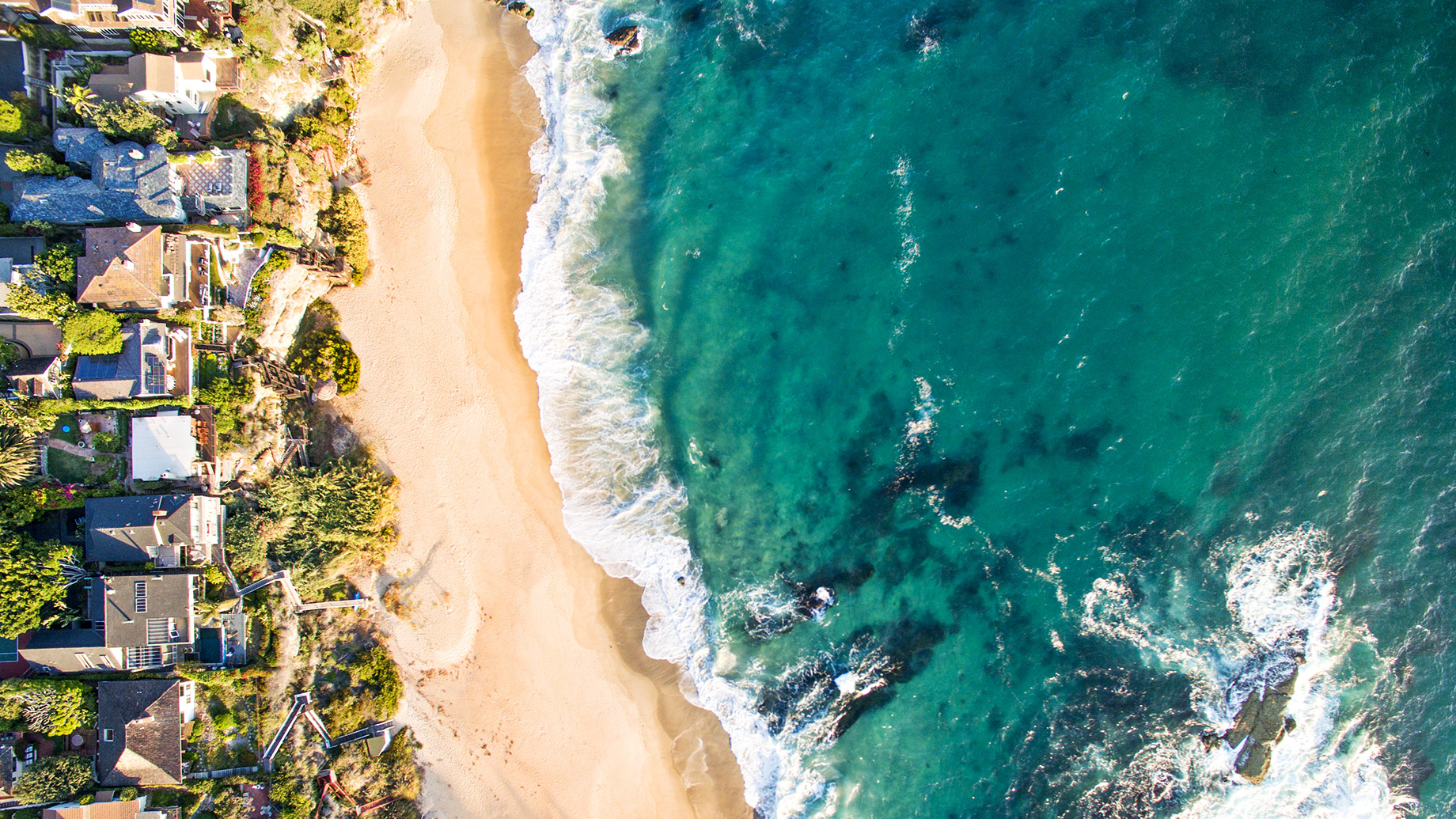
The coastline below Los Angeles unfolds through several distinct towns: Laguna Beach, Dana Point, San Clemente, Carlsbad, Encinitas, Del Mar, and into the broader San Diego region. Each leans coastal but in different ways.
Laguna and Dana Point are quieter and more residential. San Clemente and Carlsbad are the surf-and-family heartland. Encinitas and Del Mar bring a more relaxed, less polished feel. La Jolla, north of San Diego proper, anchors the higher-end end of the coast.
Beach access, walkable downtowns, and clear ocean water are common across all of them. The choice between towns is mostly about pace and the kind of day you want to repeat for a week.
Building a One-Week or Two-Week Itinerary
A useful starting frame: pick two regions for a one-week trip, three for two weeks. Combining desert with coast is a common and rewarding pairing because the contrast is so sharp.
For a one-week trip, two home bases of three to four nights each works well. The drive between desert and coast is usually two to three hours, which is a manageable midday transition with a stop for lunch.
For two-week trips, adding a mountain leg gives the journey real range. Big Bear or Idyllwild between the desert and coastal portions changes both temperature and altitude meaningfully, and most travelers find the variety reignites the trip.
Distances on the map are deceptively short. Traffic between Los Angeles and the desert can stretch a two-hour drive into three; the same applies leaving Los Angeles for the coast on weekends. Driving in the late morning or early afternoon usually clears more easily than rush hours.
Cell coverage is excellent everywhere on the coast and in the Coachella Valley. It thins in stretches of the high desert and parts of Joshua Tree National Park. Downloaded offline maps are worth the two-minute setup before any leg.
