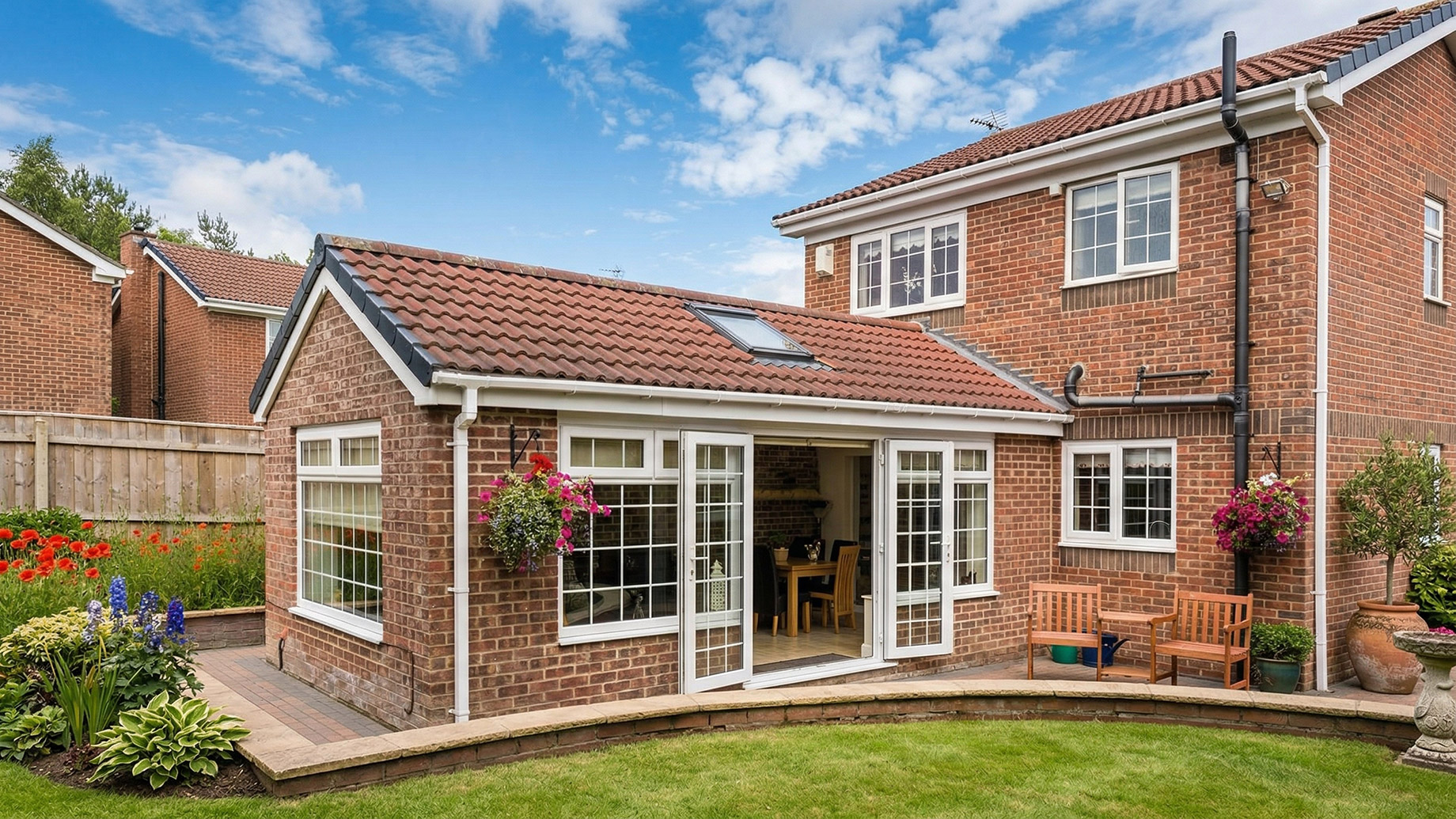
Flat roofs on residential properties have a reputation. Not a good one. Ask any surveyor or building inspector and they will tell you flat roofs cause more headaches than almost any other structural element. Water pooling, membrane failures, insulation problems, damp penetrating into living spaces. The list goes on.
Converting a flat roof to a pitched one fixes most of these issues permanently. The challenge has always been finding materials light enough to work on existing structures without major reinforcement. That changed when low pitch roof tiles made from lightweight steel entered the market. These products install at angles as shallow as ten degrees which opens up possibilities that traditional tiles simply cannot match.
This article breaks down what actually happens during a flat to pitch conversion and why more property owners are choosing this route in 2025.
Contents
- Why flat roofs fail so often
- The structural reality of adding a pitched roof
- Planning permission and what local authorities look for
- Installation process from start to finish
- Long term costs compared to flat roof repairs
- Who benefits most from this type of conversion
Why flat roofs fail so often
Flat roofs are not actually flat. They have a slight slope to encourage drainage but that slope is minimal. Problems start when drainage gets blocked or when the waterproof membrane develops even tiny punctures.
Water finds a way in. Always does. Once moisture gets beneath the surface it sits there causing rot in timber decking or corrosion in metal structures. By the time you notice damp patches on the ceiling inside the damage has usually spread further than expected.
Most flat roofs need recoating or resealing every ten to fifteen years. Some need attention more frequently depending on the original installation quality and local weather conditions. Each repair costs money and disrupts your life. Eventually the maths stops making sense and replacement becomes the smarter option.
The structural reality of adding a pitched roof
Here is where things get interesting from an engineering perspective. Traditional pitched roofs use heavy materials. Slate weighs around 30kg per square metre. Concrete tiles can exceed 40kg. Put that kind of load on a structure designed for a lightweight flat roof and you have serious problems.
Building regulations require structures to support their roof loads safely. Adding tonnes of slate to a building that was never designed for it means expensive reinforcement work. Sometimes the foundations themselves need upgrading. Costs spiral quickly.
Lightweight steel tiles change this equation entirely. They weigh roughly 7kg per square metre. That is about one seventh the weight of traditional alternatives. Most existing structures can handle this additional load without any reinforcement at all.
The pitch angle matters too. Conventional tiles need steeper slopes to shed water properly. Minimum pitch for most concrete or clay tiles sits around 17.5 degrees. Steel tiles work effectively at just ten degrees. A lower pitch means less height added to the building which simplifies planning permission and keeps the visual impact minimal.

Planning permission and what local authorities look for
You will likely need planning permission for a flat to pitch conversion. The new roof changes the building height and external appearance. Both factors trigger planning requirements in most cases.
Good news though. Low pitch conversions tend to get approved more easily than high pitch designs. Planning officers worry about buildings looking out of place or overshadowing neighbours. A subtle ten or twelve degree pitch raises far fewer concerns than a steep traditional roof.
The government planning portal provides guidance on permitted development rights and when full applications become necessary. Every local authority has slightly different interpretations so checking with yours early saves time and frustration later.
Height increases under 150mm at the highest point sometimes qualify for permitted development. Worth investigating before assuming you need a full application.
Installation process from start to finish
A typical flat to pitch conversion follows a predictable sequence. First the existing flat roof covering gets removed. Contractors then build a timber frame to create the pitched structure. This frame sits on top of the existing walls.
Insulation goes in next. Modern building regulations require good thermal performance so this stage matters for both comfort and compliance. Then comes a breathable membrane followed by battens and finally the tiles themselves.
Steel tiles arrive as pressed panels rather than individual pieces. Each panel covers a larger area than single traditional tiles which speeds up installation significantly. Interlocking edges mean better weather resistance too since there are fewer joints where water can penetrate.
Most domestic conversions complete within three to five days depending on the roof size and complexity. Larger commercial projects take longer but still finish faster than equivalent work using heavier materials.
Long term costs compared to flat roof repairs
Run the numbers over twenty years and the conversion route often works out cheaper than repeated flat roof repairs.
A typical flat roof repair costs between 500 and 2000 pounds depending on the damage extent. Assume you need work every five years and that adds up to potentially 8000 pounds over two decades. Meanwhile the flat roof continues deteriorating, the underlying structure takes damage, and your property value suffers.
A full conversion costs more upfront. Prices vary by size and specification but somewhere between 4000 and 10000 pounds covers most domestic situations. After that you have a roof system guaranteed for forty years that needs minimal maintenance. No more emergency callouts when storms blow through. No more worrying about winter weather causing leaks.
The insulation improvements bring ongoing savings too. Better thermal performance means lower heating bills every winter. Some homeowners report noticeably reduced energy costs within the first year.
Who benefits most from this type of conversion
Housing associations and local councils have embraced this approach for their building stock. Tower blocks and low rise developments built in the 1960s and 1970s frequently had flat roofs that have caused problems for decades. Converting to pitched systems resolves persistent maintenance issues while improving building appearance and resident comfort.
Individual homeowners with garages, extensions, or older flat roofed properties also benefit. The conversion adds value while solving practical problems.
Commercial buildings including offices, retail units, and small industrial properties find the same advantages apply. Less maintenance, better insulation, longer lifespan.
If you want to understand more about how these conversions work and what options exist for your specific situation take a look at www.metrotile.co.uk
