Guests expect more than basic cable when they enter a hotel room. You need an interactive TV solution that delivers streaming access, simple navigation, and direct links to your services. The right system turns the in-room screen into a central hub for entertainment, information, and control.
You should look for features like streaming app access, screen casting, room control integration, personalized guest messaging, remote content management, and support for branding and hotel services. These tools let you offer on-demand content, promote amenities, and manage updates across every room from one platform.
When you choose the right features, you improve the guest experience while also making daily operations easier. From smart room controls to system integration and digital signage options, each feature plays a role in how you engage guests and manage your property.
Core Must-Have Features for Interactive TV Solutions in Hotels
Your hotel TV should do more than show live channels. It should greet guests by name, stream their content without risk, and connect to room controls in a simple and secure way.
Personalized Content and Guest Greetings
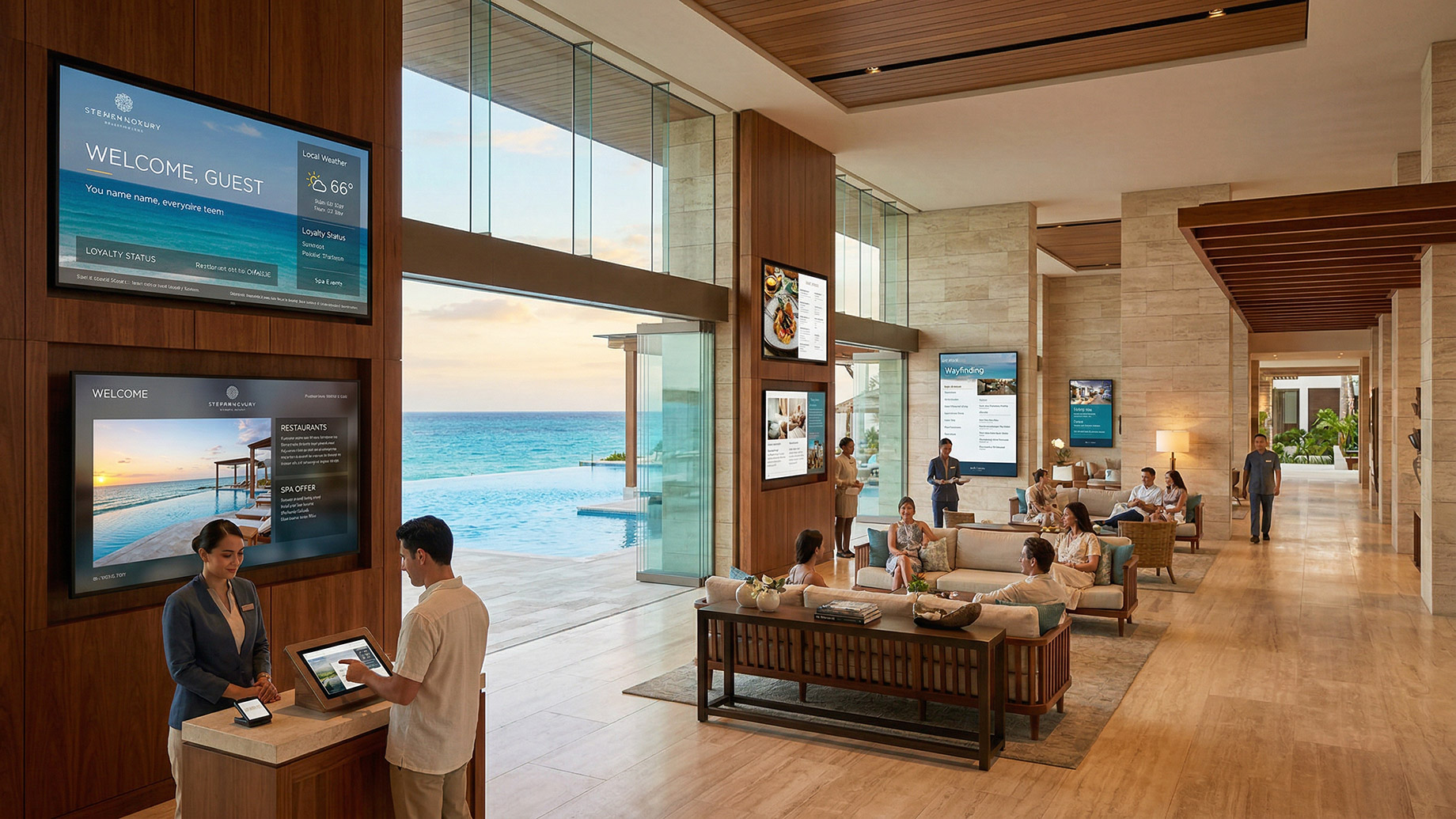
You should use personalized content to make each stay feel organized and relevant. Your hotel TV can display personalized welcome messages that greet guests by name at check-in. This feature confirms that the room is ready and linked to their reservation.
Go beyond a name on the screen. Show stay details, Wi‑Fi instructions, and loyalty status in a clear layout. Many modern hospitality TV platforms also promote on-site services, dining hours, and spa offers based on guest profiles.
Personalized streaming and recommendations also improve in-room entertainment. For example, your system can highlight language options or regional content that match the guest’s profile. Hotel TV systems support remote content updates, so you can adjust promotions or branding across all rooms at once.
Keep the interface simple. Large icons, clear menus, and limited steps reduce confusion and service calls.
Streaming Services and Device Casting
Guests expect the same streaming access they use at home. Your hospitality TV must support secure access to popular streaming apps and device casting.
Built-in apps allow direct login on the TV. However, casting solutions such as Google Cast often provide a better experience. Guests stream content from their own devices without entering passwords on a shared screen.
A strong hotel TV system should:
- Isolate each room’s network traffic
- Automatically clear login data at checkout
- Support both Android and iOS devices
- Deliver stable HD or 4K playback
Solutions from companies like Zafiro and Allbridge Entertainment focus on secure casting and easy connection steps. Clear on-screen instructions matter. If guests struggle to connect, they will call the front desk.
Reliable streaming and casting now define modern in-room entertainment. Without them, your hotel TV will feel outdated.
Smart Room Controls Integration
Your hotel interactive TV solution should act as a control hub for the guest room. When connected to your property management system and building controls, the TV becomes more than entertainment.
You can allow guests to adjust:
- Lighting levels
- Room temperature
- Curtains or blinds
- Do-not-disturb status
This integration reduces the need for separate wall panels. It also creates a cleaner room design.
Hotel TV systems that connect to smart room platforms can display real-time energy use or housekeeping status. When a guest checks out, the system can reset settings automatically. This saves staff time and supports energy control.
Keep the control screen simple. Use clear labels and limit options to what guests need. A well-designed hospitality TV interface makes room management fast and easy.
Smart Room Automation and Control Features
Smart room automation turns your in-room TV into a central control point for comfort, access, and energy use. You give guests direct control over lighting, temperature, entry, and ambiance from one simple interface.
Lighting and Smart Thermostat Integration
You can connect smart lighting and smart thermostats directly to the interactive TV. This setup lets guests adjust brightness, color temperature, and room temperature without leaving the bed.
Automated lighting scenes, such as Relax, Work, or Sleep, make control simple. Guests tap one option, and the system adjusts lights and temperature at the same time. This improves comfort and reduces confusion.
Smart thermostats also support smart energy management. When sensors detect that the room is empty, the system can lower heating or cooling and turn off unused lights.
When guests return, the room restores their preferred settings. This balance between comfort and efficiency lowers energy costs while keeping control in the guest’s hands.
For hotels, integration with the property management system allows settings to reset at checkout. This keeps operations consistent and reduces manual staff work.
Keyless Entry and Smart Locks
You can link smart locks and keyless entry systems to the TV interface and mobile devices. Guests use a digital key on their phone, a QR code, or a secure PIN to unlock their room.
This reduces the need for physical key cards, which often get lost or damaged. It also shortens front desk lines during busy check-in periods.
Inside the room, the TV can display the door status, such as locked or unlocked. Some systems allow guests to enable privacy mode or request housekeeping through the screen.
Smart locks also improve security. Access logs track entry times, and permissions expire automatically at checkout. Staff can issue or revoke access in real time.
These smart room controls create a safer and more efficient experience while lowering operational friction.
Smart Mirrors and Room Ambiance
Smart mirrors add another layer of function to the smart hotel room. These mirrors can display weather, time, news, or hotel messages while guests get ready.
When connected to the TV system, the mirror can sync with lighting and temperature settings. For example, morning mode may increase brightness and adjust the thermostat for comfort.
You can also link automated lighting with window shades and entertainment settings to create full ambiance control. Guests choose preset scenes such as Dining, Movie Night, or Wake Up.
This level of control gives guests a personalized environment without complex steps. At the same time, centralized management allows you to monitor usage and maintain efficient energy performance across all rooms.
Integration with Hotel Systems and Services
Your interactive TV should connect directly to your core hotel systems. Strong integration lets you automate guest data, deliver real-time services, and reduce manual work for your team.
Property Management System (PMS) Integration
PMS integration links your interactive TV to live guest data. The system can display the guest’s name, stay dates, and language preferences as soon as they check in.
You can sync room status, billing details, and service requests in real time. When a guest orders a movie or requests late checkout, the charge posts directly to the folio in your PMS. This reduces billing errors and removes the need for manual entry.
Key benefits include:
- Automatic guest personalization at check-in
- Real-time folio updates for purchases and services
- Accurate room status updates for housekeeping
- Streamlined check-out from the TV screen
You also gain better reporting. The TV system can send usage data back to your PMS or reporting tools, helping you track service demand and guest preferences without extra admin work.
Digital Concierge and Interactive Hotel Services
A built-in digital concierge turns the TV into a service hub. Guests can access hotel information, dining menus, spa hours, and local recommendations without calling the front desk.
You can offer interactive hotel services such as:
- Room service ordering
- Housekeeping requests
- Spa and restaurant bookings
- Maintenance reporting
- Express check-out
Each request routes directly to the correct department. This cuts phone traffic and speeds up response times.
You can also promote on-site outlets and special offers through targeted on-screen messages. For example, the system can highlight happy hour times or spa discounts based on the day of stay.
When your interactive TV connects fully with hotel systems, you create a smooth, trackable service flow that supports both guest convenience and operational control.
High-Definition Display and Advanced Entertainment
Your guests expect sharp picture quality and easy access to the content they watch at home. A strong interactive TV platform combines high-definition display technology with flexible entertainment options that support both live channels and on-demand viewing.
High-Definition and 4K Displays
You need high-definition display standards across all hotel TVs to meet guest expectations. Full HD (1080p) should be the minimum, and 4K displays add sharper detail, better color, and improved brightness on larger screens.
Clear picture quality matters most in rooms with 50-inch screens or larger. Low resolution on large displays makes images look soft and pixelated. A 4K-ready system also protects your investment as more content shifts to ultra-high definition.
Your hospitality TV solutions should support:
- 1080p and 4K output
- HDR compatibility where possible
- Commercial-grade panels built for long daily use
- Wide viewing angles for better visibility from beds and seating areas
Commercial hotel TVs differ from consumer models. They allow remote management, locked settings, and system integration with your property network. This control keeps picture settings consistent and reduces service calls.
Diverse Programming and On-Demand Content
Picture quality alone does not satisfy guests. You must offer diverse programming and flexible viewing options.
Modern hotel TV systems should support:
- Live local and international channels
- Internet-based IPTV delivery
- On-demand movies and series
- Streaming app access or secure casting
IPTV systems help you avoid the limits of traditional cable or satellite. You can expand channel lineups, add language-specific content, and update packages without major hardware changes.
On-demand libraries give guests control over what they watch and when they watch it. Interactive TV platforms can also integrate hotel services, such as room service ordering or billing review, directly on the screen.
When your hospitality TV solutions combine high-definition display quality with broad content access, you match the viewing experience guests expect from home while keeping control at the property level.
Operational Benefits and Remote Management
An interactive TV solution should reduce daily workload and give you direct control over in-room technology. Strong remote tools and energy controls help you cut downtime, lower costs, and manage rooms without sending staff on-site.
Remote Troubleshooting and Updates
You need the ability to manage every in-room TV from a central dashboard. A modern system lets you monitor device status, push updates, and fix common issues without entering the room.
Remote troubleshooting should include:
- Real-time device health monitoring
- Remote reboot and reset functions
- Software and firmware updates over the network
- Channel and app configuration from one location
When a guest reports a problem, your team can check the device online, restart it, or reinstall an app in minutes. This reduces room visits and shortens service time.
Centralized control also keeps content consistent. You can update welcome messages, promotions, and channel lineups across hundreds of rooms at once. This lowers labor costs and improves response speed during peak periods.
Smart Energy Management and Sustainability
An interactive TV system can support smart energy management by linking with your property management system and room controls. When a room is vacant, the TV can switch to low-power mode or turn off automatically.
You can set rules based on occupancy status, time of day, or guest activity. For example:
- Power down screens when guests check out
- Reduce screen brightness during idle periods
- Disable non-essential features in unoccupied rooms
These controls cut electricity use without affecting guest comfort.
Energy dashboards also give you clear data on usage by room, floor, or building. You can track trends and adjust settings to reduce waste. This helps you control utility costs and support your sustainability goals with measurable results.
Digital Signage and Branding Opportunities
A strong interactive TV solution lets you control what guests see on every screen. You can use digital signage to support your brand, guide guests, and drive measurable revenue.
In-Room and Lobby Digital Signage
You can turn every TV into a branded communication channel. In-room screens should show your logo, brand colors, and welcome messages that match your website and printed materials. This keeps your identity consistent across all guest touchpoints.
Use digital signage in guest rooms to share key details such as:
- Wi-Fi instructions
- Room service menus
- Spa and dining hours
- Local area guides
- Emergency information
Lobby screens serve a different purpose. They should focus on wayfinding, event schedules, and real-time updates. For example, you can display conference room assignments, meeting times, or weather alerts.
Choose software with a user-friendly dashboard. Your team should update content quickly without technical skills. Cloud-based management also helps you control multiple screens across the property from one system.
When you align in-room and lobby displays with your brand standards, you create a clear and consistent guest experience.
Promotional Content and Revenue Generation
Interactive TV should help you increase revenue, not just share information. You can use digital signage to promote paid services directly on guest screens.
Focus on high-margin offers such as:
- Room upgrades
- Late check-out
- Spa packages
- Restaurant specials
- Local partner tours
Present offers with clear pricing and simple call-to-action buttons. Guests should confirm purchases with a few clicks using the remote or mobile device. This direct upsell approach often performs better than printed flyers.
You can also sell advertising space to local businesses. Restaurants, attractions, and transport providers may pay to appear on lobby or in-room screens. This creates a new B2B revenue stream and can elevate B2B partnerships within your local market.
Track engagement data such as clicks, views, and conversions. Use this data to refine your offers and improve results over time.
Conclusion
You need an interactive TV solution that blends entertainment, service access, and secure management into one clear system. When you offer features like content casting, on-demand services, room controls, and personalized messaging, you give guests more control over their stay and reduce pressure on your staff. These tools also let you manage content remotely, promote hotel services, and protect guest data, thus improving both efficiency and trust.
As guest expectations rise, you must choose a platform that integrates with your property systems and supports future updates. As a result, you create a stay that feels simple, connected, and tailored to each guest while keeping your operations organized and cost-effective.
