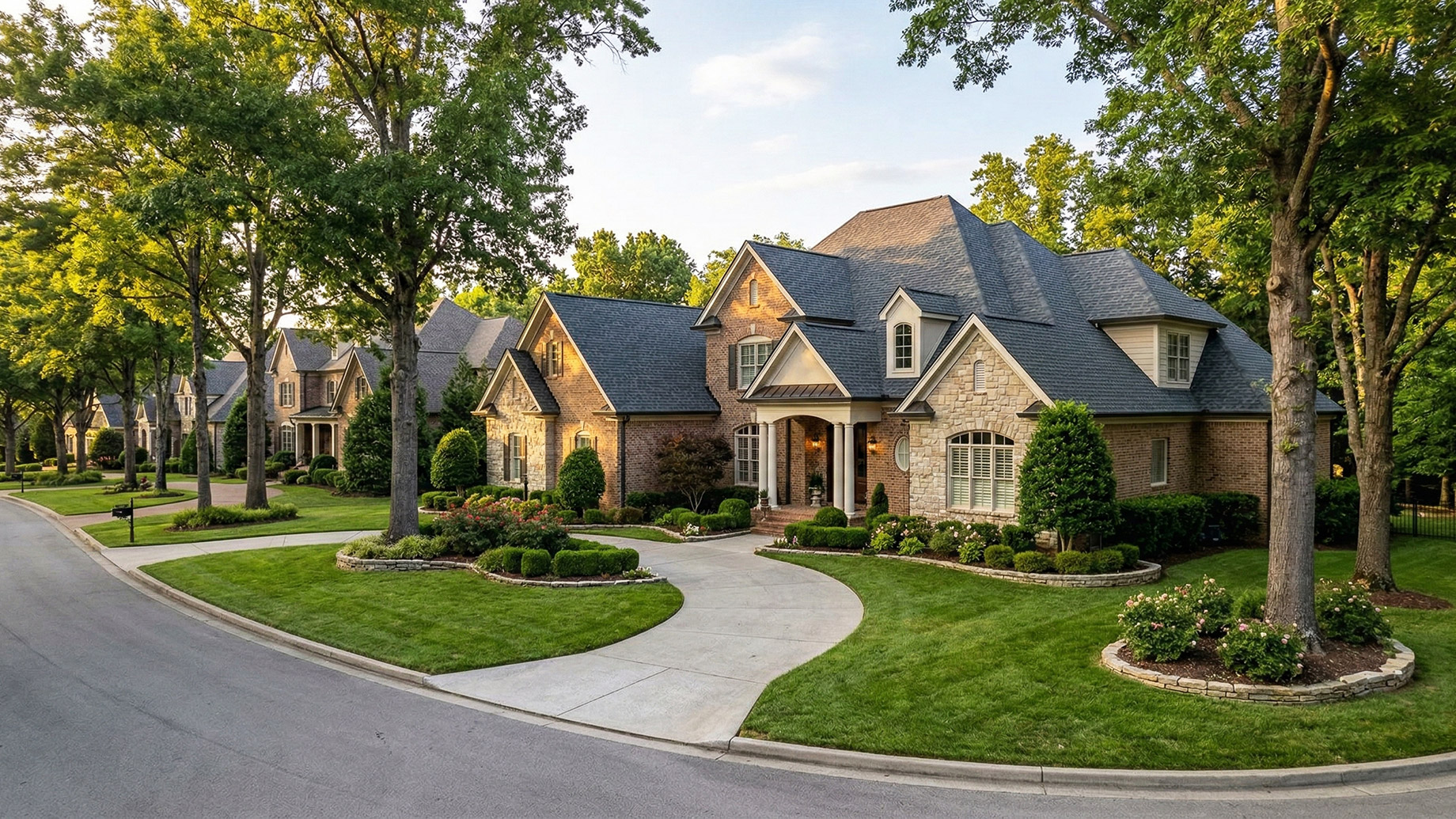
Property value in established neighborhoods develops through continuity. Years of ownership patterns, maintenance decisions, structural upgrades, and community investment create pricing stability that cannot be replicated overnight. In these areas, value drives durability and care. Buyers are not simply evaluating finishes. They are assessing the condition of systems, the consistency of surrounding homes, and the long-term trajectory of the neighborhood itself.
Franklin, TN, offers a clear illustration of this dynamic. Many of its established neighborhoods feature homes built across different decades, each now sitting at varying points in its maintenance cycle. Mature landscaping frames brick facades. Streets display architectural cohesion. School zoning history supports steady demand. Buyers walking these neighborhoods often arrive informed. They research roof age, mechanical updates, and prior renovation records before making decisions. In markets like this, value is shaped by structural integrity and documented upkeep as much as location.
Understanding property value here requires attention to detail. Age alone does not reduce pricing strength. Neglect does. Care alone does not inflate value. Consistency does. Established neighborhoods reward thoughtful ownership and measured investment over time.
Deferred Maintenance Quietly Reshapes Market Value
Structural aging influences perception quickly. Roofing, in particular, carries weight in buyer evaluation because it represents both cost and protection. A roof nearing the end of its lifespan introduces immediate budgeting considerations. Buyers factor that into the offer price and negotiation strategy without hesitation.
Nowadays, it is common for buyers to review the cost of a roof replacement in Franklin TN while analyzing listings in mature subdivisions. Access to clear estimates from experienced roofing professionals gives both sellers and buyers an accurate financial context. Professional assessments clarify material lifespan, replacement scope, and installation standards. When expert help is involved early, pricing conversations become grounded in facts rather than assumptions. Homes with recently replaced roofs or documented inspections often experience smoother negotiations.
Deferred maintenance extends beyond roofing. Siding wear, aging gutters, foundation settling, and window deterioration influence the overall impression. Even if interior renovations are current, the exterior condition communicates long-term care.
Architectural Consistency Protects Pricing Power
Cohesion contributes to confidence. Streets lined with homes that share complementary roof pitches, material palettes, and scale create a unified visual environment. This alignment supports value retention because buyers recognize predictability.
In established neighborhoods, renovations that align with existing architectural tone tend to maintain pricing stability. Thoughtful updates to facades, window styles, and exterior materials reinforce neighborhood identity. Architectural continuity strengthens perception of long-term desirability.
School Zoning History Impacts Pricing Trends
School district performance becomes embedded in property value over time. Buyers researching established neighborhoods frequently examine enrollment patterns, rating histories, and district boundaries before evaluating interiors.
In areas with long-standing educational stability, demand remains steady. School zoning influences buyer urgency and supports consistent transaction volume. Established reputations contribute directly to sustained pricing strength.
Renovation Quality Varies Widely in Older Communities
Established neighborhoods often contain homes renovated at different points in time. Some properties have undergone comprehensive updates that include roofing, insulation, plumbing, and electrical systems. Others have received surface-level improvements while core systems remain original.
Buyers review renovation depth carefully. Documentation of permits, contractor records, and system replacements increases confidence. Quality workmanship and structural upgrades support higher valuations. Renovation transparency reduces uncertainty during inspection phases.
Lot Size and Mature Landscaping Carry Long-Term Premiums
Established neighborhoods frequently offer larger lots and developed landscaping. Mature trees provide shade and privacy. Root systems stabilize soil over time. Yard proportions reflect planning decisions from earlier development periods.
Lot size influences both livability and pricing potential. Larger parcels offer expansion flexibility and increased separation between homes. Landscaping maturity enhances visual appeal and reinforces neighborhood identity.
Neighborhood Reputation Develops Over Decades
Reputation in established neighborhoods forms gradually. It exhibits homeowner stability, consistent upkeep, and long-term occupancy patterns. Streets where homes remain in the same families for years often signal reliability to buyers entering the market.
Certain neighborhoods carry recognition that extends beyond listing descriptions. Buyers associate these areas with continuity and measured growth. This recognition influences pricing because perceived stability supports demand. Reputation becomes an asset that strengthens value over time.
Renovation Over-Improvement Can Distort Comparable Sales
Pricing in established neighborhoods often depends on realistic alignment with surrounding properties. Extensive luxury upgrades that significantly exceed neighborhood norms may not produce proportional resale value.
Comparable sales function best when improvements align with market expectations. Investing strategically in structural updates and cohesive design maintains balance. Overcapitalization can complicate appraisal processes and narrow the buyer pool. Thoughtful renovation planning supports steady value retention.
Historical Preservation Guidelines Can Affect Renovation Potential
Some established neighborhoods operate within preservation frameworks. Exterior changes may require approval. Material selections may be restricted. Design alterations may follow specific guidelines.
These standards protect neighborhood character and long-term cohesion. Buyers evaluating homes within preservation areas consider both the benefits and limitations. Stability in appearance contributes to consistent pricing patterns.
Energy Efficiency Gaps Affect Long-Term Costs
Older construction standards differ from current efficiency benchmarks. Insulation depth, window glazing, and roofing ventilation systems may require upgrades to meet modern expectations.
Buyers factor long-term operating costs into purchasing decisions. Documented improvements in insulation, roofing systems, and ventilation strengthen perceived durability. Efficiency enhancements contribute to sustainable ownership costs, which influence overall valuation.
Community Stability Reduces Volatility
Established neighborhoods often demonstrate lower turnover rates. Long-term ownership translates to resident satisfaction and neighborhood continuity. Stability influences transaction frequency and pricing trends.
Communities with steady occupancy patterns typically experience measured appreciation. Reduced volatility strengthens buyer confidence and supports predictable valuation movement over time.
Home Age Influences Financing and Insurance Costs
Property age affects lender and insurer evaluation processes. Older homes may require additional inspections or documentation regarding structural systems. Roof age, electrical updates, and plumbing condition influence underwriting assessments.
Homes with documented upgrades often receive smoother approval processes. Updated roofing systems, in particular, can positively affect insurance considerations. Proactive maintenance strengthens both financing pathways and overall property value perception.
Understanding property value in established neighborhoods requires attention to structure, continuity, and long-term care. Roof condition, renovation depth, architectural cohesion, school zoning, and community stability all shape valuation outcomes. Homes in such neighborhoods carry history. That history influences negotiation strength, buyer confidence, and long-term appreciation potential. Value grows through consistent maintenance and informed investment. Buyers and sellers who recognize these factors approach transactions with realistic expectations, strengthening outcomes on both sides.
