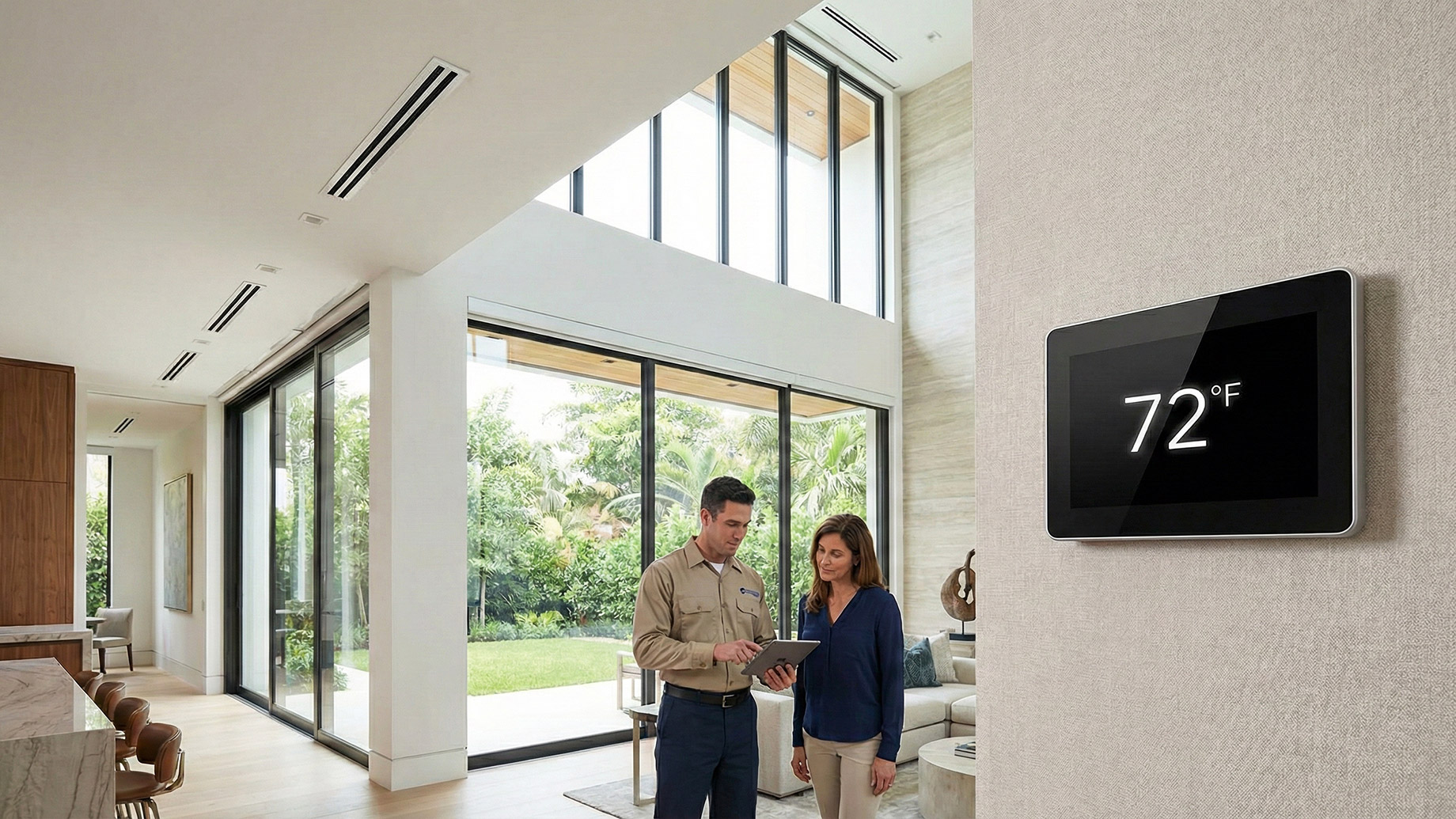
Big houses have weird temperature problems. Walk upstairs to your master bedroom in July and it feels like a sauna. Head down to the basement and you need a sweater. Your thermostat claims everything is fine at 72 degrees. Half your house would beg to differ.
Standard HVAC systems can’t handle homes over 3,000 square feet very well. Push past 5,000 and things get even messier. The equipment runs constantly but never delivers the comfort you’re paying for. Professional planning makes all the difference between systems that work and ones that leave you frustrated.
System Sizing and Zoning Requirements
Matching equipment size to your house takes more than looking at square footage on a chart. Every home has quirks that change the math.
Why Equipment Size Affects Performance
Good contractors run detailed calculations before recommending anything. They measure ceiling heights room by room. They count windows and note which way they face. A south-facing wall gets way more sun than a north-facing one. That changes your cooling needs by a lot.
Insulation makes a huge difference too. A 1980s house has different needs than one built in 2020. Even your roof color matters. Dark shingles absorb more heat. These calculations require real expertise, the kind developed over decades of handling complex residential installations like you’d find with experienced contractors such as Handy Bros.
Oversized equipment causes weird problems. The system blasts cold air for maybe three minutes, then shuts off. It does this all day long. Your house never feels right because the unit doesn’t run long enough to pull humidity out. You end up cold and clammy at the same time.
How Zoning Solves Multi-Room Challenges
Zoning divides your house into separate temperature areas. Each zone gets its own thermostat. Dampers in your ducts open and close to send air where it’s needed most.
Here’s how most luxury homes get divided up:
- Master suite stays cool at night while the rest of the house runs warmer
- Home office gets full climate control only during work hours
- Guest wing stays at basic settings until you have visitors
- Basement gets its own zone because it runs cooler naturally
- Sunrooms need separate control with all that glass letting in heat
A simple two-story house needs two zones minimum. Add a finished basement, bonus room, or home office and you’re looking at four zones. Really big homes sometimes need six or seven zones to keep everyone comfortable.
Design Integration and Aesthetic Considerations
Nobody drops a million dollars on a house just to have ugly vents everywhere. Standard rectangle floor registers look cheap. Big return grilles on your walls mess up the whole design. You have better options if you plan ahead.
Linear slot diffusers fit along ceiling beams or tuck into coffered edges. They’re only about two inches wide. Air flows out but you barely see them. Some people skip ceiling vents completely and go with radiant floors or under-floor distribution instead.
Noise will drive you nuts faster than bad temperatures. A loud compressor under your bedroom window destroys sleep. Variable speed units run much quieter than older single-speed models. Look for equipment rated under 60 decibels. That’s quieter than people talking.
Place condensers away from patios and bedroom windows. Hide air handlers in closets or the attic where you won’t hear them running. Vibration pads under the equipment stop noise from traveling through your floors.
Smart Controls and Energy Management
Thermostats got really smart in the last decade. The stuff they can do now seemed impossible ten years ago.
Advanced Thermostat Features
Learning models watch your routine for about a week. Then they start running things on their own. You wake up at 6:30 on weekdays, so the house warms up at 6:15. Sleep until 8:00 on weekends and it waits. Geofencing tracks your phone. Leave for work and temperatures adjust by themselves. You save money without lifting a finger.
Zone controls let you do things single-thermostat systems can’t touch. Guest rooms can sit at 76 degrees. Your office stays at 70. The living room floats around 73. Nobody has to compromise.
Variable Speed Technology Benefits
Old systems had two modes. Full blast or completely off. Variable speed equipment runs anywhere from 40% to 100% output instead. It adjusts based on what your house needs right this second.
Temperatures stay steadier this way. You burn less electricity too. The Department of Energy ran studies showing 20-40% savings on energy bills. That adds up fast when you’re cooling 5,000 square feet.
Some newer systems break down your usage by zone and time of day. You can spot exactly which areas waste the most energy and fix them.
Air Quality and Ventilation Standards
Getting the temperature right solves only half your comfort problems. Air quality affects how healthy you feel every day. Proper ventilation swaps stale indoor air for fresh outdoor air continuously.
Filter Ratings and Selection
MERV ratings go from 1 all the way to 16. Cheap fiberglass filters sit at MERV 1-4. They catch lint and that’s about it. Pleated filters reach MERV 8-11 and grab smaller stuff. HEPA filters hit MERV 13-16 by trapping 99.97% of particles.
Higher numbers mean cleaner air. They also make your system work harder pushing air through. Check that your equipment can handle HEPA filters before installing them.
Humidity and Ventilation Control
The Environmental Protection Agency recommends keeping humidity between 30% and 50% all year. Go higher and you risk getting mold. Drop lower and your hardwood floors start cracking.
Whole-home humidifiers pump moisture in during winter when furnaces dry everything out. Dehumidifiers yank it back out in summer. Both systems run on their own using sensors.
Heat recovery ventilators pull in fresh air without killing your energy bill. They use the stale air going out to warm up or cool down the fresh air coming in. New building codes require these in tight modern houses. You can’t count on air leaks for ventilation anymore.
Professional Installation and Ongoing Support
A $30,000 system fails hard if someone installs it wrong. Refrigerant needs precise amounts. Leaky ductwork wastes 20-30% of your conditioned air. Electrical work has to meet code requirements. Installation quality determines whether your expensive equipment performs the way it should or becomes a constant source of problems and disappointment.
Skilled techs follow detailed checklists when they install. They test everything twice before calling it done. Installation processes get refined over decades of working on complex residential projects where small mistakes create big problems, the kind of deep experience you find with established contractors. Safety controls get checked thoroughly. Thermostats get calibrated against accurate reference thermometers. The whole system goes through startup checks before anyone considers the job complete.
Protecting Your Investment
Warranties and service plans vary a ton between companies. Look for these pieces:
- Parts coverage usually runs five to ten years from the manufacturer
- Labor warranty costs extra but pays off when repairs get expensive
- Installation guarantees cover problems from bad workmanship
- Service plans bundle maintenance with faster response times
Maintenance twice a year keeps everything running smooth. Spring and fall visits catch issues early. Techs clean the coils, check refrigerant, and swap filters. Small fixes now beat major breakdowns later.
Choosing the Right System
Climate control in a luxury home runs $15,000 to $40,000 depending on size and features. Get three quotes at minimum. Check references and call them. Ask real questions about the contractor’s work.
Good installers answer everything without pushing you. They show load calculations and walk through the numbers. They explain equipment choices and efficiency ratings clearly. Bad ones want same-day decisions and won’t give detailed proposals.
Quality systems last 15-20 years with regular care. Pick the right one and you won’t regret it.
