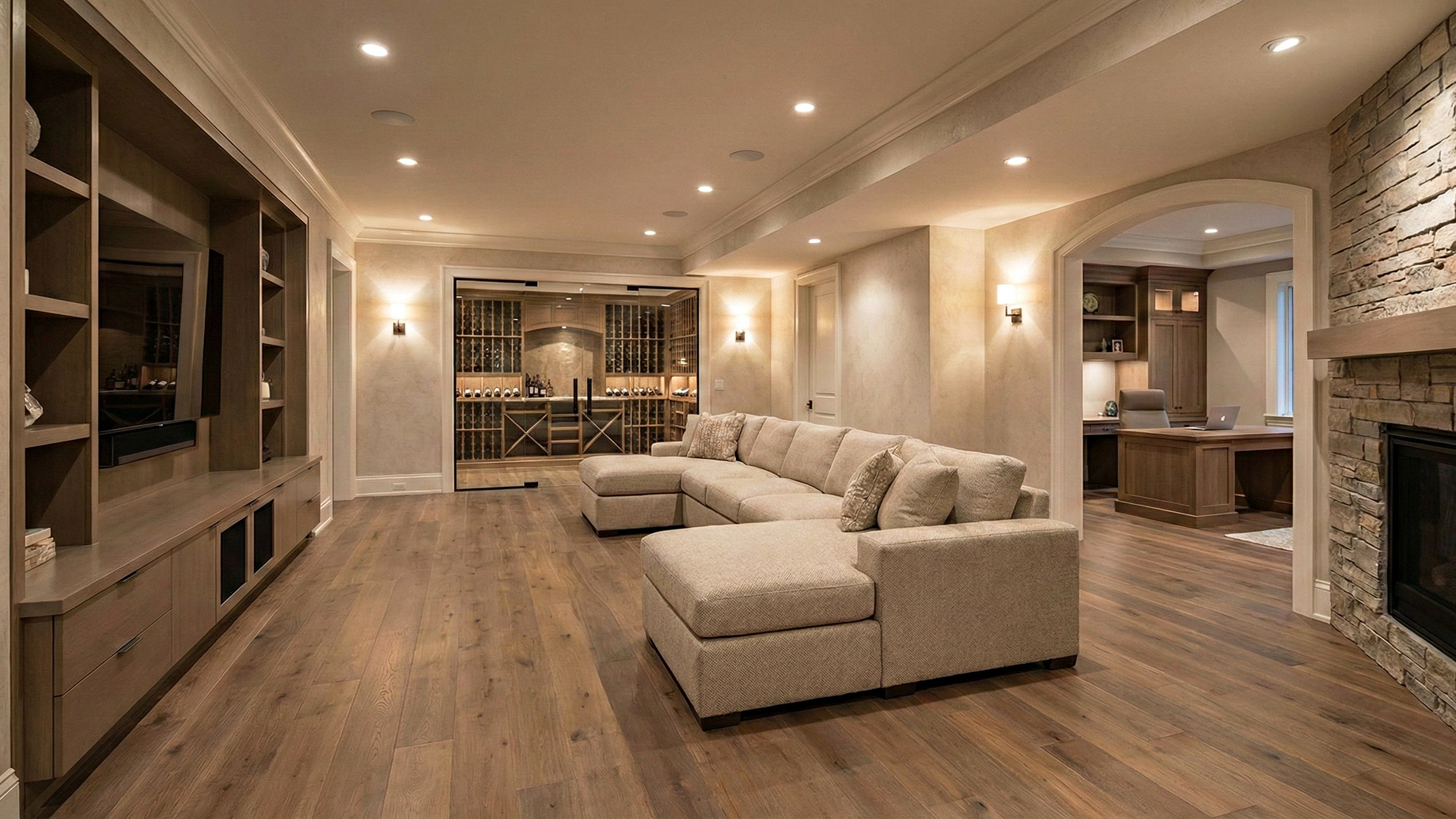
Many homeowners view the basement as a secondary zone meant for storage or utility. However, a luxury-focused renovation shifts that perspective. Quiet luxury in home design avoids flashy displays and instead focuses on high-quality materials, thoughtful layouts, and a cohesive atmosphere. When you approach a project with this mindset, you create a seamless extension of the upper floors rather than a disconnected subterranean room. Achieving this requires a move away from standard ‘finished basement’ tropes and a transition toward intentional, high-end living.
Establishing the Structural Foundation
A luxury space must feel solid and permanent. You cannot achieve a high-end feel if the room suffers from dampness or poor air quality. Before choosing paint colors or furniture, address the bones of the structure. Inspect the foundation walls for any signs of cracks or seepage. Even minor moisture problems can ruin expensive flooring and custom cabinetry over time.
Properly managing humidity levels is also essential for comfort. Install a dedicated HVAC system or integrate the basement into your existing smart home climate control to ensure the air feels as fresh as it does in the main living room. If you find evidence of past water damage, resolve the root cause through professional waterproofing. A luxury basement functions perfectly because the owner invested in the invisible details first.
Maximizing Volume and Natural Flow
The biggest challenge in basement design is often the ceiling height. Low ceilings can make a room feel cramped, which contradicts the feeling of luxury. If your structure allows, consider ‘digging out’ the floor to add height or tucking pipes and wires between joists to keep the ceiling flat and unobstructed. When you plan the floor plan, avoid creating a maze of small rooms. Open sight lines make the area feel expansive.
This is where professional basement remodeling services become invaluable. Experts help you navigate the complex electrical work and structural changes required to open up the space. A well-designed living space should flow naturally from the staircase into the main seating areas. Use architectural features like tray ceilings or subtle soffits to define different zones without using walls that block light.
Lighting and Material Selection
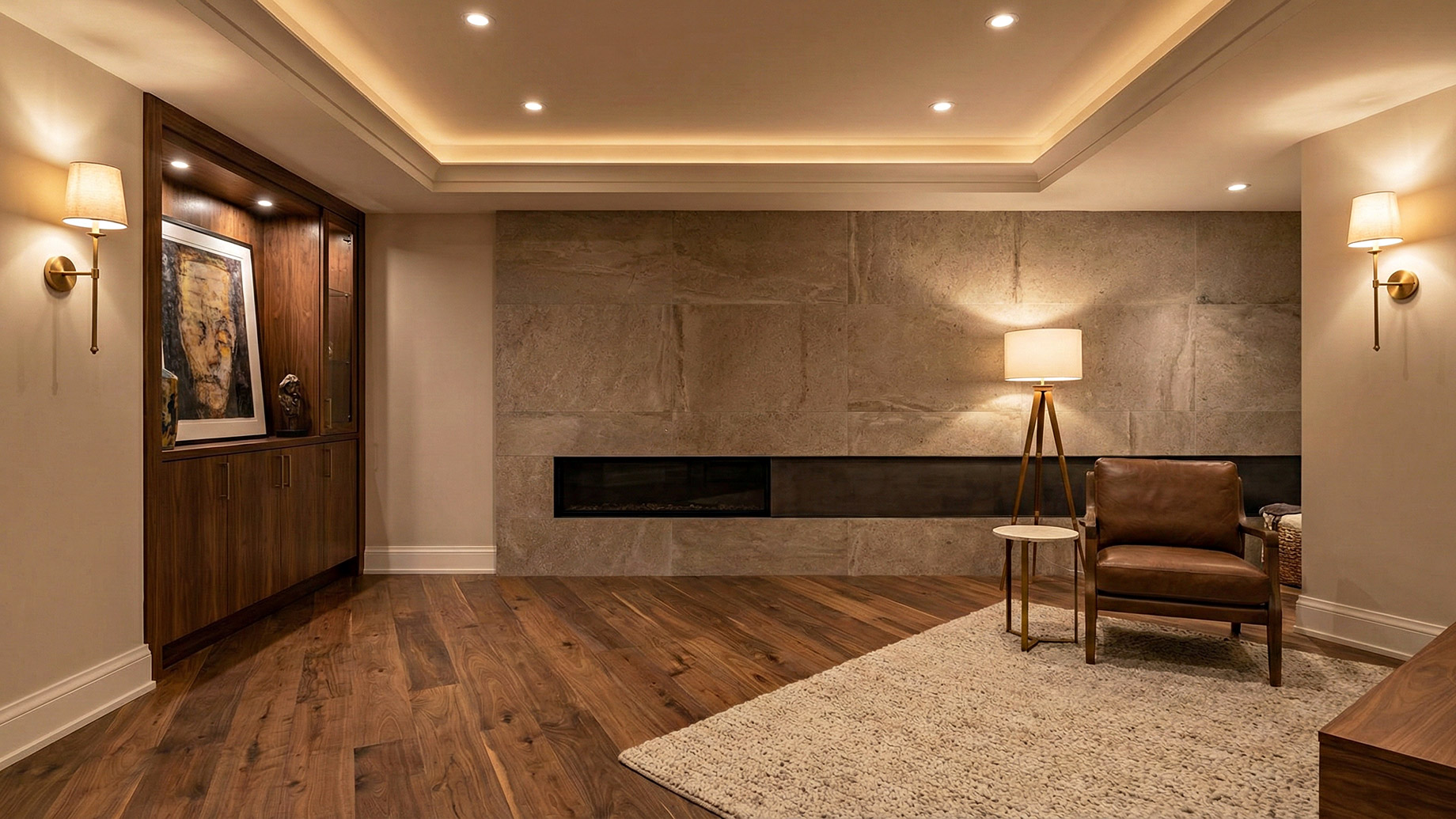
Lighting defines the mood of a basement. Relying solely on a few overhead fixtures creates harsh shadows. Instead, use a layered approach. Install recessed lights on dimmer switches to provide a clean, modern look. Supplement these with wall sconces or floor lamps to add warmth.
The materials you choose should mirror the quality of your home’s primary levels. Avoid cheap laminate or thin carpeting. Instead, opt for engineered hardwood, stone tile, or high-end luxury vinyl plank that mimics natural textures. These choices show an attention to detail that distinguishes a premium renovation from a basic one. If you include a guest bedroom, ensure the insulation in the walls provides adequate soundproofing to give visitors true privacy and quiet.
Tailoring the Space to Your Lifestyle
Quiet luxury means the room serves your specific needs perfectly through purposeful design. If you work from home, a dedicated home office requires more than just a desk and a chair. Position the workstation away from the furnace room or high-traffic stairs to minimize noise. Incorporate custom built-in shelving with integrated tech charging stations to keep surfaces clear of cord clutter. Ensure your desk placement accounts for the location of recessed lights to avoid screen glare, and prioritize an ergonomic layout that supports long hours of focus.
For those who enjoy cinema, a home theater provides an immersive experience without the visual clutter of bulky equipment. Calculate your seating distance based on the screen size; typically, you should sit roughly 1.5 times the diagonal width of the display for optimal viewing. Use acoustic wall panels upholstered in high-end fabrics to dampen sound and hide speakers within the walls.
The furniture in a multi-purpose family room should prioritize scale and utility. A large, high-quality sectional sofa serves as an inviting anchor, but you must measure the clearance around it to ensure a natural walking path of at least 36 inches. Avoid over-furnishing the area. Select a few statement pieces that offer clean lines and rich fabrics like wool or heavy linen.
Conclusion
A successful basement remodel adds more than just square footage to a property; it adds a new layer of sophistication. By focusing on structural integrity, light, and high-quality materials, you turn an overlooked area into a premier destination within the home. This level of refinement requires a departure from quick-fix renovations in favor of a long-term investment in quality. When you prioritize the hidden details and the flow of the space, the result is a basement that feels like a natural, luxurious part of your daily life.
