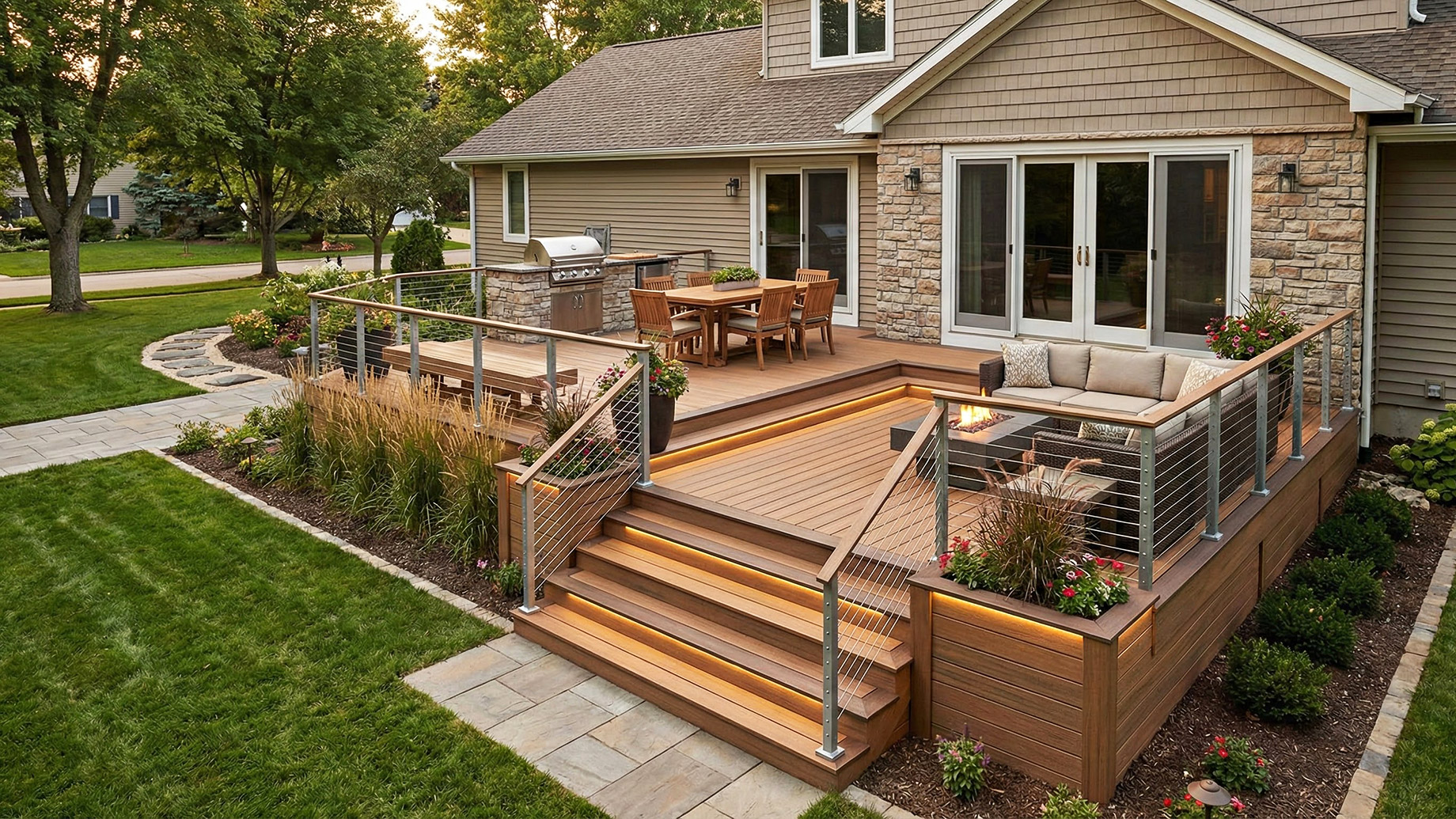
Outdoor living spaces have become one of the most desirable features for modern homeowners. Among them, a well-designed deck stands out as one of the most cost-effective ways to enhance both daily enjoyment and long-term property value. When done right, a deck feels like a natural extension of the home rather than an afterthought tacked onto the backyard.
However, not all decks add value equally. Poor layout choices, subpar materials, or rushed construction can turn what should be an asset into a maintenance burden. Homeowners who want strong resale value need to approach deck design strategically, with attention to function, durability, and aesthetics.
Why Decks Continue to Deliver Strong ROI
Deck projects consistently rank near the top of remodeling return-on-investment studies. One reason is simple: buyers emotionally connect with outdoor spaces. A thoughtfully designed deck helps prospective buyers imagine entertaining friends, relaxing after work, or spending time with family outdoors.
Unlike interior renovations that may reflect personal taste, decks tend to appeal broadly when designed with clean lines, neutral finishes, and practical features. This wide appeal helps homes sell faster and often at stronger price points.
Start With Purpose, Not Square Footage
One of the most common mistakes homeowners make is assuming bigger automatically means better. In reality, decks that are oversized or poorly placed can feel awkward and underutilized.
Instead, homeowners should start by defining how the space will be used:
- Casual family seating
- Outdoor dining
- Entertaining guests
- Relaxation and privacy
A deck that directly connects to a kitchen or dining area often provides the most functional value. Clear pathways, logical transitions, and proportional sizing matter far more than raw square footage.
Layout Choices That Improve Usability
Deck layout should complement the architecture of the home and the shape of the yard. Straightforward rectangular decks work well for many homes, while multi-level designs can add visual interest and solve grading challenges on sloped lots.
Key layout considerations include:
- Safe, well-positioned stairs
- Clear walking paths around furniture
- Proper spacing for grills and outdoor kitchens
- Defined zones for seating and dining
Decks that feel intuitive to navigate tend to be perceived as higher quality, even if buyers don’t consciously identify why.
Material Selection: Where Long-Term Value Is Won or Lost
Material choice has a major impact on both resale value and ongoing maintenance. While pressure-treated lumber remains common, many homeowners now look for materials that offer longevity and lower upkeep.
Popular options include:
- Pressure-treated wood: Affordable but requires regular staining and sealing.
- Composite decking: Higher upfront cost, but excellent resistance to moisture, insects, and fading.
- Hardwood decking: Visually striking and durable, though typically more expensive and maintenance-intensive.
Buyers increasingly favor materials that look good without demanding constant maintenance. Choosing the right decking material can significantly influence perceived value during resale.
Railings, Details, and Visual Appeal
Railings are more than safety features—they define the deck’s style. Modern railing systems using metal balusters, cable railings, or sleek composite designs can dramatically elevate a deck’s appearance.
Additional details that add perceived value include:
- Integrated lighting for stairs and walkways
- Built-in seating or planters
- Clean trim work and concealed fasteners
These finishing touches signal quality craftsmanship and thoughtful design, both of which resonate strongly with buyers.
The Importance of Structural Integrity
While aesthetics matter, structural quality is what protects a deck’s long-term value. Improper footings, poor framing, or inadequate ledger connections can lead to safety issues and failed inspections—red flags for buyers.
This is where professional construction becomes essential. Experienced contractors understand local building codes, soil conditions, and load requirements, ensuring decks are built to last.
Homeowners working with reputable custom deck builders in Central PA, such as those at RFO Contracting, benefit from expert planning, proper permitting, and craftsmanship that holds up over time. These factors often matter just as much as visual appeal during resale evaluations.
Maintenance Considerations Buyers Care About
Buyers don’t just look at how a deck looks today—they think about future upkeep. Decks that clearly require frequent staining, board replacement, or structural repairs can become negotiation points during a sale.
Designing with maintenance in mind includes:
- Choosing rot-resistant materials
- Ensuring proper drainage and ventilation
- Using corrosion-resistant fasteners
- Avoiding overly complex designs that are hard to maintain
Low-maintenance decks tend to attract a wider pool of buyers and reduce friction during inspections.
How a Deck Fits Into the Overall Property
A deck should feel integrated into the property, not disconnected from the rest of the yard. Landscaping, fencing, and outdoor lighting all influence how the deck is perceived.
Simple improvements—such as defined planting beds, privacy screens, or pathway lighting—can dramatically improve the overall presentation without major expense. Buyers evaluate outdoor spaces holistically, not in isolation.
Final Thoughts: Design for Living, Build for Value
The best decks strike a balance between livability and long-term value. They’re comfortable, visually appealing, and built with materials and techniques that stand the test of time.
By focusing on purposeful design, durable materials, and professional construction, homeowners can create outdoor spaces that enhance daily life while strengthening resale potential. A well-built deck isn’t just an upgrade—it’s an investment that continues to pay dividends long after construction is complete.
