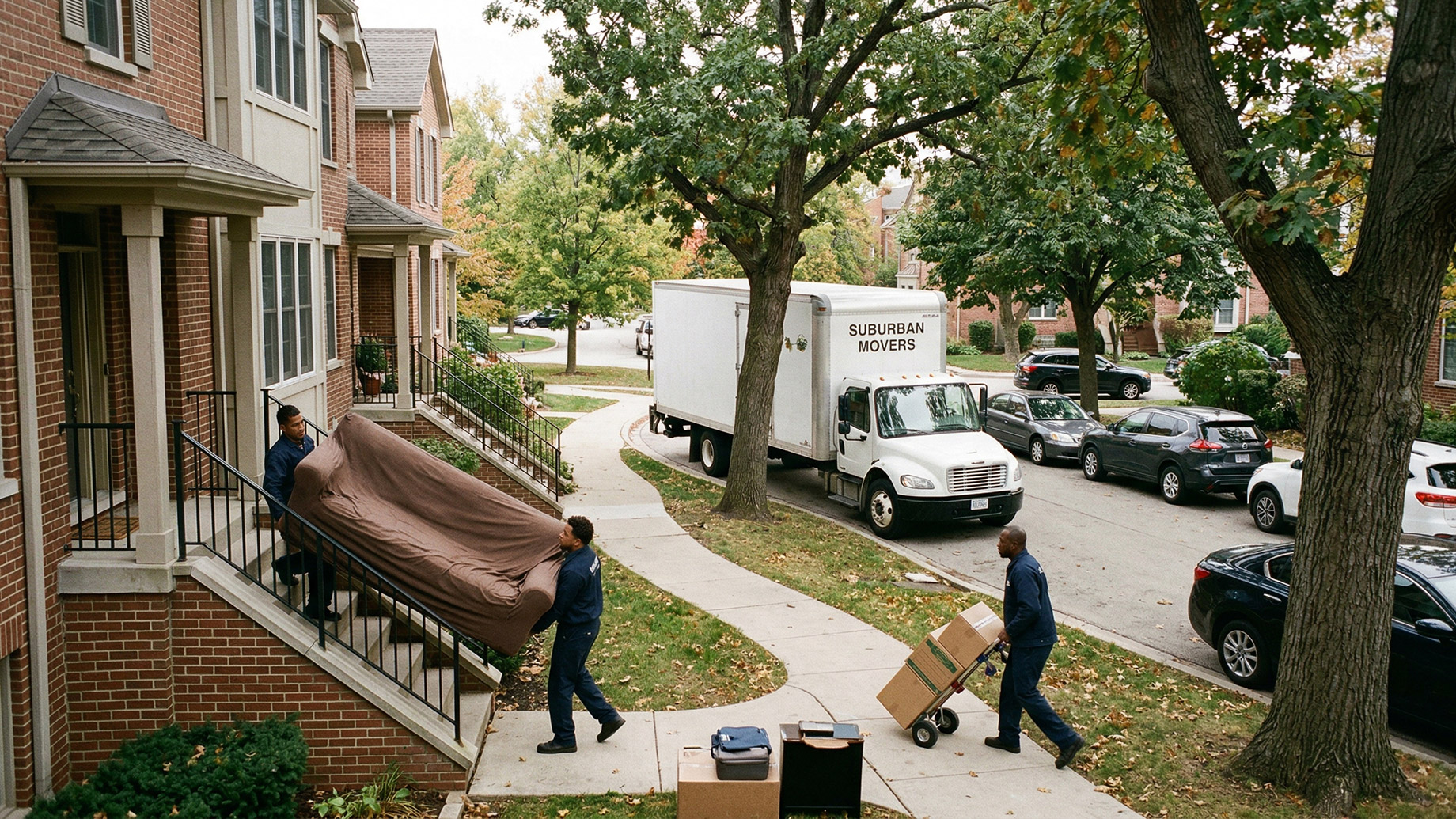
Many homeowners assume a short move between nearby Chicago suburbs will be quick and simple. After all, if your new place is only a few miles away, how complicated could it be? In reality, local suburban relocations can be surprisingly time-consuming due to access issues, neighborhood rules, and the physical layout of homes and communities.
Understanding these factors in advance helps you budget realistic time and avoid last-minute frustration or extra costs on moving day.
Street Layouts and Truck Access Slow Everything Down
Chicago suburbs are full of cul-de-sacs, dead ends, and narrow residential lanes. While these streets are ideal for quiet living, they can be difficult for moving trucks to navigate and park.
- Cul-de-sacs and dead ends: Large trucks may need extra time to turn around or back in carefully, especially when cars line the curb.
- Narrow streets: When a truck cannot park directly in front of the home, movers may have to stage items farther away, increasing walking distance and loading time.
- Corner and flag lots: Homes set back from the street or on tight corners often require long carries, which slow down loading and unloading.
Even if the drive between your old and new home is just 10–15 minutes, the time required to maneuver and position the truck can add up quickly.
HOA and Community Rules Add Hidden Complexity
Many townhome communities, condo buildings, and planned developments in the suburbs are governed by HOAs or management companies. These entities may have specific rules that affect your move:
- Designated moving hours: Some associations restrict moves to weekdays or specific time windows to control noise and traffic.
- Elevator reservations: In multi-story buildings, freight elevators often must be booked in advance and padded for protection, with strict start and end times.
- Parking and loading areas: HOAs may prohibit trucks on certain driveways, require loading from guest spots, or mandate permits for street parking.
If these details are not confirmed before moving day, your crew may end up waiting for access, relocating the truck, or adjusting the plan on the fly—all of which extend the total time of a supposedly “quick” move.
Crew Coordination for Stairs, Long Carries, and Tight Spaces
Short-distance moves often involve complex physical setups: multi-level townhomes, basement storage, or detached garages. Professional movers have to coordinate their crew carefully to keep everything efficient and safe.
- Stair-heavy properties: Multiple flights of stairs require more frequent breaks and may demand extra crew members to maintain a steady pace.
- Long carries: When entry doors are far from legal parking spots, movers may need dollies, extra ramps, or staggered teams to shuttle items.
- Tight hallways and turns: Large furniture that fits through one home’s layout may need to be partially disassembled to make it into the new space.
A move that looks simple on paper can quickly become a puzzle of logistics and labor allocation once the crew sees the actual properties at both ends.
Why Short Moves Still Need Timing Buffers
Because the distance is small, many people underestimate how long each phase of the move will take. Reliable movers build in timing buffers for tasks that are easy to overlook:
- Protecting floors, railings, and doors with pads and runners
- Disassembling and reassembling beds, tables, and sectionals
- Labeling, staging, and organizing items at the new home so rooms stay functional
Adding a modest cushion to your move schedule reduces stress and helps you avoid overtime charges or rushed decisions about where items end up.
Common Unexpected Delays in Chicago Suburban Moves
Even with planning, certain local factors can stretch a short move into most of the day:
- Weather: Rain, snow, and ice require slower walking speeds, more protective materials, and extra care on steps and driveways.
- Traffic and construction: Detours, school zones, and lane closures are common around suburban corridors and can delay trucks between locations.
- Neighborhood events: Block parties, street sweeping, or scheduled maintenance may limit parking or access at just the wrong time.
Working with trusted Chicago moving professionals who know the local suburbs can help you anticipate these challenges and build a realistic schedule.
Planning Ahead for a Smoother Short-Distance Move
To keep a nearby move from dragging on longer than expected, focus on preparation and communication:
- Confirm HOA or building rules, elevator reservations, and parking instructions in writing.
- Share photos or videos of access points, stairs, and tight spaces with your movers in advance.
- Have boxes fully packed, sealed, and labeled before the crew arrives.
- Reserve more time than you think you need so no one is rushed.
Short moves in the Chicago suburbs are not necessarily easy moves—they simply trade highway mileage for access hurdles and coordination details. By planning carefully and allowing for the unexpected, you can keep your local relocation on schedule and reduce the stress that often comes with moving day.
