Gutters don’t fail all at once. They degrade gradually, losing effectiveness in ways that are easy to overlook until the consequences show up somewhere else. The challenge is that most gutter problems develop out of easy sight and don’t announce themselves until real damage has already occurred. Knowing what to look for gives homeowners the early warning they need to act before small failures become expensive ones.
During a Rainstorm
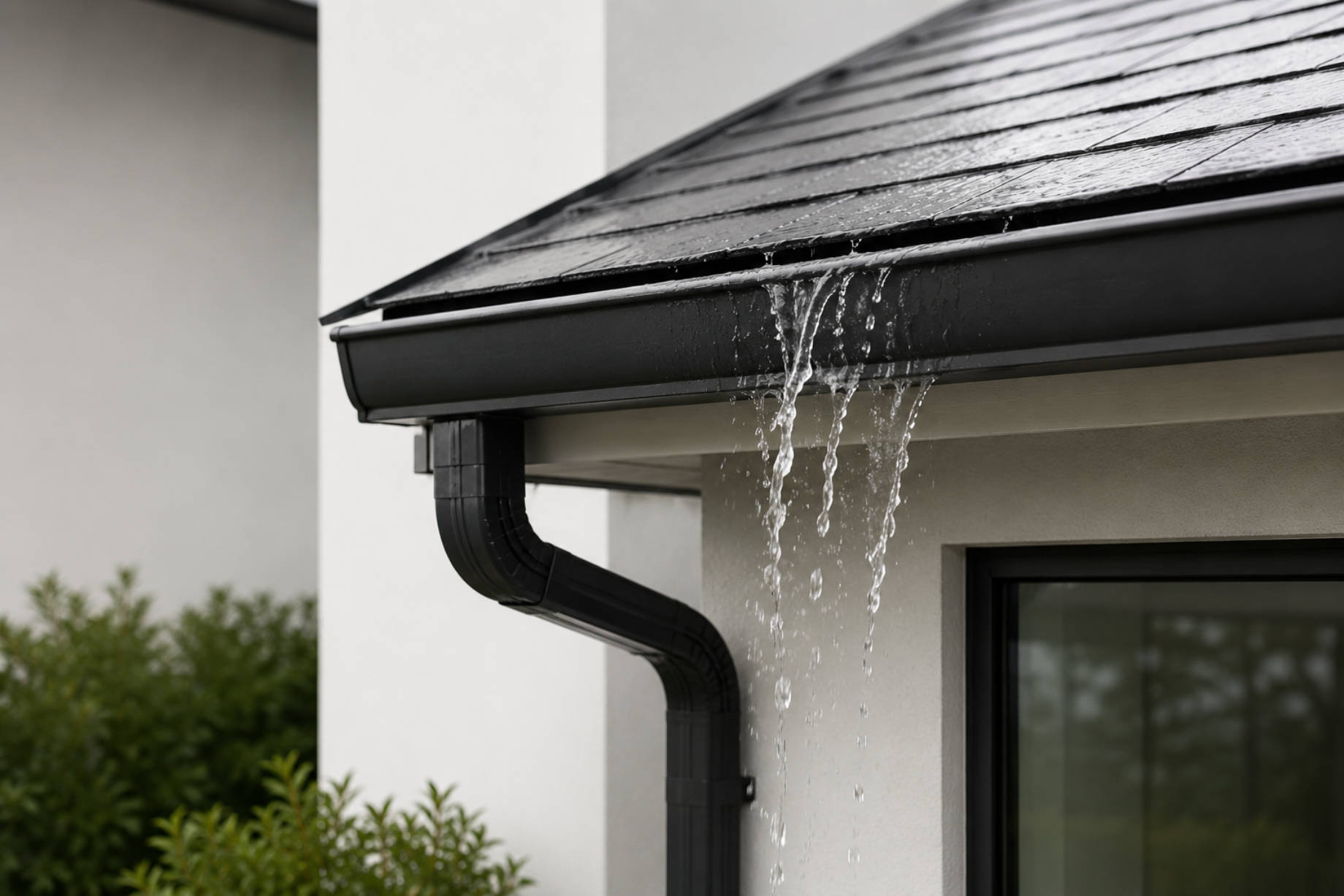
The most revealing time to observe a gutter system is during active rainfall. A properly functioning system should channel all water cleanly into downspouts with no overflow, no waterfalls cascading over the front edge, and no water dripping behind the gutter along the fascia.
If you see water pouring over the sides rather than flowing through the system, the gutters are either clogged, improperly sloped, or undersized for the roof’s runoff volume. If water is dripping or streaming behind the gutter and running down the fascia, the gutter has either separated from the board or developed a leak at the back seam.
After a Rainstorm
Once the rain stops, a walk around the home’s perimeter tells its own story. Signs to look for include:
Erosion channels or bare soil patches in foundation plantings directly below the roofline indicate that water has been overshooting or overflowing the gutter and hitting the ground with force. Mulch that washes away repeatedly after every rain is a reliable indicator of the same problem.
Pooling water near the foundation that lingers for hours or days after rainfall points to discharge that isn’t being directed far enough from the home. Downspout extensions that are missing, too short, or pointed toward the house are a common culprit.
Mud or debris splattered on siding low on the exterior walls suggests consistent overflow impact. Staining on siding or brick indicates that water has been running along the surface rather than through the gutter system over an extended period.
Physical Condition of the Gutters Themselves
A closer inspection of the gutters reveals a second layer of warning signs. Sections that visibly sag or bow downward have either lost their hanger attachment or are carrying accumulated debris weight. Paint that is peeling or bubbling on the fascia board directly behind the gutter almost always indicates prolonged moisture contact. Rust staining on or beneath steel gutters signals that water is sitting rather than draining. And any visible separation between gutter sections or between the gutter and the fascia is an active leak point, even if it’s not raining when you notice it.
Inside the Home
By the time gutter problems register inside the home, the damage has typically been building for some time. Moisture on basement walls or floors following heavy rain, efflorescence on basement masonry, and musty odors in crawl spaces can all trace back to surface drainage that isn’t being managed properly at the roofline. Staining on interior ceilings near exterior walls may indicate that overflow has been saturating the soffit and finding its way into the structure.
What to Do When You Spot the Signs
Some of what you find will point toward cleaning or minor repair. Other signs point toward a system that has reached the end of its functional life. Either way, acting on early warning signs is always less expensive than waiting for the damage to compound further.
