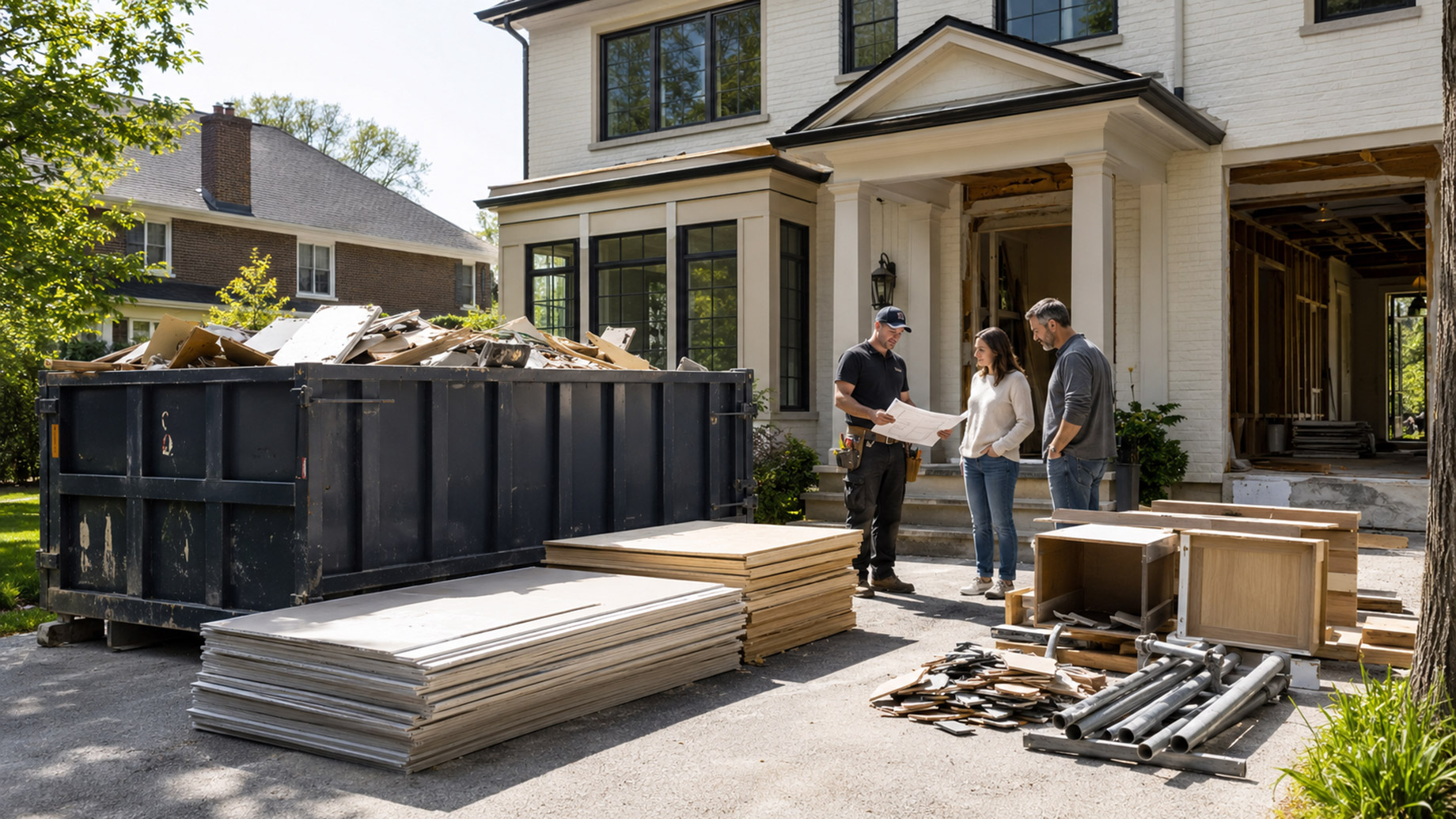
Thinking about a home makeover often brings to mind fresh paint and new floors. Most homeowners jump straight into picking colors or buying hardware. Skipping the logistics of what leaves the house can cause major delays. A solid plan starts with understanding the mess before the first hammer swings.
Managing the leftovers of a project is a full-time job. Trash piles up faster than most people expect. Dealing with heavy materials requires a strategy that goes beyond just throwing things in a bin. Proper staging makes the difference between a smooth workflow and a chaotic site.
Mapping The Debris Field
Every room gutted adds layers of history to the curb. Old drywall and rusted pipes need a designated spot. Piles of debris can quickly overtake a driveway or lawn if not managed from the start. Planning for these exit routes is the only way to keep the job site functional for the crew.
Clear boundaries for waste zones help keep the workspace safe. Sorting materials as they come out saves time during the disposal phase. Keeping metal separate from wood often helps with weight limits and recycling options. Small piles are much easier to handle than a single mountain of mixed trash.
Safety is a priority during the demolition phase. Sharp nails and broken glass hide in unorganized piles. A tidy site allows the crew to move faster and prevents accidents during the workday. Staging areas should be clearly marked to keep foot traffic away from the heaviest debris.
Organizing Your Renovation Checklist
Renting a bin is the most common way to handle large volumes of wreckage. Checking a renovation prep checklist before the delivery verifies that your driveway is protected and permits are in order. Such preparation prevents damage to your property and keeps the project on schedule.
Selecting the right size is a balancing act for any homeowner. A small bin leads to multiple hauls and extra fees. Large bins waste money and take up valuable space on the street. Consider these factors when choosing a container:
- Total square footage of the rooms being gutted.
- Type of material – concrete is much heavier than wood.
- Duration of the project to avoid daily rental extensions.
Timing the delivery is another logistical hurdle to solve. If the bin arrives late, the crew has nowhere to put the debris.
The Rising Volume Of Modern Waste
Modern construction habits lead to higher volumes of trash. New materials and fast-moving trends cause frequent teardowns in residential areas. Managing these streams requires more attention to detail than simple cleanup. Homeowners are now dealing with more synthetic materials than in previous decades.
Handling diverse materials demands a plan for each type of scrap. Plastics and treated woods have different disposal requirements than basic brick. Planning for these items reduces the environmental footprint of the build. It keeps the project compliant with local landfill regulations that grow stricter every year.
Local facilities often have strict rules about what can enter their site. Knowing the rules before you fill a bin saves hours of sorting later. Avoiding a massive mixed pile is the best way to keep costs low. High fees for contaminated loads can quickly eat into a renovation budget.
Global Building Industry Statistics
Global construction activities are a primary driver of environmental impact. A report from a major journal stated that the building industry is responsible for 40% of all annual waste globally. Managing these materials is a key part of any modern protocol. Reducing this number starts with better planning at the individual project level.
Large-scale waste represents a loss of resources that could serve other purposes. Reducing the amount of material leaving the site helps lower the demand for new supplies. Reusing old studs or bricks can cut costs while helping the environment. Every piece of lumber saved is one less item that needs to be hauled away.
The sheer volume of global waste shows why local efforts matter. Every homeowner who chooses to recycle contributes to a larger solution. Small choices at the job site add up to a reduction in landfill pressure.
Calculating Material Weight
Physical weight is a shock for many people starting a remodel. Building a single-family home creates tons of waste from start to finish. Drywall and tiles are heavy when piled into a single container. Homeowners often underestimate how quickly a bin reaches its weight capacity.
Exceeding weight limits on a rented bin leads to heavy fines. It is helpful to estimate the weight of your materials before the demo starts. Concrete and dirt are the heaviest items and require specialized containers. These dense materials can easily exceed the lifting capacity of standard trucks if the bin is too large.
Following safety rules keeps the project running smoothly. Overloaded bins are difficult to pick up and dangerous on the road. Keeping the debris level at the top of the bin is a standard rule.
Sorting For Efficiency
Efficient sorting techniques on the ground save a lot of labor. Research suggests that the best strategy involves preventing the mixing of waste at the source. Separating items before they hit the bin makes it easier to process them.
Homeowners can implement these strategies with multiple collection points. Dedicate one area for wood and another for masonry. A simple setup increases the chances that materials will be repurposed later. It makes it easier to load the bin in a way that maximizes every cubic yard of space.
Sorting helps track which materials cost the most to throw away. High-value scrap like copper can be sold to offset some of the project costs. Careful management turns trash into a potential asset for the homeowner. Tracking these costs provides a clearer picture of the total project investment.
Successful Waste Management Strategies
Instead of smashing everything, workers can deconstruct elements for reuse. Such a method preserves the quality of the materials for future use. Deconstruction is a slower process but offers significant long-term rewards:
- Preserved lumber can be donated for tax credits.
- Fixtures like sinks and lights are often easy to clean.
- Copper pipes and wires have high resale value at scrap yards.
Careful deconstruction offers several benefits for the budget. Preserved lumber can be donated for tax credits in certain areas. Fixtures like sinks and lights are often easy to clean and reinstall. This approach keeps the site quieter and cleaner than a traditional sledgehammer demolition.
Final Site Preparation
Finalizing the waste plan is the last step before the crew arrives. Clearing a path for the hauler prevents delays on delivery day. Checking for overhead wires or low branches keeps the equipment safe. A clear path ensures that the bin is placed exactly where it is needed most.
Communicating the plan to the neighbors prevents friction during the build. Let them know when the bin will arrive and how long it will stay. Clear communication builds goodwill and avoids complaints to the city. It also helps neighbors plan their own parking or deliveries during your project.
Double-checking the permit requirements for street parking is a smart move. Some cities require specific signage or lighting for bins placed on the road. Following these steps avoids fines and keeps the site compliant.
Successful renovations are built on a foundation of logistics and foresight. Clearing the way for new designs means handling the old materials with care. A smart waste plan reduces stress and keeps the focus on the beautiful end result. Taking the time to prep the site ensures a faster transition to the finish line.
