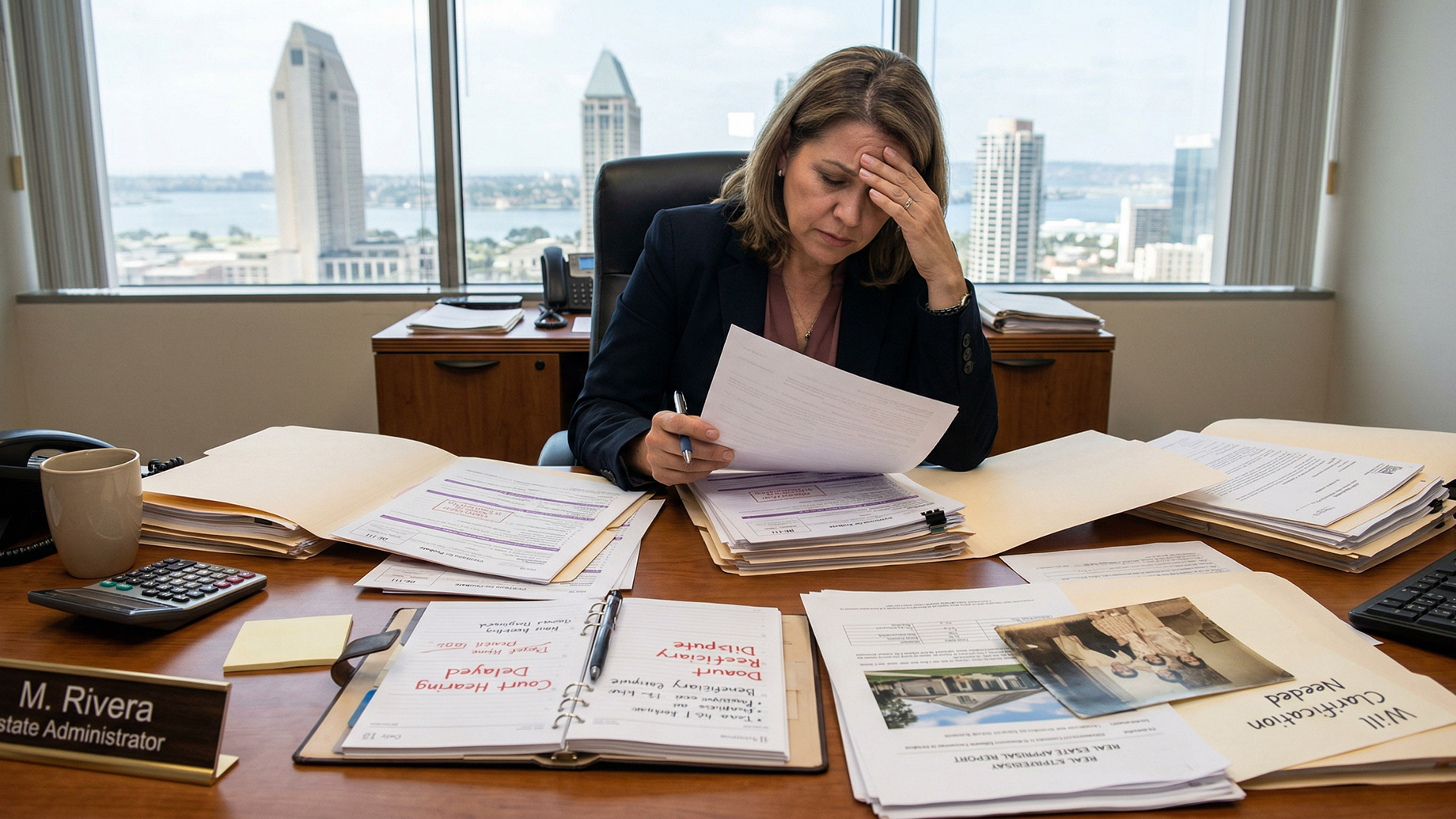
A court process that appears straightforward on paper can quietly stretch far longer than people expect. Probate is one of those systems where timelines often change once the legal steps begin. Families may assume that filing documents and submitting a will will move the process forward quickly, yet several legal checks must take place before an estate can be settled. Courts must confirm ownership of property, review debts, and make sure assets are distributed correctly.
Anyone looking into the probate timeline in San Diego County soon realizes that delays usually happen for specific reasons. A closer look at those common causes helps explain why probate sometimes takes more time than expected.
Missing or Incomplete Estate Documents
One of the most common reasons probate slows down is missing or incomplete documentation. The court relies on official records to confirm property ownership, financial accounts, and the instructions written in a will. If any of these documents are unclear or unavailable, the court cannot move forward with confidence.
Executors may need to locate bank records, property titles, or older financial statements before the estate can proceed. Sometimes a will may contain unclear wording or outdated information, which creates confusion about how assets should be distributed. Each missing detail forces the court to request clarification, and those extra steps naturally extend the probate process.
Family Disputes Over the Estate
Disagreements between family members often create significant delays during probate. Even carefully written wills can lead to conflict if beneficiaries feel the distribution is unfair or unclear. Some relatives may challenge the validity of the will, claiming the person who created it was pressured or not fully aware of their decisions.
Once a dispute reaches the probate court, the process becomes more complicated. Judges must review evidence, listen to legal arguments, and sometimes schedule multiple hearings before making a decision. During this period, the estate may remain frozen until the disagreement is resolved, which can add months or longer to the probate timeline.
Complex or Hard to Value Assets
Certain estates contain assets that are not simple to divide or evaluate. Real estate properties, business ownership, investment portfolios, and valuable collections often require professional appraisal before they can be distributed. Courts usually request accurate valuations to ensure every beneficiary receives the correct share of the estate.
Appraisers must review documents, inspect property, and prepare official reports before those values are confirmed. In some situations, assets such as family businesses or shared property may need to be sold or transferred with court approval.
Executor Responsibilities and Delays
The executor plays a major role in keeping probate moving smoothly. This person is responsible for gathering financial records, notifying creditors, managing estate property, and submitting required documents to the court. If an executor struggles to keep up with these responsibilities, delays can occur. Probate requires careful organization and attention to detail because every filing must meet legal requirements.
If paperwork is submitted with missing information or errors, the court may request corrections before continuing the process. In some cases, executors step down or become unable to complete their duties, and the court must appoint a replacement before probate can proceed.
Court Scheduling and Administrative Backlogs
Probate courts handle a large number of estate cases every year, and this workload can influence how quickly each case moves forward. Judges must review petitions, approve requests from executors, and confirm that all legal requirements are satisfied before closing an estate. Because many cases are processed at the same time, scheduling hearings or approvals may take longer than families expect.
Administrative tasks inside the court system also require careful review. Clerks must process filings, record court orders, and manage legal notices connected to the estate. Even when paperwork is submitted correctly, the court calendar and internal procedures can extend the probate process.
Final Thoughts
Probate delays usually happen because several issues appear together during the legal process. Missing documents, family disputes, complex assets, and court scheduling can all affect how quickly an estate moves forward. Each step exists to make sure the property is transferred properly and legal obligations are met. While families often hope for a quick resolution, the system moves carefully to protect everyone involved.
Anyone researching the probate timeline in San Diego County often discovers that these common challenges are the main reasons estates take longer to settle than expected. Understanding these factors makes the process easier to follow while probate works toward completion.
