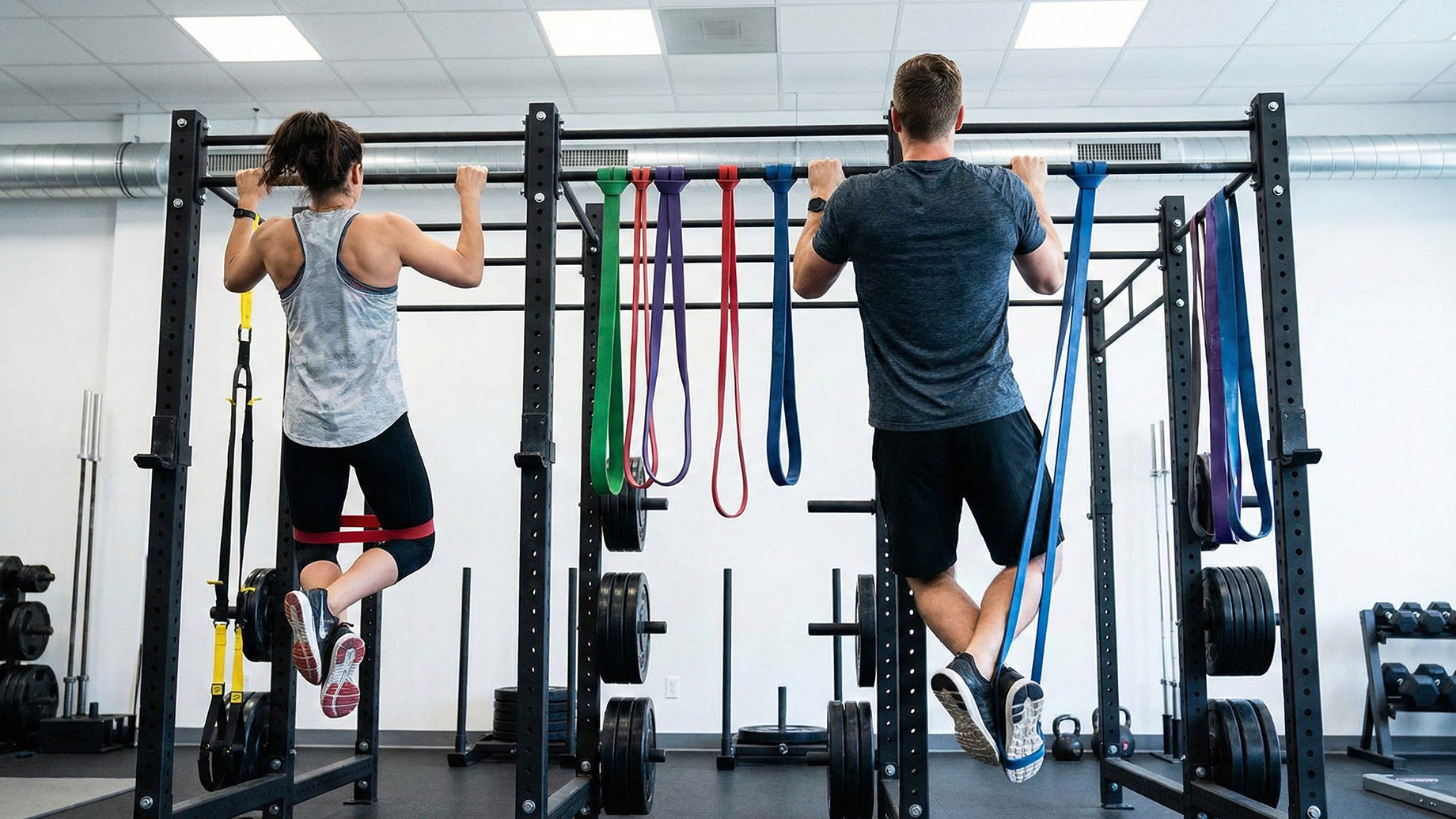
When it comes to enhancing your pull-up routine, resistance bands are a popular tool that can offer significant benefits. Resistance bands for pull-ups come in various sizes, strengths, and types, catering to different fitness levels and needs. They are generally categorized into short and long bands, each offering unique advantages and applications. Understanding the differences between these two types of bands can help you choose the right one for your pull-up goals.
The Science Behind Resistance Bands
Resistance bands work on the principle of elastic resistance, which mimics the natural resistance you experience during weightlifting. When you stretch a band, it creates tension, providing resistance that challenges your muscles. This form of resistance is unique because it increases as the band is stretched further, offering a progressive challenge throughout the range of motion.
The elasticity of resistance bands means that they provide variable resistance, meaning the resistance increases as the band stretches. This characteristic makes resistance bands highly effective for functional strength training, as it closely aligns with the natural strength curve of muscles. When using bands for pull-ups, the bands offer more assistance at the beginning of the movement and less as you reach the top, aligning perfectly with the points of maximum and minimum strength in your muscles.
Furthermore, resistance bands are known for their ability to activate stabilizing muscles. Since bands are less stable compared to free weights, they require your body to engage core and stabilizer muscles to maintain balance and control during exercises. This not only helps in building strength but also improves coordination and proprioception, making resistance bands a comprehensive tool for fitness enhancement.
Short Resistance Bands
Short resistance bands, often referred to as mini bands, are typically 10 to 12 inches long and offer a compact and portable solution for resistance training. These bands are designed to loop around your legs or arms, providing targeted resistance for various exercises, including pull-ups. When used for pull-ups, they can be looped around the bar and your knee or foot to provide a moderate level of assistance.
One of the primary benefits of short resistance bands is their versatility. They can be easily incorporated into a wide range of exercises beyond pull-ups, such as squats, deadlifts, and shoulder presses. Their compact size makes them ideal for home workouts and travel, allowing you to maintain your fitness routine wherever you go. Additionally, short bands are available in different resistance levels, giving you the flexibility to choose the right level of assistance for your pull-ups.
However, short resistance bands may offer less assistance compared to their longer counterparts, making them more suitable for individuals who are closer to achieving unassisted pull-ups. They are excellent for refining technique and adding a challenge to your workouts, but if you’re just starting with pull-ups, you might find long resistance bands more beneficial for providing the necessary support.
Long Resistance Bands
Long resistance bands, also known as power bands or pull-up assist bands, are typically 41 inches long and offer a greater range of resistance levels. These bands are designed to be looped around the pull-up bar and your knees or feet, providing significant assistance to help you perform pull-ups with ease. Their length and elasticity make them particularly useful for beginners or those who struggle with the full range of motion in pull-ups.
The extended length of long resistance bands allows for a more gradual and customizable resistance experience. They can provide substantial support at the bottom of the pull-up, where you need it most, and gradually decrease assistance as you pull yourself up. This makes them ideal for developing the strength and technique required to perform unassisted pull-ups over time.
Long resistance bands are also highly versatile, suitable for a wide variety of exercises beyond pull-ups, such as chest presses, rows, and tricep extensions. Their durability and strength make them a long-lasting investment for your fitness journey. If you’re new to resistance training or pull-ups, starting with a long resistance band can help you build the foundational strength needed to progress to more challenging exercises.
Comparing Short vs. Long Resistance Bands for Pull-Ups
When comparing short and long resistance bands for pull-ups, it’s essential to consider your fitness level and specific goals. Each type of band offers unique benefits and can be more or less suitable depending on your needs. Here’s a comparison to help you make an informed decision:
Short Resistance Bands
- Portability: Easy to carry and use anywhere.
- Versatility: Can be used for various exercises targeting different muscle groups.
- Assistance Level: Provides moderate assistance, ideal for those close to achieving unassisted pull-ups.
- Suitability: Best for refining technique and adding resistance to other exercises.
Long Resistance Bands
- Assistance Level: Offers significant assistance, making them ideal for beginners.
- Range of Motion: Provides support throughout the entire pull-up motion.
- Versatility: Suitable for a wide range of exercises beyond pull-ups.
- Durability: Typically more robust and long-lasting.
Ultimately, the choice between short and long resistance bands depends on your current strength level and training goals. Beginners benefit from greater assistance, while more advanced users progress by reducing assistance over time in line with the principle of progressive overload.
Exercises Beyond Pull-Ups
Resistance bands are not limited to just assisting with pull-ups; they can be incorporated into a variety of exercises to enhance your overall fitness. Utilizing bands for different workouts can help improve strength, endurance, and flexibility across various muscle groups.
Here are some exercises you can perform with resistance bands:
- Squats: Place the band above your knees and perform squats to activate your glutes and thighs.
- Chest Press: Anchor the band behind you and push forward to engage your chest muscles.
- Rows: Loop the band under your feet and pull towards your chest to work your back and shoulders.
- Shoulder Press: Stand on the band and press upwards to strengthen your shoulders and upper arms.
- Deadlifts: Stand on the band and pull upwards to target your hamstrings and lower back.
Resistance bands are a cost-effective and convenient way to diversify your workouts and keep them challenging and engaging.
Making the Right Choice for Your Pull-Up Goals
Choosing between short and long resistance bands for pull-ups ultimately comes down to your fitness level, goals, and preferences. Both types of bands offer unique benefits and can be effectively incorporated into your workout routine to help you achieve your pull-up objectives. Before making a decision, consider what you hope to achieve with your pull-up training and how resistance bands can best support those goals. Explore the different resistance levels and experiment with various exercises to find what works best for you.
