Large, high-value homes come with a unique set of maintenance challenges that smaller properties simply don’t face. Expansive square footage, custom architectural details, and sprawling grounds create more places for pests to enter, hide, and cause damage before anyone notices. While a small infestation in a modest home might be spotted quickly, the same problem in a sprawling estate can go undetected for months, quietly working its way through wood framing, wiring, and insulation.
Understanding how pests interact with luxury properties, and why these homes are particularly vulnerable to unnoticed damage, is the first step toward protecting a significant investment.
How Common Pests Damage High-End Construction and Finishes
Termites, rodents, carpenter ants, and cockroaches don’t just create a nuisance; they actively degrade the materials that make luxury properties valuable in the first place.
Termites are often the most financially damaging. According to the U.S. Environmental Protection Agency, termites cause an estimated $5 billion in property damage annually in the United States, and most homeowner insurance policies do not cover this type of damage because it’s considered preventable. In a luxury home, termites don’t distinguish between a standard stud wall and a hand-carved staircase or imported hardwood paneling. Once inside custom woodwork, they can compromise structural integrity and cosmetic details that are expensive or impossible to replicate exactly.
Rodents present a different but equally serious risk. Mice and rats gnaw on electrical wiring to keep their teeth worn down, and this behavior is a documented cause of house fires. The National Fire Protection Association has noted that rodent damage to wiring is among the more difficult fire causes to trace after the fact, since evidence is often destroyed. In homes with extensive smart-home systems, home theaters, or elaborate lighting networks, rodent damage to wiring can be both costly and disruptive to diagnose.
Carpenter ants, unlike termites, don’t eat wood, they excavate it to build nests, preferring wood that’s already softened by moisture. This makes them a strong indicator of an underlying moisture problem, often found near roofing, window frames, or outdoor structures like pergolas and pool houses. Cockroaches, meanwhile, tend to gather in kitchens, wine cellars, and mechanical rooms, where they can contaminate food storage areas and trigger allergic reactions in sensitive individuals.
Beyond these four, pests such as carpenter bees, powderpost beetles, and wildlife like raccoons or squirrels can also find their way into insulation, roofing systems, and outdoor amenities such as cabanas, guesthouses, and detached garages.
Why Larger Properties Create More Hiding Places
The very features that make luxury properties desirable, expansive grounds, multiple outbuildings, and rarely used rooms, also make them more vulnerable to undetected pest activity.
A few reasons hidden infestations are more common on large estates:
- Guesthouses and pool houses are often unoccupied for weeks or months at a time, giving pests uninterrupted access to build nests without disturbance.
- Storage rooms, wine cellars, and basements tend to be checked infrequently, allowing moisture and pest activity to go unnoticed.
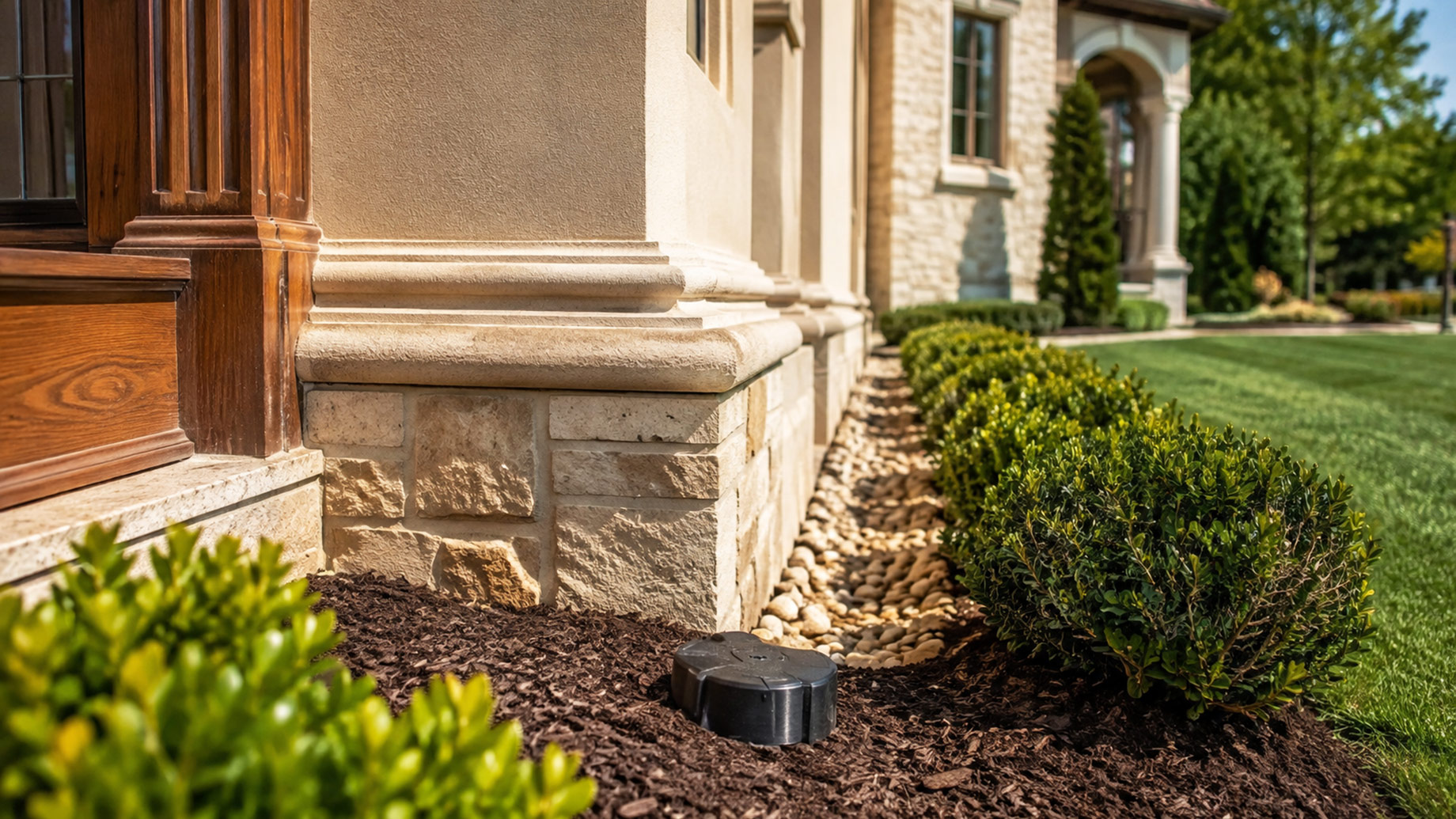
- Landscaped grounds with mulch beds, ornamental trees, and irrigation systems create moisture-rich environments that attract termites and carpenter ants close to the foundation.
- Multiple rooflines and additions, common in custom-built homes, create more seams, valleys, and joints where water can intrude and pests can enter.
- Detached structures like garages, sheds, and workshops are sometimes built with different materials or lower construction standards than the main house, making them more susceptible to gaps and openings.
Because these areas aren’t part of daily foot traffic, a colony of termites or a rodent nest can establish itself and grow substantially before a homeowner or property manager happens to notice warning signs like discarded wings, droppings, or gnaw marks.
The Financial Stakes of Delayed Detection
For any homeowner, pest damage is unwelcome. For owners of high-value properties, the financial exposure is proportionally larger because the materials involved, reclaimed wood beams, custom millwork, natural stone facades, and elaborate landscaping, are far more expensive to repair or replace than standard building materials.
Termite damage, for instance, tends to worsen the longer it goes undetected, since colonies can number in the hundreds of thousands and forage continuously. Structural repairs to hand-finished woodwork or custom trim work often require specialized craftsmanship that isn’t quickly or cheaply sourced. Similarly, if rodents damage wiring behind finished walls, tracing and repairing the problem may mean opening up walls that were never designed to be easily accessed, adding both cost and complexity to what would otherwise be a routine fix.
This is one reason a proactive, customized approach to pest control tends to serve larger properties better than a reactive one. Rather than waiting for visible signs of infestation, a tailored inspection and prevention plan can account for the specific layout, materials, outbuildings, and vulnerable zones unique to each property. For expansive homes in the region, a proactive Columbus pest control plan can also address local seasonal pressures and risks associated with guesthouses, garages, outdoor kitchens, landscaped grounds, and other areas that may receive limited day-to-day attention.
Preventive Measures That Reduce Risk
While no property is entirely immune to pests, several preventive practices consistently reduce the likelihood of significant damage:
- Routine, thorough inspections. Rather than a single annual check, larger properties benefit from more frequent inspections that specifically include guesthouses, storage areas, crawl spaces, and attics, not just the main living areas.
- Moisture control. Because termites and carpenter ants are drawn to damp wood, managing gutters, downspouts, irrigation runoff, and grading around the foundation reduces one of the most common attractants.
- Landscaping maintenance. Keeping mulch, firewood, and dense plantings away from the foundation removes convenient bridges pests use to travel from soil to structure. Trimming tree branches that touch the roofline also limits access points for rodents and ants.
- Sealing structural openings. Gaps around utility lines, vents, window frames, and foundation cracks are common entry points. Sealing these, particularly on outbuildings that may have been constructed with less attention to detail than the main residence, closes off easy access.
- Monitoring seldom-used spaces. Simply walking through guesthouses, storage rooms, and mechanical areas on a regular basis — even briefly — increases the odds that early warning signs are caught before an infestation becomes established.
These measures don’t eliminate risk entirely, but combined, they significantly lower the odds of pests establishing a foothold in the parts of a property that are easiest to overlook.
Final Analysis
Luxury properties are, in many ways, more exposed to pest-related risk than smaller homes — not because they’re inherently more attractive to pests, but because their size, complexity, and underused spaces make early detection harder. Termites, rodents, carpenter ants, and cockroaches can quietly damage custom woodwork, wiring, insulation, and outdoor amenities long before visible symptoms appear.
Understanding these risks, staying attentive to moisture and landscaping conditions, and maintaining a consistent inspection routine across every part of the property — including the areas that are easy to forget — remains the most reliable way to protect both the structural integrity and the long-term value of a high-end home.
