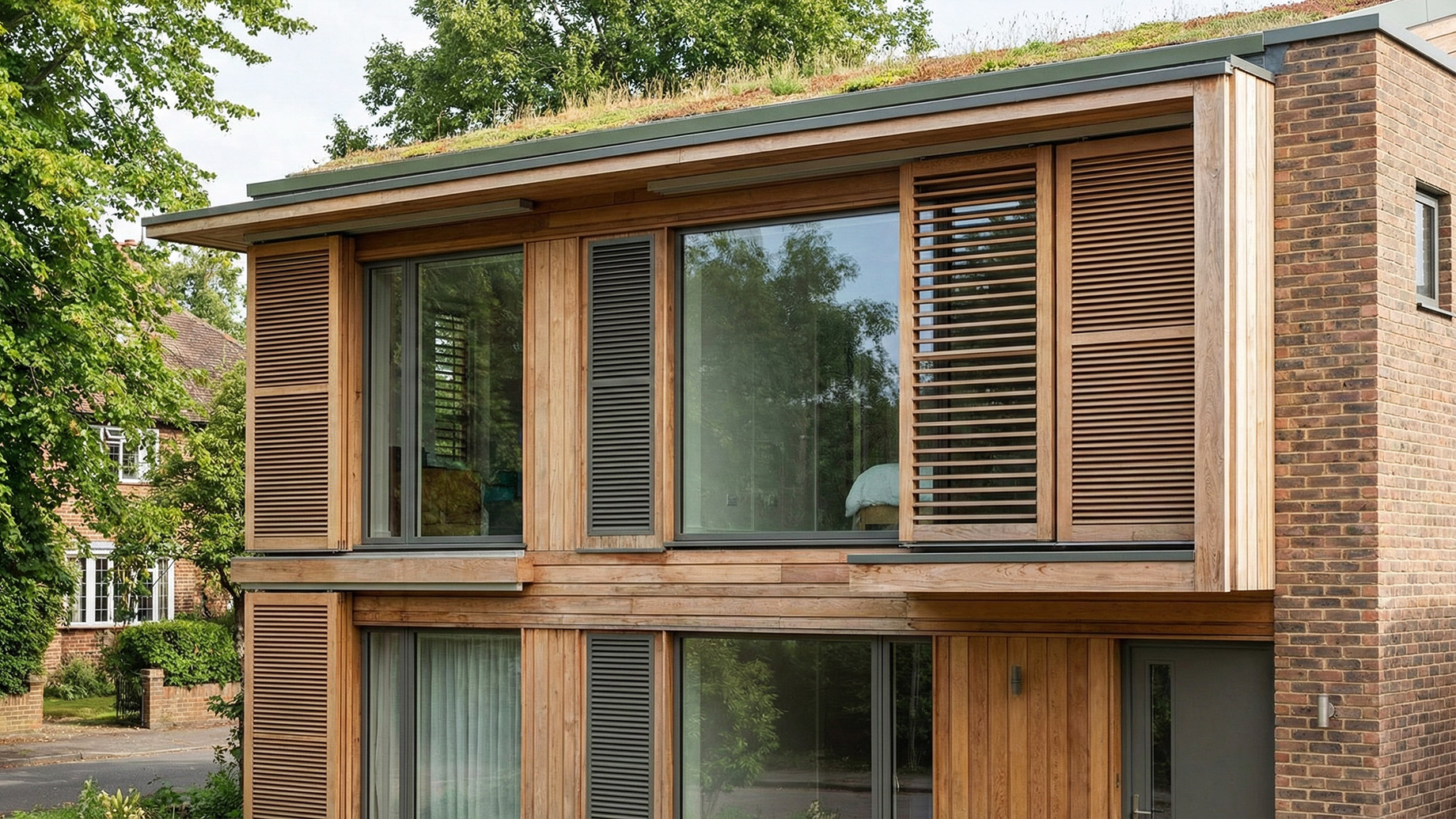
Passive design is not a style. It is the discipline of shaping a home so comfort comes from the building itself – orientation, form, openings, shading, fabric performance, and controlled ventilation – rather than oversized systems reacting to problems later. In the UK, this approach is becoming the baseline for better residential outcomes: lower energy demand, calmer internal temperatures, and fewer compromises when budgets tighten.
Reducing Demand Before Adding Technology
The first principle is demand reduction. UKGBC promotes a fabric-first approach because it locks in performance for decades – insulation continuity, airtightness, and reduced thermal bridging do the heavy lifting before renewables or heat pumps are added. Residential projects often win or lose value here. Junction detailing, window positioning, and build-up thickness influence comfort and running costs far more than a single “green” feature.
Solar control is the next layer. London homes must balance winter solar gain with summer overheating risk. Approved Document O makes this tension explicit – reducing glazing can limit overheating but may increase heating demand and reduce daylight. Passive design resolves this deliberately: openings are sized for daylight and outlook, external shading is used where necessary, and internal layouts place the most occupied rooms on brighter, calmer elevations.
Ventilation, Airtightness, and Real-World Performance
Ventilation is the third pillar. Airtight homes still require consistent fresh air, otherwise energy efficiency comes at the cost of poor indoor air quality. Passivhaus principles are useful here, not because certification is always the goal, but because the logic is clear: high-performance windows, minimal thermal bridges, continuous airtightness, and controlled ventilation – often MVHR – supported by quality assurance. In practice, this means coordinating vents, service routes, and acoustics early so systems operate quietly and predictably.
Passive design is not a checklist
The most common communication mistake is treating passive design as a list of independent measures. In reality, it is a set of linked decisions, each affecting the others. Small choices can disproportionately change outcomes, including:
- Window-to-wall ratio and glazing position
- Shading strategies for south and west-facing rooms
- Thermal bridge control at balconies, parapets, and steelwork
- Airtightness line continuity across extensions and roof conversions
- Material selection with moisture behaviour in mind
Passive design also strengthens planning outcomes. When massing responds to context and daylight is properly evidenced, schemes are easier to defend on amenity grounds and tend to feel more balanced internally. This is where a design-led residential architect aligns form, policy, and performance without turning the project into an engineering exercise.
In UK residential architecture, passive design is disciplined decision-making under real constraints – limited space, close neighbours, fixed budgets, and a warming climate. Resolve fabric, openings, shading, and ventilation early, and everything else becomes simpler: technical detailing, services coordination, and long-term running costs. For a practical, London-grounded route to low-energy homes that still feel generous and well crafted, https://www.as-architects.co.uk/ is a strong place to start.
