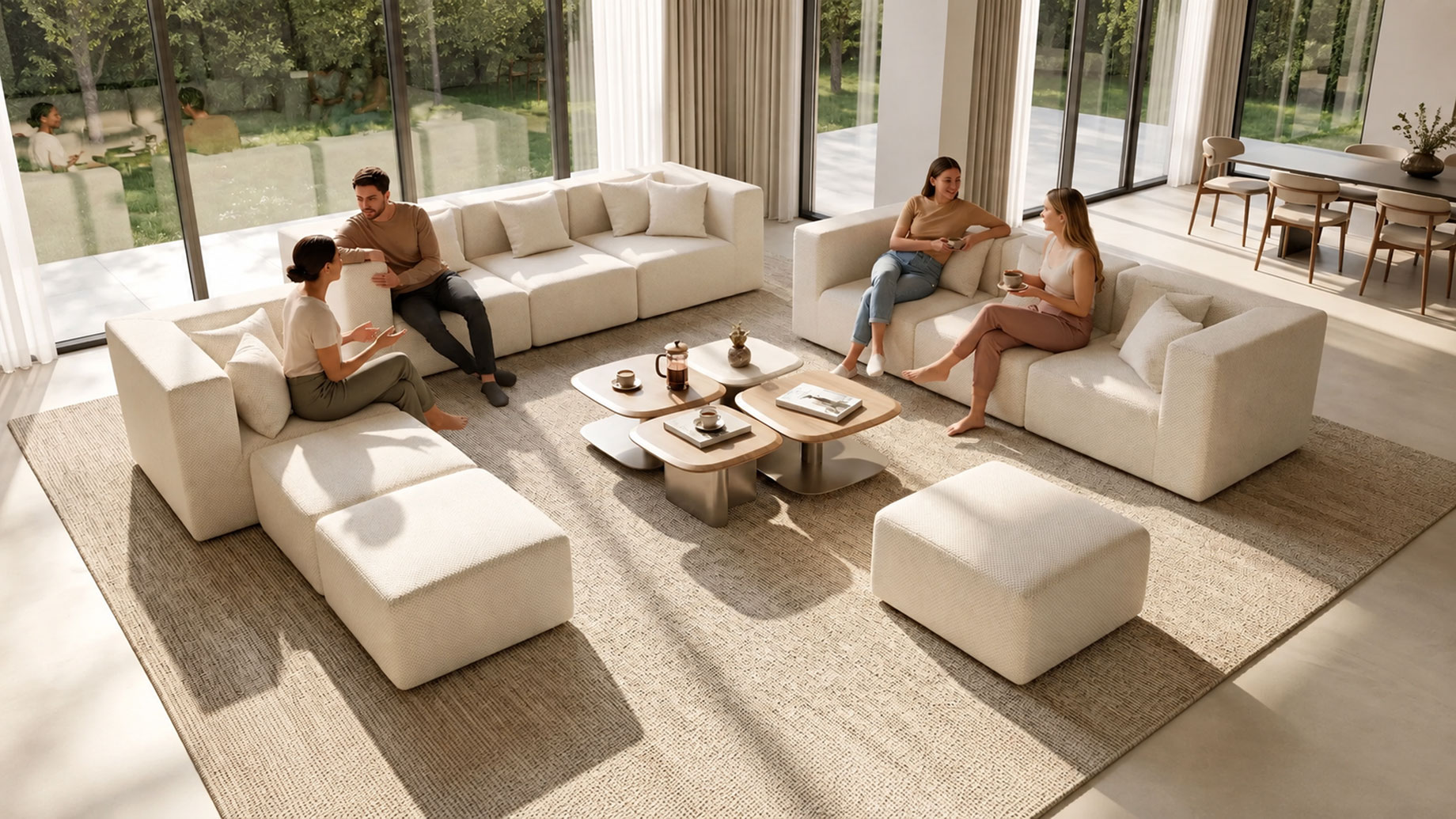
Movie nights call for somewhere to lean back and stretch out. When friends visit, the same room needs seating that makes conversation comfortable. With a modular sofa, a practical approach is to keep the main seats facing the television and add a side seat that can turn or move. Keeping the changes small makes the arrangement easier to use every day.
Position the Main Viewing Seats and Legroom
Start with the people who regularly watch television at home. Their main seats should allow them to lean against the backrest and look naturally toward the screen. A position that requires constant head-turning is unlikely to become a favorite, even if there is technically room to sit there.
Next, decide who needs space to stretch out. If two people usually watch movies together and one prefers reclining, place the extended section at one end of the sofa. The other person can use the full seat beside it without sharing cushion space with someone else’s legs.
If both people prefer stretching out, plan separate leg support for each. A wide sofa does not automatically provide two comfortable lounging positions. What matters is whether both people can use the backrests and extend their legs at the same time.
Keep the extended section away from the main entrance to the seating area. If the kitchen is reached through the right side of the living room, try placing the lounging section on the left first. That leaves the right side open and establishes a useful starting point for later adjustments.
Separate the Main Seating From the Adjustable Pieces
Keep the seats directly facing the television in the same position for both activities. Side seating and footstools can handle the adjustments around them.
When comparing options in Monvane’s modular sectional sofa collection, look for L-shaped designs with modules that can be rearranged. This flexibility allows you to organize individual pieces around everyday habits instead of keeping every seat in one permanent arrangement.
The construction of each piece matters when planning movable seating. A module intended to sit separately and change direction should work independently, with suitable support for sitting and leaning back. Pieces that depend on neighboring modules for stability should remain part of the main sofa. An ottoman can support someone’s legs or provide an occasional extra perch, but it should not automatically replace a backed seat for a long conversation.
Keep the main seating complete and choose adjustable pieces from the components that actually support that use. If the set does not include a suitable independent module, a separate movable chair can do the job. This arrangement needs only one seat that can change direction; there is no need to dismantle the main sofa to create more combinations.
Switch From Watching to Conversation by Moving the Side Seat
Consider a layout with the main sofa facing the television, a lounging section on the left, and an independent seat on the open right side. One local adjustment can make it work for both activities.
For movie nights, the right-hand seat also faces the television. Position it slightly forward or farther to the side of the main sofa, depending on where its occupant has an unobstructed view. The main sofa and left-hand lounging section stay in place.
When friends visit, turn the right-hand seat toward the main sofa and bring it a little closer. People on the sofa can turn slightly to speak with the person beside them, rather than everyone sitting shoulder to shoulder along the same row.
There is no need to create a perfectly symmetrical U shape. An angled side seat can support conversation while preserving an easy way in and out. The useful change is how people face one another.
If an ottoman occupies the space needed by the side seat, move it near the left-hand lounging section and clear the right-hand entrance. Every piece that moves should have a planned destination so that improving one seat does not leave another component stranded in the walkway.
Check Walking Routes and Furniture Clearance
Once the layout is in place, have people occupy the seats while someone walks from the doorway to the sofa and from the sofa toward the kitchen. An empty seating area can look spacious until everyone stretches out.
Pay particular attention to the adjustable seat on the right. When it faces the television, does it block access to the main sofa? When it turns inward for conversation, does its back extend into the walkway? If someone must ask others to pull in their legs every time they stand up, move the side seat outward or leave more space between it and the sofa.
Also perform the adjustment itself. A seat may fit in both final positions but require several other pieces of furniture to be moved before it can turn. Allow a slightly looser arrangement if it lets one person make the change easily.
Leave Room Around the Coffee Table
Choose the coffee table after both sofa arrangements have been established. It should provide somewhere for drinks and snacks while leaving room for the side seat to turn and move.
Use cardboard to mark the proposed tabletop footprint, then try both the viewing and conversation layouts. Check whether everyone can reach what they need and stand up comfortably. If making one table accessible to every seat requires an oversized surface, choose a smaller table and use a side table for additional drinks.
Rounded corners suit an area people regularly move through, but size still matters more than shape. A curved edge cannot compensate for a table that occupies too much floor space. First preserve movement around the seating; then decide how much tabletop space is useful.
Conclusion
For this type of room, start with an L-shaped main sofa facing the television, place the lounging section away from the main entrance, and add an independent movable chair on the open side. A modest coffee table with rounded corners can sit in the middle, with a side table beside the main seats.
When the main sofa already accommodates the household’s regular viewing needs, consider putting any extra budget and floor space into that movable chair rather than a longer sofa. It provides a complete, supported seat and changes the way people interact simply by turning toward them. The goal is enough seating for everyone to settle comfortably, with an open side that keeps the room easy to use.
