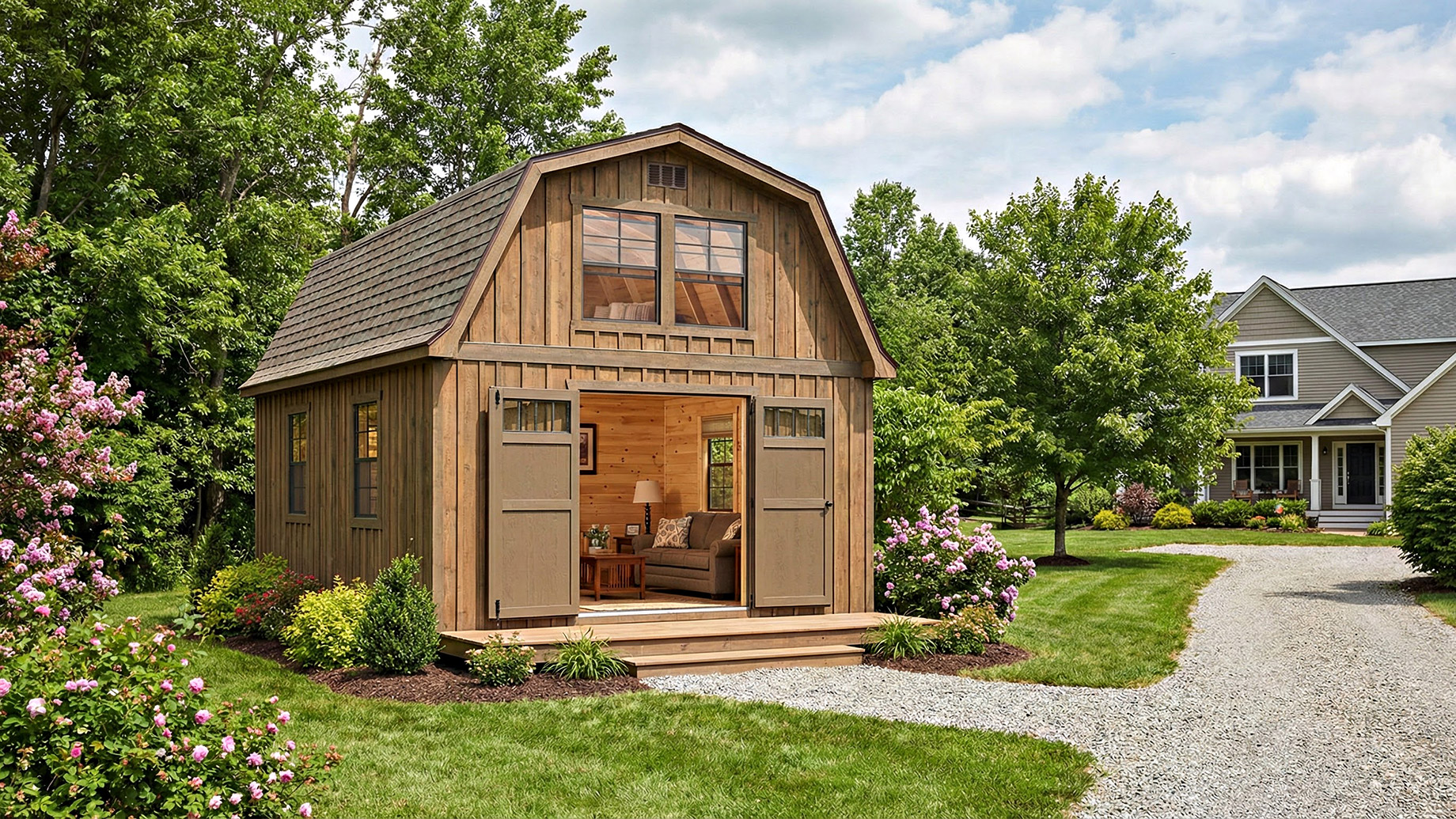
As homeowners look for flexible ways to add usable space without committing to full-scale construction, lofted barn cabins have emerged as a smart and increasingly popular alternative. These structures blend the efficiency of a shed with the comfort and versatility of a small cabin—often at a fraction of the cost and timeline of traditional backyard builds.
For those exploring options beyond standard sheds, professionally designed lofted barn cabins offer a compelling solution. Their elevated rooflines, integrated lofts, and customizable layouts make them suitable for everything from guest spaces to backyard offices, without the complexity of permanent home additions.
This article explores why lofted barn cabins are gaining traction, how they compare to traditional builds, and what to consider before adding one to your property.
What is a Lofted Barn Cabin?
A lofted barn cabin is a structure that combines:
- A barn-style gambrel roof
- A finished or semi-finished interior
- A built-in loft area for sleeping or storage
Unlike basic storage sheds, these cabins are designed with livability in mind. The lofted roof creates vertical space that supports sleeping areas, reading nooks, or storage, while the main floor remains open and functional.
Why Homeowners Are Choosing Cabin-Style Sheds
Traditional backyard builds often require:
- Extensive permits
- Contractors and subcontractors
- Long construction timelines
- Significant budget commitments
Lofted barn cabins simplify the process while still delivering meaningful usable space.
Key Advantages
- Faster installation timelines
- Lower overall cost
- Reduced permitting complexity (in many areas)
- Flexible use cases
This makes them ideal for homeowners who want functionality without long-term construction disruption.
Common Uses for Lofted Barn Cabins
One of the biggest benefits of these structures is adaptability. Homeowners use lofted barn cabins for a wide range of purposes.
Backyard Guest Space
A lofted cabin can serve as a comfortable guest retreat, offering privacy and separation from the main home without the cost of an addition.
Home Office or Studio
With remote work becoming more common, many homeowners use barn cabins as:
- Dedicated offices
- Creative studios
- Quiet workspaces away from household distractions
The loft provides additional storage or a relaxation area while keeping the main floor open for work.
Hobby or Retreat Space
Artists, writers, and hobbyists appreciate having a dedicated space that feels distinct from the house. Lofted cabins offer a cozy, focused environment for creative pursuits.
Interior Layout and Space Efficiency
The real value of a lofted barn cabin comes from how efficiently it uses space.
Key layout features include:
- Open main floor plans
- Overhead loft for sleeping or storage
- High ceilings that prevent a cramped feel
Even modestly sized cabins can feel spacious when vertical space is used effectively.
Cost Comparison: Cabin vs. Traditional Build
Traditional backyard builds often involve:
- Foundation work
- Framing and roofing labor
- Electrical and interior finishing
Lofted barn cabins streamline many of these steps. While prices vary by size and finish level, they typically cost significantly less than permanent additions.
Additional savings come from:
- Reduced labor hours
- Pre-engineered designs
- Simplified site preparation
For many homeowners, this makes cabin-style sheds the most cost-effective way to add usable space.
Customization Without Complexity
Despite being simpler than full builds, lofted barn cabins still offer customization options such as:
- Window and door placement
- Interior finishes
- Electrical packages
- Insulation upgrades
This allows homeowners to tailor the space without managing multiple contractors or design phases.
Placement, Zoning, and Preparation
Before installing a lofted barn cabin, check:
- Local zoning regulations
- Setback and height restrictions
- Utility access if electricity is planned
Site preparation typically requires a level foundation such as a gravel pad or concrete blocks, keeping costs and prep time reasonable.
Long-Term Value and Flexibility
Lofted barn cabins offer long-term adaptability. A space that starts as a home office can later become:
- A guest cabin
- A hobby room
- A storage solution
This flexibility increases overall property utility without locking homeowners into a single-purpose structure.
Final Thoughts
Lofted barn cabins provide a practical, cost-effective alternative to traditional backyard construction. With smart design, efficient layouts, and customizable features, they offer real living space without the complexity of a permanent build.
For homeowners exploring flexible, functional structures, reviewing well-designed lofted barn cabins is an excellent place to start.
