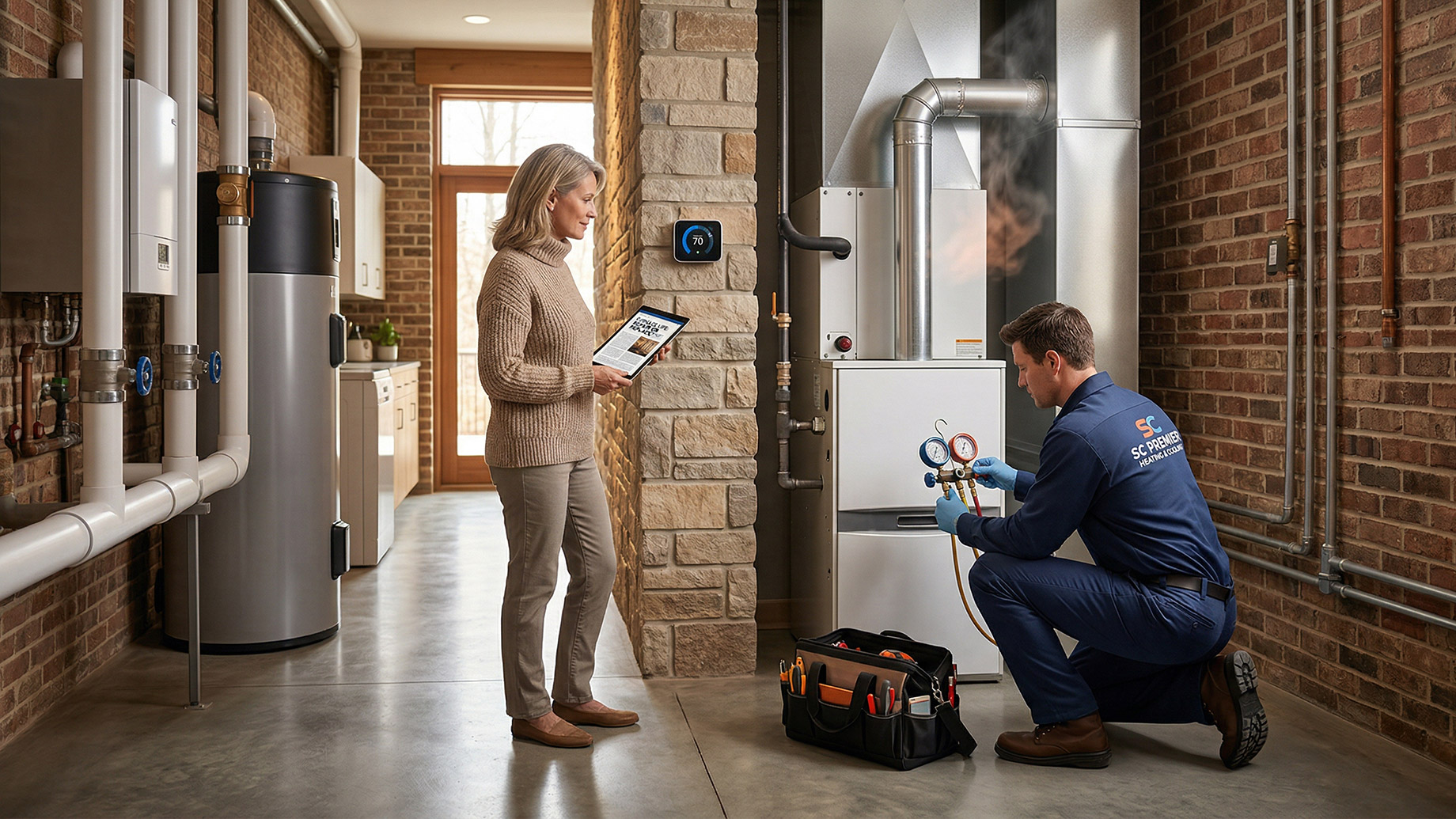
A furnace is one of those things most homeowners do not think about much until something starts going wrong.
If it is heating the house properly, it is easy to assume everything is fine. But at some point, every homeowner starts asking the same question: how long does a furnace last?
According to HVAC professionals in South Carolina, this depends on the type of furnace, how well it has been maintained, and how heavily it is used. In general, most furnaces last anywhere from 15 to 30 years.
Some stop working earlier because of poor maintenance or heavy wear, while others keep running for much longer with regular care.
Knowing the average furnace life can help you plan, avoid surprise breakdowns, and decide when repair makes sense and when replacement is the smarter option.
What is the Average Lifespan of a Furnace?
The average lifespan of a furnace is usually around 15 to 20 years, but that is only a general range. Many well-maintained systems continue working beyond that, sometimes lasting 25 years or even longer.
Still, just because a furnace still turns on does not mean it is in great shape. As furnaces age, they often become less reliable and less efficient.
Parts wear out, heating performance drops, and repair needs become more common.
So if you are wondering how long a furnace should last, the realistic answer is this: a furnace may last a long time, but its age should still be taken seriously once it gets into the later years of its life.
What Affects Furnace Lifespan?
Not every furnace ages the same way. A few important factors can make a big difference in how long it lasts.
Maintenance
Regular maintenance is one of the biggest reasons some furnaces last much longer than others. Annual inspections, clean filters, and small repairs done early can prevent larger problems later.
A neglected furnace may wear out faster because dirt buildup, airflow problems, or failing parts put more stress on the system.
Installation quality
Even a high-quality furnace can have a shorter life if it was installed poorly. Incorrect sizing, bad airflow design, or sloppy setup can cause extra strain from the beginning.
Usage
A furnace in a colder climate usually works harder and longer during the year than one in a milder area. More use often means more wear over time.
Filter changes
A dirty filter restricts airflow, which can make the system work harder than it should. Something as simple as changing the filter regularly can help extend furnace life.
Repair history
If a furnace has already needed several repairs, that can be a sign that it is nearing the end of its useful life. One repair is normal. Constant repairs are a different story.
How Long Does a Furnace Last With Regular Maintenance?
A well-maintained furnace often lasts longer than the average. If it has been inspected yearly, kept clean, and repaired when needed, it may stay in good working condition for 20 years or more.
That said, regular maintenance does not make a furnace last forever. It just gives it the best chance to run safely and efficiently for as long as possible.
Homeowners sometimes assume that if their furnace still heats the house, replacement is unnecessary. That is not always wrong, but age and condition still matter. An older furnace that works today may be much closer to a breakdown than a newer one.
When to Replace a Furnace
A lot of people search for when to replace a furnace because they do not want to spend money too early, but they also do not want to wait until the system fails in the middle of winter.
Here are some signs it may be time to replace your furnace instead of continuing to repair it.
Your furnace is 15 to 20+ years old
Once a furnace gets into this age range, it is smart to start paying closer attention. It may still work fine, but it is no longer young. This is usually the stage when homeowners should start budgeting for replacement.
Repairs are becoming more frequent
If your furnace needs service often, repair bills can start adding up fast. A system that breaks down every season is usually telling you it is getting worn out.
Energy bills are rising
Older furnaces tend to become less efficient over time. If your heating bills are going up and your usage has not changed much, your furnace may not be running as efficiently as it used to.
Heating is uneven
If some rooms are too cold while others are too warm, your furnace may be struggling to distribute heat properly. Uneven heating can happen for different reasons, but an aging furnace is one possible cause.
Strange noises are getting worse
Banging, rattling, squealing, or humming noises can point to worn or failing parts. Some noises are minor, but ongoing unusual sounds should not be ignored.
The furnace runs constantly
A furnace that seems to run longer than normal may be losing efficiency or struggling to keep up with heating demand.
Safety concerns show up during inspection
This is one of the biggest reasons to replace a furnace. If a technician finds a serious issue such as a cracked heat exchanger or unsafe combustion problems, replacement may be the safest choice.
Is an Old Furnace Unsafe Just Because It Is Old?
Not necessarily.
This is one of the biggest misunderstandings homeowners have. A furnace is not automatically unsafe only because it is old. Age alone does not prove that something is dangerous.
What matters more is the condition of the furnace. An older furnace can still be safe if it has been maintained properly and passes inspection. On the other hand, a newer furnace with serious defects may be unsafe.
That is why specific testing matters. If someone says your furnace needs to be replaced, they should be able to explain why in simple terms. It should not just be based on age alone.
If you are being told to replace a furnace right away, ask what the actual issue is. A good explanation might include things like:
- failed parts
- unsafe combustion readings
- visible damage
- heat exchanger problems
- repeated breakdowns
- high repair costs compared to replacement
If no clear reason is given, getting a second opinion can be a smart move.
Repair or Replace?
This is where many homeowners get stuck. If the furnace still works, repair may seem like the obvious choice. And sometimes it is.
A repair often makes sense when:
- The furnace is not that old
- The issue is small
- The system has otherwise been reliable
- Repair costs are reasonable
Replacement usually makes more sense when:
- The furnace is older
- Repairs are becoming common
- Performance is declining
- Safety issues are involved
- The cost to keep fixing it no longer feels worth it
A good rule of thumb is to look at the full picture, not just the current repair bill. Spending money on an old furnace every year can become more expensive over time than replacing it.
How to Make a Furnace Last Longer
You cannot make a furnace last forever, but you can help it last as long as possible.
Here are a few simple ways to protect your system:
- Replace the air filter regularly
- Schedule annual maintenance
- Pay attention to unusual sounds or smells
- Do not ignore small issues
- Keep vents and registers clear
- Make sure airflow is not blocked
Small habits can make a real difference over the years.
Final Thoughts
So, how long does a furnace last? For most homes, the answer is somewhere between 15 and 30 years, with many systems falling near the middle of that range.
The average furnace life depends on maintenance, usage, installation quality, and overall condition.
If your furnace is older but still working well, that does not always mean you need to replace it right away.
But if it is showing signs of wear, needing frequent repairs, or raising safety concerns, it may be time to start planning for a replacement.
The best approach is simple: do not panic just because your furnace is old, but do not ignore the warning signs either. A little attention now can help you avoid a much bigger problem later.
