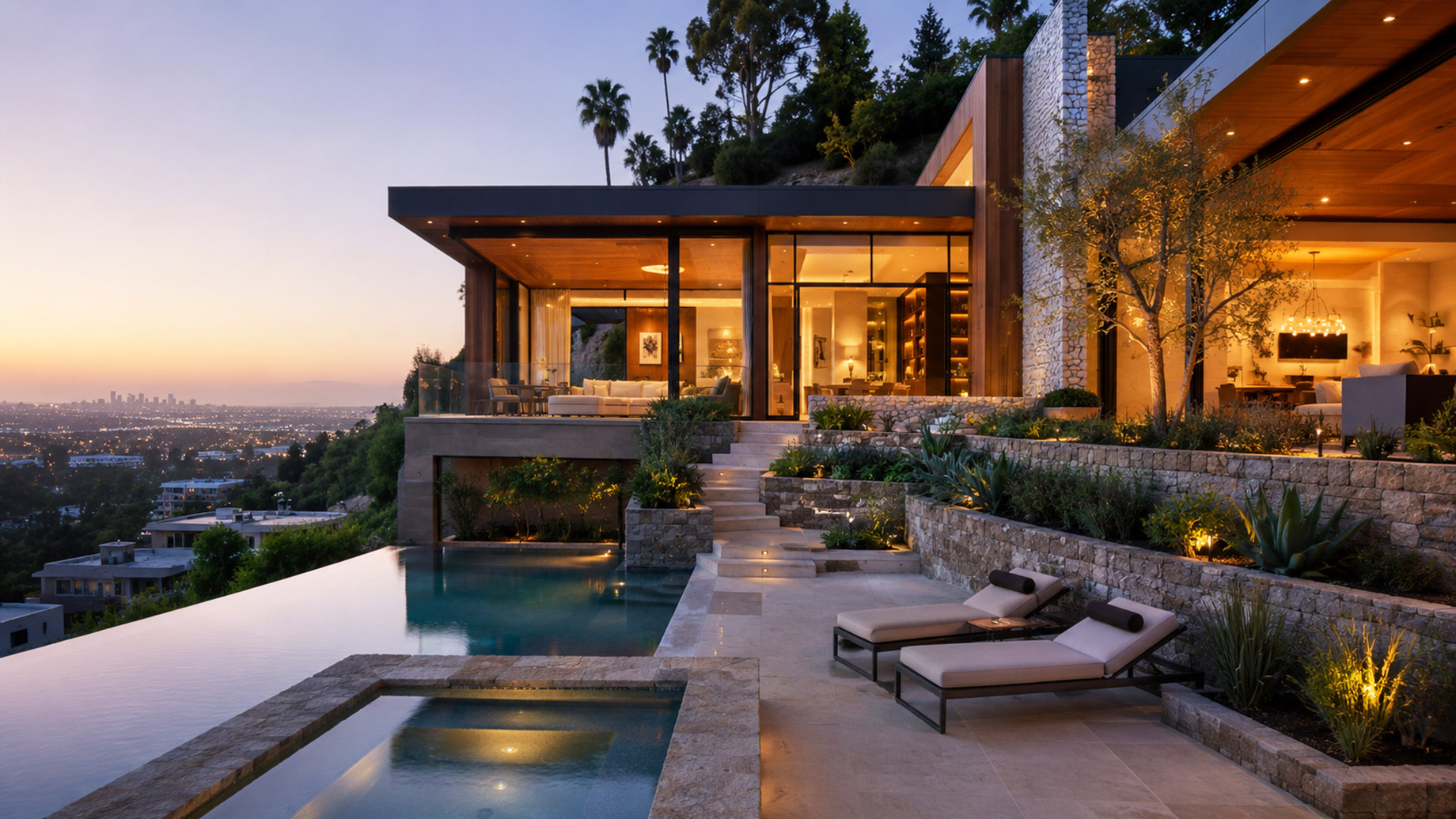
Luxury real estate in Los Angeles has always been about more than square footage. While price, location, and market timing matter, the homes that truly stand apart often share one defining quality: architectural character.
From the hillside estates of Beverly Hills to the tree-lined streets of Studio City, Encino, Toluca Lake, and Glendale, buyers are increasingly drawn to properties that offer more than functionality. They want homes with identity, atmosphere, and a sense of place.
In a competitive market, architectural detail can become one of the strongest emotional and financial drivers behind a successful sale.
Design is No Longer Just a Bonus
For many buyers, especially in the luxury segment, design has become part of the decision-making process from the first impression. A thoughtfully designed home can immediately communicate lifestyle, privacy, comfort, and status.
Elements such as natural light, scale, indoor-outdoor flow, ceiling height, landscape integration, and material selection can strongly influence how a buyer feels during a showing. Even before discussing comparable sales or neighborhood trends, buyers often know whether a home “feels right.”
This emotional connection is powerful. In Los Angeles, where many homes compete for attention online, design-forward properties tend to photograph better, attract stronger interest, and create more memorable showings.
Why Architectural Identity Matters
A home with architectural identity tells a story.
It may be a Spanish-style residence with arched doorways and warm textures. It may be a mid-century modern property with clean lines, open spaces, and walls of glass. It may be a contemporary estate designed around privacy, entertaining, and panoramic views.
Whatever the style, buyers often respond to homes that feel intentional.
Generic upgrades rarely create the same impact as cohesive design. A luxury buyer can usually sense when a property has been thoughtfully curated versus simply renovated for resale. This is why architectural consistency can become a major value factor.
In Los Angeles neighborhoods where inventory is diverse, distinctive homes are easier to remember and easier to market.
The Role of Neighborhood Context
Architecture does not exist in isolation. The surrounding neighborhood plays a major role in how a home is perceived.
A character-rich home in Glendale may appeal to buyers who appreciate historic charm, mature landscaping, and hillside views. A sleek modern property in Beverly Hills may attract buyers looking for privacy, prestige, and refined entertaining spaces. In Studio City or Sherman Oaks, buyers may prioritize layout, lifestyle convenience, and the connection between indoor and outdoor living.
This is why local expertise matters. Understanding what buyers value in each neighborhood helps determine how a home should be positioned, marketed, and presented.
For homeowners preparing to sell, working with a local real estate professional who understands both market data and buyer psychology can make a meaningful difference. In the Los Angeles area, Tooyn Homes offers a boutique approach to real estate, combining neighborhood knowledge with a strong appreciation for design, presentation, and lifestyle-driven marketing.
Presentation Can Elevate Perceived Value
Even a beautiful property can underperform if it is not presented correctly.
Professional photography, staging, lighting, copywriting, and digital exposure all influence how buyers perceive value before they ever step inside. In luxury real estate, presentation is not decoration — it is strategy.
A well-presented home should highlight:
- Architectural strengths
- Natural light and flow
- Key lifestyle spaces
- Outdoor areas
- Unique design details
- Neighborhood appeal
- Emotional buyer benefits
The goal is not simply to show rooms. The goal is to help buyers imagine a life inside the home.
Buyers Are Looking for Lifestyle, Not Just Property
Today’s luxury buyers are often searching for a complete lifestyle. They want privacy, beauty, comfort, convenience, and a home that reflects who they are.
This is especially true in Los Angeles, where buyers may compare very different neighborhoods and property styles before making a decision. A buyer considering Beverly Hills may also look at Encino or Calabasas. Someone drawn to Studio City may also explore Toluca Lake, Sherman Oaks, or Valley Village.
Because of this, successful real estate marketing must connect the property to the lifestyle around it.
A home near dining, studios, schools, hiking trails, shopping, or cultural destinations can carry additional emotional appeal. When those lifestyle benefits are communicated clearly, buyers are more likely to understand the full value of the property.
Architectural Details That Often Influence Buyer Interest
While every home is different, certain design features tend to attract strong attention in the Los Angeles market:
Indoor-Outdoor Flow
California living is strongly connected to outdoor space. Sliding glass doors, patios, pools, courtyards, balconies, and landscaped entertaining areas can significantly increase buyer appeal.
Natural Light
Homes with abundant natural light often feel larger, warmer, and more inviting. Light affects both photography and in-person experience.
Privacy
Luxury buyers often prioritize privacy. Gated entries, mature hedges, thoughtful layouts, and secluded outdoor spaces can all add perceived value.
Timeless Materials
Stone, wood, plaster, steel, glass, and other quality materials can create a sense of permanence and sophistication.
Flexible Spaces
Home offices, guest suites, gyms, media rooms, and creative studios have become increasingly important as buyers seek homes that support modern living.
Sellers Should Think Like Buyers
Before listing a home, sellers should ask one important question: what will buyers remember?
In a crowded market, buyers may tour several properties in one week. A home needs a clear identity to stand out. That identity may come from architecture, views, location, design, lifestyle, or emotional warmth.
The strongest listings usually combine several of these elements.
This is where thoughtful preparation becomes essential. Small improvements can sometimes create meaningful impact, especially when they support the home’s existing architectural style. Rather than making random upgrades, sellers benefit from identifying which details will matter most to the right buyer.
The Future of Luxury Real Estate is More Personal
As online listings become more competitive, luxury real estate marketing is becoming more personal, more visual, and more story-driven.
Buyers are not only evaluating homes by numbers. They are evaluating how a property makes them feel, how it fits their lifestyle, and whether it offers something memorable.
Architectural character gives a home that emotional edge.
In Los Angeles, where design, culture, lifestyle, and real estate intersect, the most successful properties are often those that feel distinctive and authentic. Whether modern, historic, minimalist, or traditional, a home with a clear sense of identity will always have an advantage.
For sellers, that means presentation matters. For buyers, it means the right home is not always the largest or newest — it is the one that feels aligned with the life they want to build.
