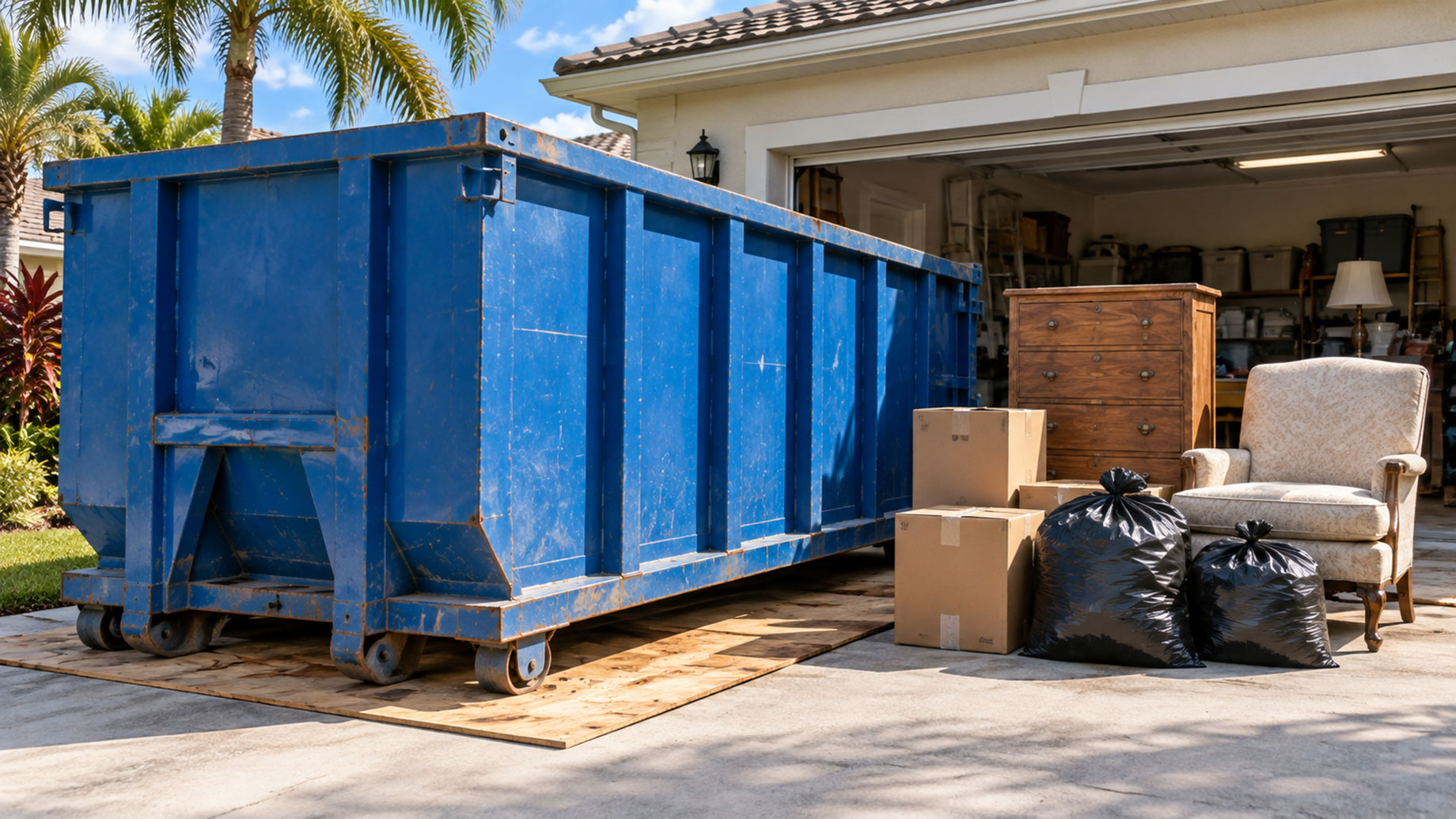
Most home cleanouts start small. You plan to clear the garage on a Saturday, then you open the attic, then you remember the shed. By Sunday night, there are twelve bags in the driveway, a broken dresser you cannot lift alone, and no plan for any of it.
The problem is almost never effort. It is volume. Homeowners underestimate how much comes out of a house lived in for a decade, and that miscalculation turns a weekend into a month. Here is what to settle first.
Define the Scope Before You Move a Single Box
Walk every space and rank it
Go through the whole house with a notepad. Attic, garage, shed, closets, the spare room that became a storage room. Mark each space as full, clear, partially clear, or leave alone, in one pass, before you touch anything.
Separate the four outcomes early
Every item ends up in one of four piles, the standard split when decluttering a home: keep, donate, sell, or dispose. Only the dispose pile decides your container size. Sort as you walk, because guessing at disposal volume is where the plan goes wrong. The keep pile still needs a home, which is where good utility closet organization pays off.
Set a hard end date
A cleanout without a deadline turns into storage. Pick your delivery date and work backwards. That one constraint does more for momentum than any system.
Estimating Debris Volume Realistically
Match the size to the job
One cubic yard is a cube three feet on every side, and it fills faster than you expect. Roll-off containers in this market run from 15 to 40 cubic yards:
- 15-yard: a focused single-room or garage cleanout with light furniture
- 20-yard: a multi-room cleanout, the most common residential choice
- 30-yard: a whole-house clear-out with bulky furniture and appliances
- 40-yard: an estate cleanout, or a cleanout combined with renovation debris
Between two sizes, take the larger. A second haul costs far more than the size difference.
Weight matters as much as space
Every container also carries a tonnage allowance that scales with its size. Across the Tampa market, those run from roughly one ton on the smallest to eight tons on the largest, so confirm the figure for your size. Dense material hits that limit long before the container looks full.
What Will and Will Not Be Accepted
Standard household debris
Furniture, mattresses, household junk, wood, drywall, flooring and tile, scrap metal, and yard waste all go in without issue.
Items that are prohibited outright
Paint, solvents, oil and gasoline, chemicals and pesticides, batteries, tires, appliances containing refrigerant, asbestos, medical waste, and liquid waste are excluded. Prohibited items in a load can trigger extra fees, fines, or a refusal to haul. Stage them separately from day one.
Heavy materials need their own container
Concrete, dirt, sand, gravel, brick, and masonry cannot be mixed with general waste. These need a dedicated heavy-duty container, usually one material type per load. If your cleanout includes an old patio or walkway, plan for a second container.
Hillsborough County runs a household hazardous waste program for paint and chemicals, and accepts electronics separately at its Community Collection Centers. Check current locations and collection days before loading your car.
Arranging Disposal and Choosing a Provider
Go local, not through a broker
National booking sites subcontract your job to whoever is available, so you have no direct line to the driver when something changes. Local operators like CFL Dumpsters serve Brandon, Valrico, Riverview, Seffner, Tampa, and surrounding Hillsborough communities directly, so a swap or schedule change goes to the same people handling your container. On a cleanout, where timelines slip constantly, that access beats a marginally lower quote.
Ask these four questions before booking
- What tonnage is included, and what is the rate per ton after that?
- How many rental days are included, and what is the daily charge beyond them?
- Do I need a separate container for concrete or dirt?
- What are the exact container dimensions?
Book two to three days ahead
Residential demand clusters around weekends. Two or three days of lead time gets you the size you want, not what is left on the lot.
Placement, Access and Driveway Protection
Measure the drop zone
A 20-yard container runs roughly 22 feet long and 8 to 8.5 feet wide. You also need clearance in front for the truck to tilt and roll it off, plus overhead room. Low branches and power lines are the most common reason deliveries fail.
Protect the surface
Lay plywood under the container’s contact points. Asphalt and pavers scar easily under concentrated weight, and the repair costs more than the boards.
Check street rules and HOA restrictions
If the driveway will not work, street placement may require a permit, and requirements differ between the City of Tampa and unincorporated Hillsborough County. Many neighborhoods also cap how long a container can sit in view. Confirm both before booking.
Where the Costs Actually Come From
Three variables drive your total: container size, tonnage overage, and rental duration. A standard residential rental runs 7 to 10 days with a per-day charge after that, plus a per-ton charge past the included weight, commonly $75 to $165 in the Tampa market.
Compare that against hauling it yourself. Multiple trips mean fuel, tipping fees, time off work, and a real chance of damaging your vehicle. For the past two truckloads, a container wins on both cost and time.
To keep the bill down: donate or sell before delivery, break down bulky furniture so it packs flat, and keep dense material out of the general load.
A Working Cleanout Sequence
- Two weeks out: walk the house, rank rooms, set the end date
- Ten days out: book donation pickup, list anything you plan to sell
- Five days out: estimate volume, confirm size, book the drop
- Two days out: clear the drop zone, lay down protection
- Delivery day: load the largest items first to build a base
- When full: call for haul-away or a swap
Conclusion
A full home cleanout is a logistics problem before it is a labor problem. The homeowners who finish in one weekend are not working harder. They sized the container right, pulled restricted items in advance, and cleared the drop zone before the truck arrived. Plan for an hour and save three weekends.
Frequently Asked Questions
What size dumpster do I need for a full house cleanout?
Most three-bedroom cleanouts land in the 20 to 30 yard range. Choose 30 if the job includes bulky furniture, appliances, or a long-neglected garage.
Can I put a refrigerator or air conditioner in a roll-off container?
Not in a standard container. Refrigerant must be professionally removed and certified first, and many haulers exclude these units entirely. Tires, batteries, paint, and chemicals are excluded too.
How long can I keep the container on my property?
Standard residential rentals run 7 to 10 days, with a daily rate after that. Your HOA may impose a shorter limit, so check before booking.
What happens if I go over the weight limit?
You are billed a per-ton rate on the overage. Keeping concrete, dirt, and other dense material out of the general load is the simplest way to avoid it.
