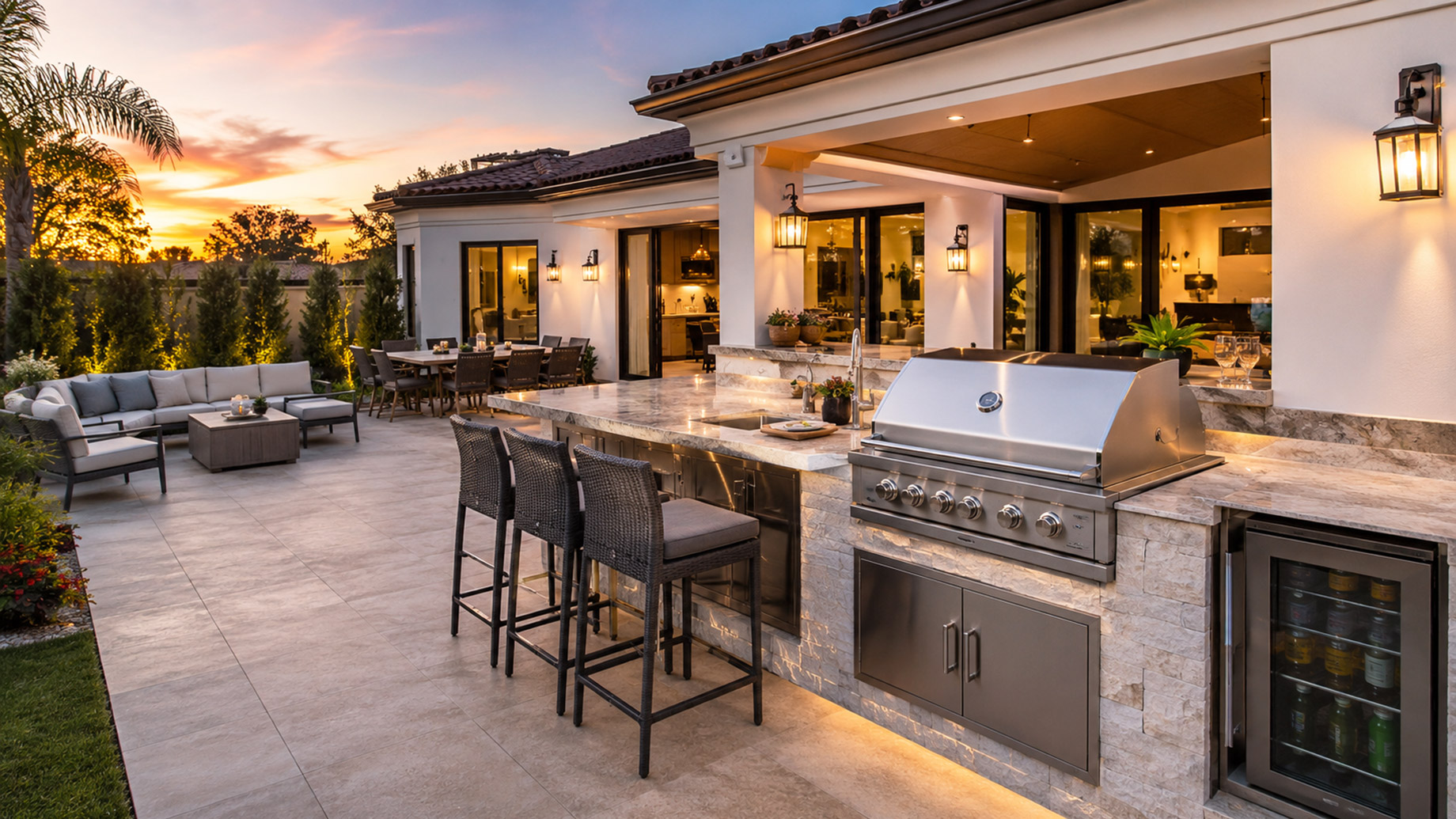
Outdoor living has evolved far beyond a simple grill on the patio. Today, homeowners are treating their backyards as true extensions of the home, with spaces designed for cooking, gathering, relaxing, and entertaining in equal measure. At the center of this shift is the outdoor kitchen: a feature that blends lifestyle appeal with practical function and can significantly elevate how a property is used and perceived.
A well-designed outdoor kitchen is not just about aesthetics. It supports easier entertaining, reduces traffic in and out of the house, and helps create a more intentional connection between the home’s interior and exterior spaces. For homeowners thinking about upgrading their property, the right design can also contribute to long-term value by making the home more attractive to future buyers who want a move-in-ready outdoor entertaining area.
The strongest outdoor kitchens are the ones that balance beauty with usability. They are tailored to the home, the climate, and the habits of the people who will actually use them. Rather than chasing trends, homeowners get the best results when they start with a clear understanding of how the space should function day to day.
Start With Lifestyle, Not Appliances
One of the most common mistakes in outdoor kitchen planning is beginning with a wish list of products instead of a vision for how the space will be used. While premium grills, refrigeration, storage, and seating all matter, those features only work well when they support the homeowner’s actual lifestyle.
A family that hosts large weekend cookouts will need something different from a couple that wants a quiet outdoor dining setup for weekday dinners. Some homeowners want a full culinary station with prep areas, multiple cooking surfaces, and beverage storage. Others simply need a durable and elegant setup anchored by a quality grill, a bit of counter space, and comfortable seating nearby.
That is why early planning should revolve around a few practical questions:
- How often will the space be used?
- Will it be used primarily for entertaining or daily family meals?
- How many people typically gather at one time?
- Does the homeowner prefer quick grilling, slow smoking, or multi-course outdoor cooking?
- Will the space also need to support lounging, dining, or fire-feature seating?
These answers guide every major design decision that follows. They help define the scale of the kitchen, the right placement within the yard, and the features worth investing in most heavily.
Think in Zones for Better Flow
The most successful outdoor kitchens are designed in zones. Much like an indoor kitchen, they perform best when cooking, prep, serving, and socializing areas work together without competing for space.
A cooking zone usually includes the grill, smoker, side burner, or other primary equipment. This should be easy to access, but not so close to seating that smoke, heat, or foot traffic becomes disruptive. A prep zone benefits from generous countertop space and proximity to refrigeration or storage. A serving zone may include a bar counter, buffet ledge, or adjacent dining area where finished food can move easily from grill to guest.
Then there is the social zone, which is often the true heart of the backyard. This can be bar seating, a dining table, a lounge arrangement, or a nearby fire feature. Homeowners often assume the kitchen itself is the destination, but in reality, people gather where they can comfortably talk, eat, and linger. The outdoor kitchen should support that experience, not dominate it.
When these zones are thoughtfully arranged, the space feels intuitive. The cook can remain part of the conversation, guests know where to gather, and the entire backyard works as one cohesive environment rather than a collection of disconnected features.
Match the Kitchen to the Architecture of the Home
Luxury outdoor design feels most compelling when it appears naturally connected to the property. An outdoor kitchen should look like it belongs to the home, not like it was dropped into the yard as a separate project.
Materials play a major role here. Stone, brick, stucco, metal, and cabinetry finishes should relate to the home’s existing architecture and exterior palette. A sleek contemporary home may support clean lines, darker finishes, and minimalist hardware. A more traditional residence may call for warm stonework, classic detailing, and a softer visual transition into the landscape.
Scale matters as well. A large, elaborate kitchen can overwhelm a modest backyard, while an undersized setup can feel underwhelming on an expansive property with a pool, lounge space, and architectural hardscaping. The dimensions of the kitchen should be in proportion with the house, the patio, and the surrounding amenities.
This is one reason many homeowners benefit from working with specialists who understand how cooking equipment, hardscaping, and overall outdoor living design fit together. For example, homeowners researching outdoor kitchens in Lancaster, PA can get a clearer sense of how layout, appliances, and materials come together in a fully integrated backyard setting.
Choose Features That Improve Daily Use
It is easy to get excited about high-end add-ons, but the best investments are the ones that improve daily usability. Homeowners should think in terms of convenience, efficiency, and maintenance as much as visual impact.
Some of the most worthwhile features include:
- Durable counter space for prep and plating
- Built-in storage for tools, fuel, and serving essentials
- Refrigeration for beverages and cooking ingredients
- Task lighting for evening use
- Trash and cleanup solutions
- Weather-resistant materials that hold up over time
Depending on the climate and layout, homeowners may also want shelter elements such as pergolas, roof structures, or partial covers. These can make the kitchen more comfortable in sun, light rain, or changing seasons and also help visually anchor the space within the yard.
Utility planning is equally important. Electrical, gas, and water access should be addressed early, not as an afterthought. A beautiful design can quickly become frustrating if the layout does not support safe, convenient infrastructure for cooking and cleanup.
Prioritize Durability in Every Material
Outdoor kitchens are exposed to weather, temperature swings, moisture, and constant use. Materials must be selected with durability in mind, especially in four-season climates where freeze-thaw conditions can shorten the life of poorly chosen finishes.
Cabinetry should be made from weather-resistant materials designed specifically for exterior installations. Countertops should tolerate heat, spills, and prolonged outdoor exposure. Hardware, fixtures, and appliances need to stand up to changing conditions without rusting or degrading prematurely.
This is where value and price are not always the same. A cheaper material may reduce upfront cost, but if it warps, stains, cracks, or requires replacement after a few seasons, it becomes the more expensive choice over time. Homeowners focused on long-term value should look for finishes and systems that offer both performance and visual longevity.
A low-maintenance outdoor kitchen also increases the odds that the space will be used often. If surfaces are hard to clean or materials are too delicate for regular entertaining, homeowners may find themselves avoiding the very feature they were most excited to build.
Create Comfort Beyond the Kitchen Itself
An outdoor kitchen succeeds when it is part of a broader experience. Cooking outdoors is only one piece of the appeal. The surrounding environment should encourage people to stay, gather, and enjoy the space.
That means considering furniture, circulation paths, shade, lighting, and seasonal usability. Guests should be able to move comfortably through the area without crowding the cooking space. Seating should feel intentional rather than leftover. Lighting should support both function and ambiance, with brighter task lighting in cooking areas and softer illumination in dining or lounge zones.
Homeowners may also want to think about adjacent enhancements such as fire features, heating, audio, or landscaping that frames the outdoor kitchen and softens hardscape-heavy areas. Even small details, like planters, privacy screening, or coordinated textiles, can make the space feel more finished and inviting.
When all of these elements work together, the outdoor kitchen becomes more than a utility feature. It becomes a destination within the property.
Consider Resale Value, But Design for Real Life
Outdoor kitchens are often discussed in terms of home value, and for good reason. Buyers increasingly appreciate homes with upgraded outdoor living areas, especially when those spaces feel thoughtfully planned and ready to use. A well-executed outdoor kitchen can set a property apart in a competitive market by showcasing lifestyle potential that goes beyond square footage alone.
That said, the best resale value usually comes from designing the space well for current living. Overly niche layouts, impractical features, or design choices that prioritize novelty over function can limit long-term appeal. Buyers respond to quality, coherence, and usability. They want to see a space they can immediately imagine enjoying themselves.
A timeless layout, durable materials, and features that support entertaining across a variety of lifestyles tend to hold their appeal best. In that sense, designing for everyday use and designing for value are often the same objective.
Plan the Project Holistically
An outdoor kitchen should never be treated as an isolated add-on. It intersects with patio design, drainage, utilities, traffic flow, furniture placement, and the visual hierarchy of the yard. The strongest results come from planning the entire outdoor environment together rather than making piecemeal decisions.
This holistic approach helps homeowners avoid common problems, such as squeezing a kitchen into a location with poor circulation, selecting appliances before understanding space constraints, or finishing the patio only to realize utility lines still need to be run. It also creates opportunities to make the entire backyard feel more intentional and luxurious.
Even for smaller properties, careful planning can produce impressive results. A compact outdoor kitchen with the right orientation, storage, and adjacent seating may outperform a larger but poorly organized design. Space efficiency matters just as much as square footage.
Final Thoughts
A thoughtfully designed outdoor kitchen enhances more than a backyard. It changes how a home is experienced, creating new routines for dining, gathering, and relaxing while strengthening the connection between architecture and outdoor living. For homeowners who value both daily enjoyment and long-term property appeal, it is one of the most rewarding upgrades available.
The key is to approach the project with clarity. Focus on how the space will actually be used, organize it for comfort and flow, choose durable materials, and make sure the design belongs to the home as a whole. When those fundamentals are in place, an outdoor kitchen becomes a lasting feature that feels every bit as essential as the rooms inside.
