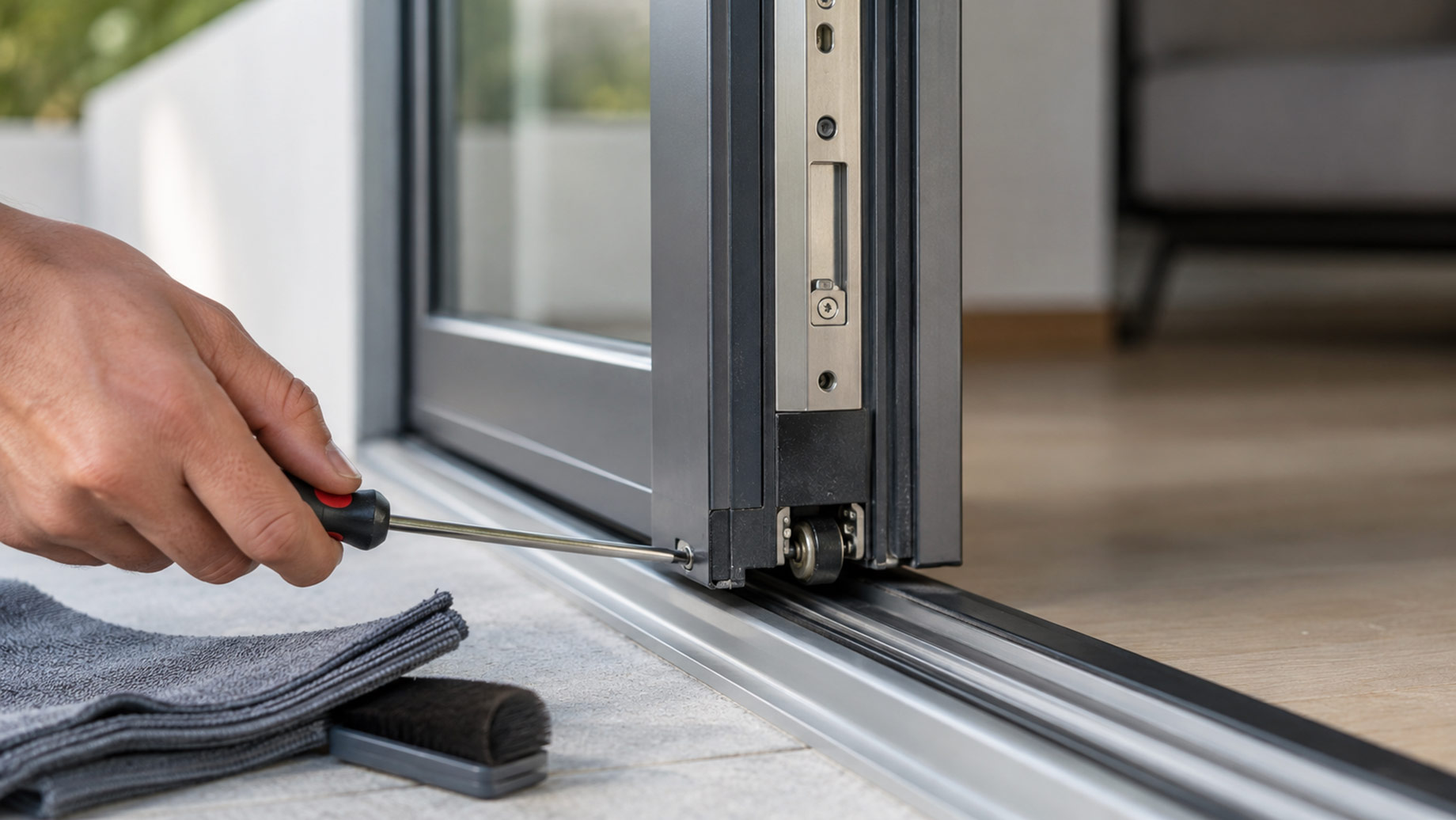
Sliding doors become difficult gradually. Dust collects in the track, rollers wear, guides loosen, and the lock no longer aligns with its strike.
Routine maintenance protects smooth movement and helps find safety or security problems early.
Identify the System
Record door material, weight, hardware model, roller type, guide, stops, anti-jump parts, and lock.
Keep drawings and product codes. Surface-mounted, pocket, bypass, glass, and garage-style systems need different access.
Inspect the Track
Look for dirt, dents, loose fasteners, corrosion, and wear.
Do not sand or reshape a track without manufacturer guidance. Small changes can affect roller contact.
Confirm the track remains level and its supporting structure is secure.
Clean Correctly
Vacuum loose debris before wiping. Use cleaner approved for the finish and roller material.
Avoid flooding pocket tracks or enclosed systems. Remove moisture after cleaning.
Do not apply random oil. Some lubricants attract dust or damage polymer parts.
Check Rollers
Move the door slowly and listen for flat spots, grinding, or clicking.
Quality sliding door hardware uses components designed as a set. Replace rollers with approved parts matching capacity and track profile.
Uneven roller adjustment can tilt the panel and misalign the lock.
Check the Floor Guide
The guide should remain engaged without scraping the finish.
Tighten its mounting and inspect wear. A loose guide allows the bottom to swing, stressing hangers and locks.
Confirm guide clearance after roller adjustment.
Test Stops and Anti-Jump Parts
Stops must prevent excess travel. Anti-jump devices should limit upward movement without rubbing during normal operation.
Check fasteners and position. A stop that has shifted may allow the handle or panel to strike the wall.
Test soft-close functions separately.
Inspect Handles
Loose handles encourage users to pull at the wrong angle. Tighten using the correct tools and torque.
Check finger clearance and sharp edges. Recessed pulls should remain secure.
Do not use the lock cylinder as a handle.
Inspect the Lock
Operate the lock with the door open and closed. It should move without forcing.
A door lock product range may include different cylinders, handles, hook locks, and garage door mechanisms. Use parts intended for the sliding or closing action.
If the lock works open but binds closed, inspect door alignment and strike position.
Check the Strike
The strike or keep should be firmly attached to structural material.
Look for wear, loose screws, deformation, and marks showing poor alignment.
Do not enlarge the opening repeatedly to hide a dropping door. Correct the rollers or support.
Review Seals
Weather or brush seals affect operating force. Clean them and check for tearing or flattening.
A thick replacement seal can push the door away from the lock or make movement difficult.
Use the correct profile and compression.
Inspect Glass and Panel Attachments
For glass doors, inspect clamps, gaskets, holes, and chips using the approved procedure.
Do not overtighten fittings. Replace damaged glass according to safety requirements.
For timber or metal panels, check splits, loose frames, and fastener pullout.
Set Maintenance Frequency
High-use entrances need more frequent inspection than residential closet doors.
Increase frequency in dusty, wet, coastal, or public environments.
Use a checklist and record adjustment or replacement.
Test After Work
Move the door through full travel. Confirm:
- Smooth motion
- Guide engagement
- Stops
- Anti-jump clearance
- Handle security
- Lock alignment
- Closing force
Repeat at normal speed and from both sides.
Keep Spares
For buildings with many identical doors, keep approved rollers, guides, stops, and lock parts.
Label parts by system. Visually similar components may have different ratings.
Allow Access to Concealed Parts
Pocket doors and covered track systems often hide the parts most likely to need adjustment. Before removing finishes, check for designed access panels, removable stops, or manufacturer instructions. Forcing a panel can damage trim and turn a small roller adjustment into a larger repair.
When renovating, preserve practical access to rollers, hangers, and soft-close devices. Photograph concealed hardware and note its location. Future technicians can then service the door without unnecessary demolition.
Control Moisture and Corrosion
Exterior and bathroom doors face water, condensation, and cleaning chemicals. Look for rust, white corrosion, swollen timber, or mineral deposits around tracks and fasteners. Correct the water source before replacing damaged hardware, or the new parts will fail in the same way.
Use only compatible cleaners and lubricants. Heavy grease can collect grit, while an aggressive chemical may damage coatings, plastics, or seals. Where corrosion is repeated, confirm whether a more suitable material or finish is available for the environment.
Prioritize Safety-Critical Defects
Not every defect has the same urgency. A noisy roller may be monitored briefly, but a loose top hanger, broken anti-jump device, cracked glass attachment, or unreliable lock needs prompt action. Restrict use when a heavy panel could leave its track or fall.
Record the defect, temporary control, repair date, and parts used. A simple history helps identify doors that consume excessive maintenance and should be overhauled or replaced. It also gives building managers evidence that safety-related work was completed.
Where doors form part of an escape route or accessible entrance, test them against the building’s operational requirements after maintenance. Confirm that opening force, clear width, locking behavior, and signage remain suitable. Coordinate any fire-rated or powered door work with a qualified specialist, because ordinary adjustments can affect the complete system.
Conclusion
Sliding door maintenance should cover the complete system, not only the track.
Clean correctly, adjust rollers, secure guides and stops, and investigate lock misalignment instead of forcing it. Regular inspection keeps the door easier to use and helps preserve safety and security.
