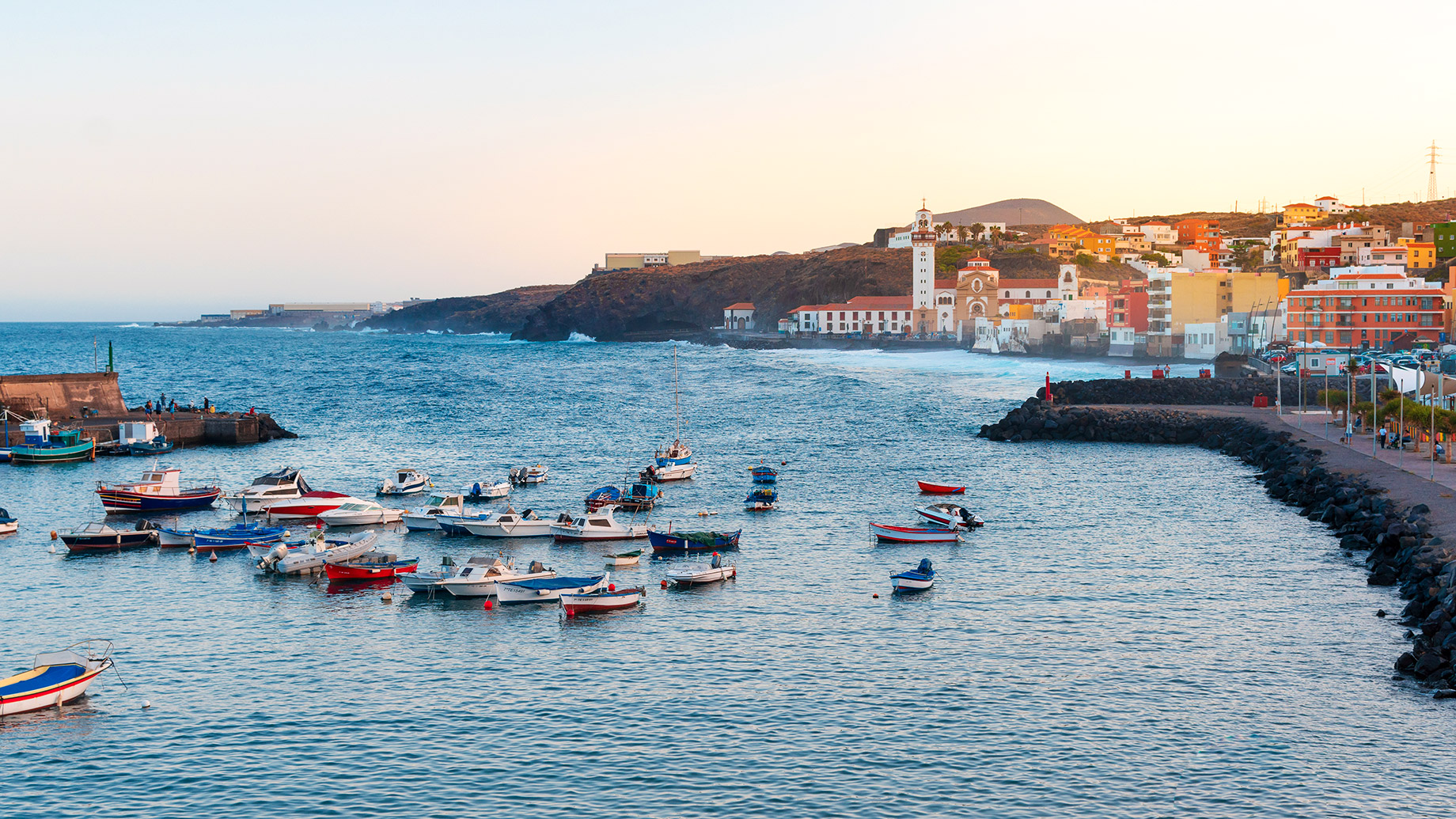
Tenerife is usually associated with black volcanic sand and lazing on the beach. Few people, when planning their holiday, realise that just a few miles from the coast lies a completely different world, with depths of over a thousand metres and fish that attract visitors from all over Europe. Fishing in Tenerife bears little resemblance to what enthusiasts of carp ponds and river backwaters are used to. Here you’ll find blue marlin, tuna weighing 30–50 kg, wahoo, and sea bream, all in the Atlantic, where the waves rock the boat and the rod bends into an arc. Planning a fishing trip to Tenerife is easier than it seems, but it’s useful to have a rough idea of what a day out on the water entails.
Morning: packing up and leaving the marina
Most charter boats set sail from the port of Las Galletas or the Puerto Colón marina in the south of the island. The captain usually sets the departure time for 7–8 am, whilst the wind is light and the sea is relatively calm. Before boarding, the crew gives a brief briefing: they show where the life jackets are, explain the safety rules and assign roles on board. For those heading out to sea for the first time, this stage takes away most of the anxiety.
When boarding the aircraft, there are a few practical points to bear in mind:
- sun cream with a high SPF, reapplied every two hours;
- polarised sunglasses, without which it is almost impossible to see the fish biting in bright sunlight;
- a light windbreaker or waterproof jacket in case of splashes;
- a supply of drinking water and a light snack;
- travel sickness tablets, if you are prone to seasickness.
Experienced anglers advise against bringing unnecessary items: there isn’t much space on the boat, and all the necessary equipment is provided by the crew. Tackle, lures and bait are included in the price of the trip.
Out on the open sea: my first few hours on the water
It takes 15–20 minutes to leave the marina. The boat passes through the breakwater and heads out to the open ocean, where the depth drops sharply to 800–1,000 metres just a few miles from the coast. It is precisely this change in the seabed topography that makes the waters off the southern coast of Tenerife so productive for fishing.
The Canary Current brings a rich food supply to the islands, attracting shoals of pelagic fish.
First of all, the skipper selects a fishing spot, using data from the fishfinder, the direction of the current and information from other skippers. Then the actual fishing begins, and it follows a clear sequence:
- Setting up the trolling gear. The crew casts out four to six rods with different lures: wobblers, octopus lures and live bait. The lures are positioned at varying distances from the stern to simulate a school of fish.
- Covering the route. The boat travels at a speed of 5–7 knots along the edge of the drop-off. This can last from 30 minutes to an hour and a half. The entire crew keeps an eye on the rods.
- Bite and playing the fish. When the reel starts running, the captain slows down, and the rod is handed to the angler. Landing a large fish takes between 10 minutes and an hour, depending on the species and size.
- Change of tactics. If trolling proves unsuccessful, the crew may switch to jigging or bottom fishing whilst anchored over a reef area.
The breaks between active fishing sessions are spent watching the ocean. Dolphins and sea turtles are often spotted off the coast of Tenerife, and pilot whales pass by between February and May. Many participants note that it is these moments between bites that are just as memorable as the fishing itself.
What fish are caught off the coast?
The species composition of the catch depends on the season and the depth at which fishing takes place. Tenerife Excursions 365, a company that organises ocean trips with professional skippers, has been compiling statistics on catches for many years. Based on these statistics, the key species that are caught most frequently can be identified:
- Blue marlin. The flagship species for trophy fishing in the Canary Islands. The season runs from June to November. Individual fish can weigh up to 500 kg, although the average weight is 150–250 kg.
- Yellowfin tuna. Actively caught from spring to autumn using trolling and casting tackle. A powerful fish; the fight with it on the rod is a real thrill.
- Dorado (mahi-mahi). A colourful, fast fish that stays near floating objects and seaweed beds. Found all year round, but peaks in summer.
- Wahoo. One of the fastest fish in the Atlantic, reaching speeds of up to 80 km/h. Caught less frequently, but considered a coveted trophy.
- Barracuda and various species of horse mackerel. These are caught closer to the shore and are suitable for those who prefer a more relaxed fishing experience without hours of waiting.
Captains follow the ‘catch and release’ principle when it comes to marlin: they take a photo of the fish alongside the boat and then set it free. Tuna and sea bream, however, are usually kept. Many restaurants along the coast will cook guests’ catch for a small fee, which is a real treat after a day out on the water.
Return to the marina and a recap of the day
The return journey usually takes less time, as the skipper chooses a direct route. The boat arrives at the marina around 2–3 pm, and by then it’s time to take stock of the day’s events.
What does a participant receive at the end of the fishing trip in Tenerife?
- Photos and videos of the catch, filmed by the crew.
- A portion of the catch, if edible species were caught.
- Practical experience with sea fishing tackle, which will come in handy on future trips.
Some organisers offer additional options: combined trips featuring open-water swimming, whale watching or sunset cruises. The choice depends on the specific group’s priorities.
The ideal duration of a fishing trip is between 4 and 6 hours. This is enough to enjoy a fulfilling experience without getting too tired in the sun.
Tenerife is one of those rare places in Europe where you can head out to sea at any time of year: the warm climate and proximity to deep-water areas mean you can fish all year round. A day on the boat is dynamic and unpredictable. Even if you don’t land a trophy fish, the experience of being out on the Atlantic, encountering dolphins and working with the tackle is well worth the time spent. And those lucky enough to return with a serious catch usually book their next trip whilst still at the jetty.
