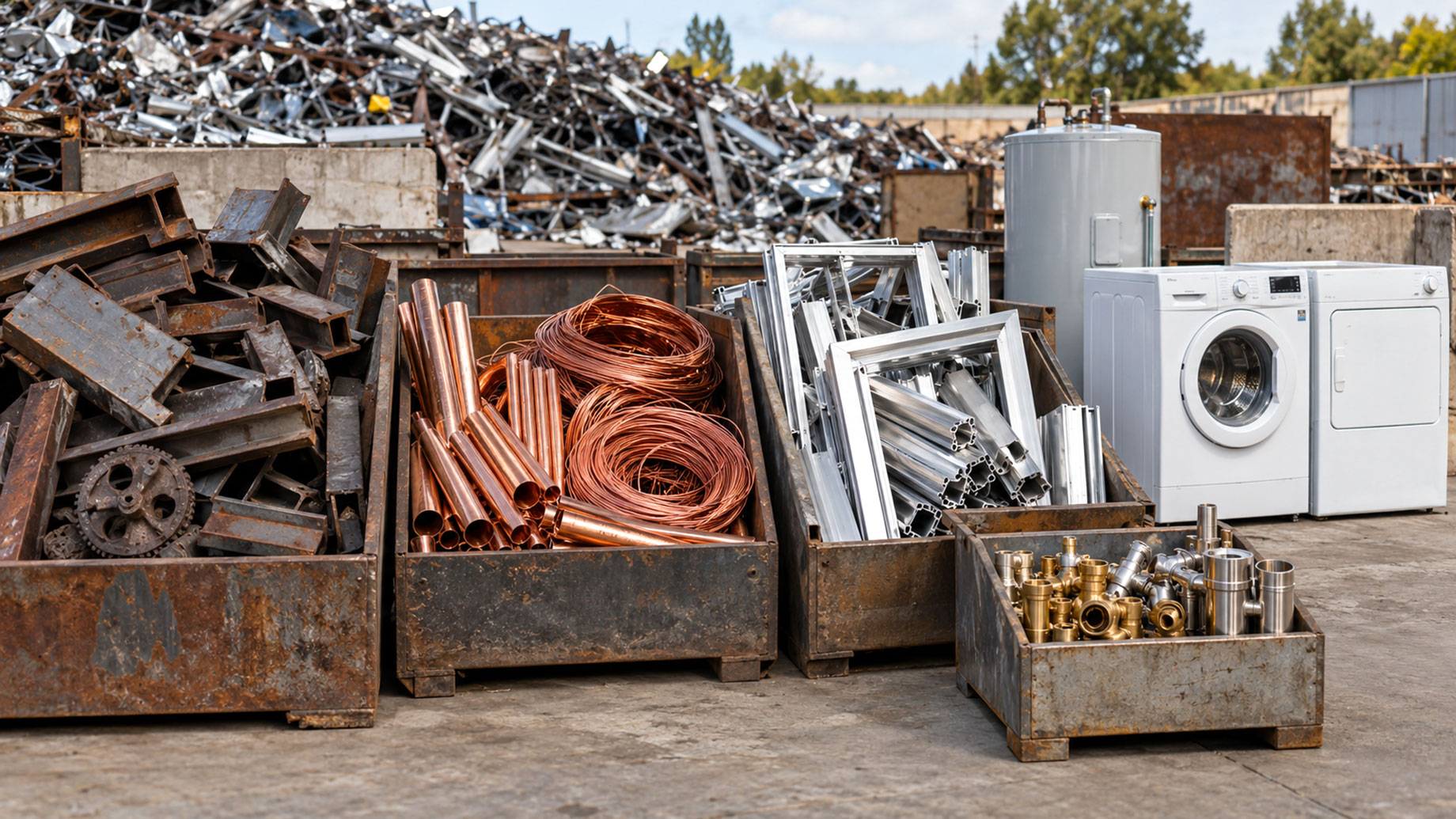
Property owners and contractors regularly hold more recoverable metal than they realize, and uncertainty about what a facility will actually take keeps it sitting in storage. Facilities handling scrap metal recycling by Taylor’s Scrapyard and Metal Recycling process a wide range of material continuously, and in practice five broad categories account for most of what crosses the scale each week. Recognizing them turns a cluttered shop corner or a demolition pile into something with measurable value rather than an ongoing disposal expense.
Structural Steel and Cast Iron
Ferrous material makes up the largest share by tonnage almost everywhere. Beams, angle iron, rebar, pipe, plate, engine blocks, brake rotors, cast tubs, farm implements, and machine frames all belong here. Individual pieces price lower per pound than the alloys, but the weight involved makes these loads worthwhile whenever a demolition, barn clearing, or equipment replacement produces them. Volumes at that scale generally justify a container on site rather than repeated trips, since one box holds what would otherwise take a week of hauling.
Copper Wiring, Tubing, and Fittings
Copper carries the highest per-pound value most customers will encounter. Plumbing lines, roof flashing, electrical feeders, motor windings, and bus bar all qualify, with pricing separated into grades by cleanliness. Bare bright wire sits at the top, followed by heavier tubing showing light oxidation, then material carrying solder joints, paint, or attached brass. Staff at Taylor’s Scrapyard and Metal Recycling price insulated cable on recoverable copper content and strip it mechanically, so keeping copper away from steel during collection preserves those distinctions once the load reaches intake.
Aluminum in Its Many Forms
Aluminum arrives in high volume during renovation, roofing, and manufacturing work. Siding panels, seamless gutters, downspouts, storm windows, screen frames, extrusion offcuts, wheels, engine covers, and machining chips are all recoverable. The metal is light relative to its bulk, so a full truck bed weighs less than most people expect, though the per-pound rate paid by Taylor’s Scrapyard and Metal Recycling compensates. Steel screws, rubber gaskets, and glass panes reduce the grade when left attached, and window frames are separated from their glazing before pricing is finalized at the counter.
Brass, Bronze, and Stainless Steel
The remaining alloys show up in smaller quantities but hold strong value. Brass valves, plumbing fixtures, key stock, and shell casings sit alongside bronze bearings and bushings, while stainless appears as kitchen equipment, tanks, railings, and food processing components. The non-ferrous recycling by Taylor’s Scrapyard and Metal Recycling grades these separately rather than folding them into mixed metal, since the categories differ substantially in composition and price. Removing steel fasteners and plated coatings before delivery keeps each piece in its proper grade.
Appliances and End-of-Life Equipment
Refrigerators, washers, dryers, ovens, water heaters, and dishwashers combine steel shells with motors and wiring that add value beyond base weight. Electric motors, transformers, compressors, and lead-acid batteries fall into this group as well. Units holding refrigerant require certified recovery before processing, and batteries need controlled handling rather than general disposal, which is why the trained personnel at Taylor’s Scrapyard and Metal Recycling perform those steps rather than accepting sealed systems directly into a pile. Delivering equipment intact keeps the remaining metal in a clean grade.
Conclusion
Five categories cover nearly everything worth loading onto a truck: structural ferrous material, copper, aluminum, the remaining alloys, and appliances or retired equipment. Separating them loosely before arrival shortens the visit and protects the grades that determine payout. Anything sealed, pressurized, or still holding fluid belongs with trained personnel rather than in a general pile. Customers working through a licensed operation receive accurate weights, documented transactions, and metal that returns to manufacturing instead of occupying space indefinitely.
