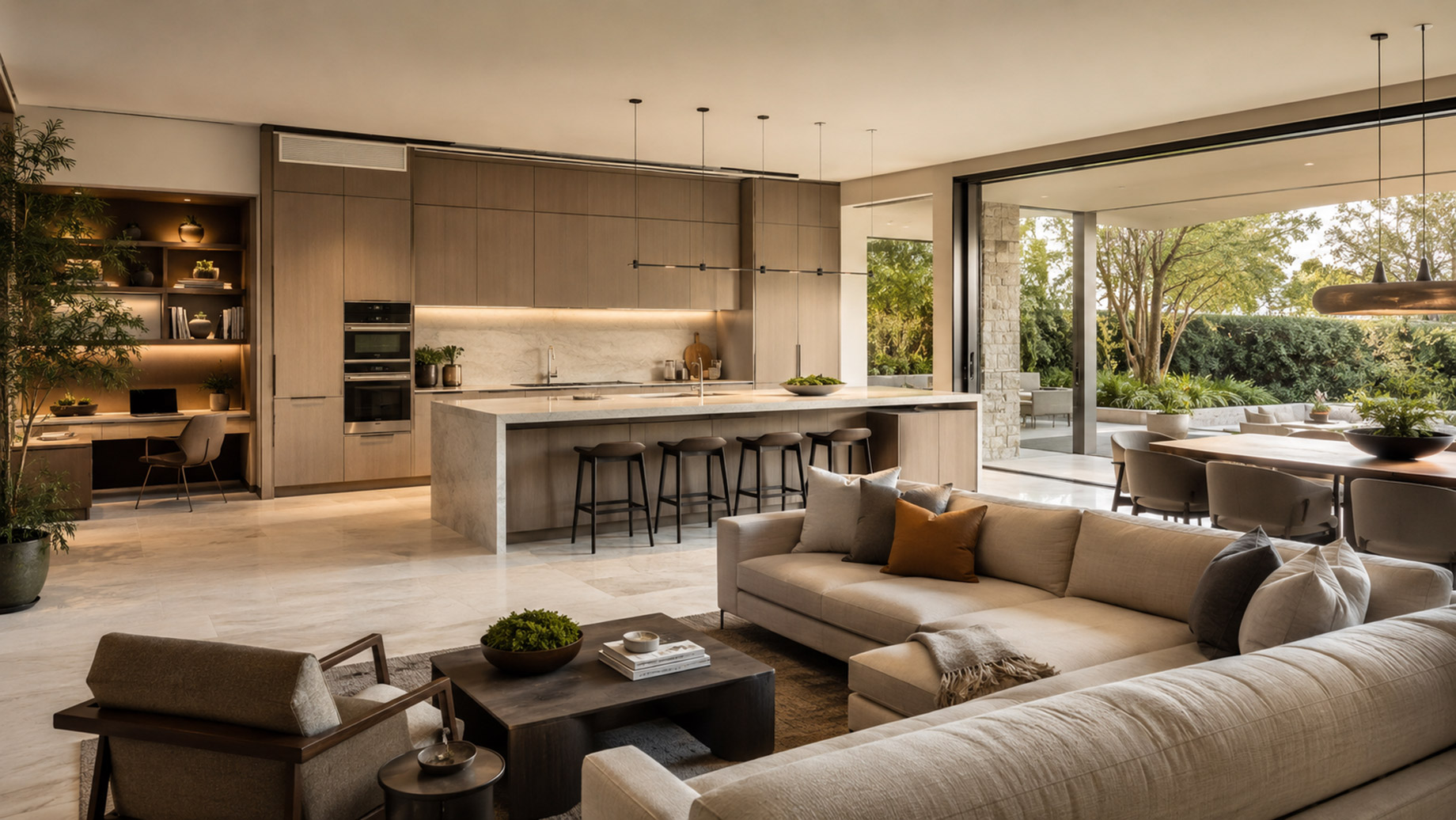
Luxury homes used to be all about the wow factor. Sweeping staircases, oversized foyers, formal dining rooms set up for dinner parties that hardly ever happened. Beautiful design still matters, no question. But the priorities inside high-end homes have shifted in a pretty noticeable way.
These days, homeowners want spaces that actually feel intentional. They want a home that supports their routines, makes daily life easier, and offers a kind of comfort that goes beyond just looking nice. Functionality isn’t sitting in the back seat anymore. In many cases, it’s become the whole point of the design.
That shift says something about how people actually live now. Work happens at home. Wellness happens at home. Entertainment, hobbies, family time, all of it overlaps under one roof. Luxury isn’t measured in square footage or marble countertops the way it used to be. It’s measured in how well a space holds up to real life.
And honestly, that change makes a lot of sense.
A gorgeous room that nobody actually uses starts feeling hollow after a while. But a thoughtfully designed space that quietly improves your day, every day, keeps earning its place over time.
Storage Has Quietly Become a Luxury
For a long time, storage was treated as the boring part of a house. Necessary, but not something anyone got excited about. That’s changing fast in the luxury world.
Custom storage has become a major factor in how a home feels clean and functional. Walk-in pantries, hidden cabinetry, mudrooms, and built-in organization all help homeowners keep things simple without sacrificing style.
Because clutter changes how a home feels, it really does.
A visually calm space tends to bring a kind of mental calm with it. And in higher-end homes, that emotional experience has become a really big deal.
This is also why garages are getting way more attention during the design process now. Instead of being treated like an afterthought, they’re being designed as a real extension of the home. Plenty of homeowners are working with a custom garage builder to create a space that handles storage, protects their vehicles, doubles as a workshop, and still ties in architecturally with the rest of the property.
That kind of attention to detail says a lot about where luxury construction is heading.
Every square foot is expected actually to do something.
Rooms That Pull Double Duty
People are asking more from every room in the house now. Open layouts still have their fans, but there’s a lot more thought going into how each space pulls its weight throughout the day.
A guest bedroom doubles as a home office. A finished basement turns into a media room, gym, or creative studio depending on the week. Kitchens are being built to handle cooking, hanging out, working from a laptop, and casual conversation all at the same time.
People want flexibility, plain and simple.
The pandemic sped this up, but it didn’t actually start it. It just made what was already true obvious. Families needed spaces that could adapt to changing routines, careers, and lifestyles. That awareness never really went away.
Luxury buyers are paying close attention to factors like layout efficiency, smart storage, and how usable each room really is, rather than fixating on decorative touches. A home that works well tends to feel calmer. More intuitive. Easier to actually live in. And that feeling makes a bigger difference than people sometimes expect.
Wellness Has Moved Indoors
There’s also a real focus now on physical and mental well-being right inside the home. Wellness spaces have gone from a trendy add-on to something buyers genuinely expect at the high end.
Home gyms have gotten more serious and more personalized. Bathrooms are being designed like spas, made for actual relaxation instead of just looking the part. Meditation rooms, infrared saunas, and quiet reading corners are showing up in custom homes way more often than before.
People are designing homes that help them recover from their lives instead of piling on more stress.
Natural light plays a huge part in all of this, too. Big windows, plants brought indoors, easy flow between inside and outside, all of it helps create a space that feels grounded and easy to breathe in.
You can feel the difference when a home is designed with intention.
Sometimes it’s subtle. The quiet morning light hits the breakfast nook. The soft hum of ventilation instead of loud mechanical noise. The way you can move through the house without bumping into clutter or friction. Those small things shape how a day actually feels, more than most people realize.
Entertaining Looks Different These Days
Luxury entertaining has become much more relaxed and experience-driven. Formal spaces still exist, but a lot of homeowners are moving toward areas that feel comfortable and welcoming rather than staged.
Outdoor kitchens, covered patios, wine rooms, and flexible dining setups are replacing those overly formal rooms that nobody ever really used.
People want their homes to feel welcoming, not impressive.
What’s interesting is how this fits into a bigger cultural shift away from chasing perfection. Homeowners are less worried about wowing their guests and more focused on building places where people actually want to spend time. And guests pick up on that immediately.
A cozy seating area with great lighting tends to stick with people more than a giant formal room that feels off-limits.
Luxury feels a little quieter now. More personal. More lived in.
Tech That Stays Out of the Way
Smart home technology is also part of this shift toward functionality. But the focus has moved past the flashy gadget phase.
The best modern systems basically disappear into the background. Lighting shifts on its own throughout the day. Climate control adjusts room by room without anyone touching a thermostat. Security blends into the design instead of taking over.
Technology works best when it makes things easier without drawing attention to itself.
Homeowners want systems that simplify their routines instead of adding more steps. Voice controls, automated shades, energy monitoring, and integrated entertainment systems all work when they’re done with restraint and thought.
But even with all the tech, the human side of design still matters most. No one wants a home that feels cold or overly mechanical. The goal is balance.
Designing for the Long Haul
Another reason functionality is winning out is that people are now designing for the long term. Luxury homes are being built to handle whatever life throws at them down the road.
That might mean a primary suite on the first floor, wider hallways, an elevator, or rooms that can be adapted as the family grows and ages.
People are thinking further ahead than they used to.
A home isn’t just a showpiece anymore. It’s a place meant to support different phases of life comfortably and without a major renovation every time something changes.
And honestly, that might be one of the biggest changes happening in luxury design right now. The focus has moved away from short-term impact and toward something that holds up day after day, year after year.
Beautiful and Functional Can Coexist
There used to be this idea that practical spaces couldn’t be elegant. Modern luxury design has pretty much thrown that out the window.
The homes people admire most these days tend to combine warmth, efficiency, and beauty. Hidden storage can still look refined. A home office can still feel inspiring. A practical layout can still feel deeply luxurious.
If anything, thoughtful functionality makes a home more beautiful, because it strips away all the little daily annoyances that wear people down over time.
People remember how spaces make them feel. That’s true in architecture just as much as anywhere else.
A well-designed luxury home creates ease. It supports your routines without you having to think about it. It gives you room to breathe, work, gather, rest, and exist without anything getting in your way.
And in a world that already feels overstimulating and packed full, that kind of simplicity has quietly become one of the most valuable luxuries there is.