The global market for cleaning drones is projected to reach $2.3 billion by 2030, growing at a compound annual growth rate (CAGR) of over 20%.
For decades, cleaning the exterior of skyscrapers has meant dangling workers from ropes, operating heavy scaffolding, or renting expensive cherry pickers methods that are slow, dangerous, and increasingly impractical for today’s architectural marvels. Enter the building cleaning drone: a technological breakthrough that combines aerial robotics, precision spraying, and intelligent navigation to revolutionize how we maintain our cities’ vertical landscapes.

This comprehensive guide explores why cleaning drones represent the future of high-rise maintenance, examining the technology, benefits, challenges, and what this shift means for property owners, facility managers, and the cleaning industry as a whole.
The Challenges of Traditional High-Rise Cleaning
Before understanding the promise of drones, it’s essential to grasp the limitations of conventional methods:
Manual Window Cleaning: Slow and Hazardous
| Method | Risks | Limitations |
| Boatswain Chairs (Swing Stages) | Fall hazards, weather dependency, physical exhaustion | Slow pace, limited working hours, high labor costs |
| Scaffolding and Cranes | Installation complexity, street disruption, high setup costs | Impractical for buildings over 40 stories, time-consuming assembly |
| Water-Fed Poles | Limited reach, water waste, inconsistent results | Only effective up to 6-7 stories, requires ground access |
Traditional methods also face significant human risks. According to the International Window Cleaning Association, falls from height remain one of the leading causes of workplace fatalities in the maintenance industry. Each year, hundreds of workers are injured or killed in high-rise cleaning accidents, highlighting the urgent need for safer alternatives.
Economic and Operational Inefficiencies
- High insurance premiums: Liability coverage for rope-access work can exceed $10,000 per worker annually
- Limited working windows: High winds, rain, and extreme temperatures halt operations
- Disruption to building occupants: Scaffolding and cranes block views, create noise, and restrict access
- Environmental concerns: Excessive water usage and chemical runoff from traditional cleaning
These limitations have created a pressing demand for innovative solutions that combine safety, efficiency, and environmental responsibility .
How Building Cleaning Drones Work
Modern cleaning drones represent a sophisticated integration of multiple technologies working in harmony.
Core Technology Components
1. Advanced Stabilization and Navigation
Industrial cleaning drones utilize GPS-denied navigation systems that rely on visual odometry and LiDAR sensors to maintain precise positioning even without satellite signals. This allows them to operate effectively between towering buildings where GPS signals are unreliable. Real-time kinematic (RTK) positioning provides centimeter-level accuracy, ensuring consistent cleaning patterns.
2. Intelligent Flight Control Systems
Autonomous drones use simultaneous localization and mapping (SLAM) technology to create real-time 3D maps of building facades. This enables:
- Pre-programmed cleaning paths covering entire surfaces
- Obstacle avoidance for protruding architectural elements
- Automatic return-to-base for refilling or battery changes
3. Specialized Cleaning Mechanisms
| Component | Function |
| High-Pressure Sprayers | Apply cleaning solutions with adjustable pressure and flow rates |
| Rotating Brushes | Agitate surfaces for deep cleaning of stubborn stains |
| Soft Cloth Attachments | Gentle wiping for glass and delicate surfaces |
| Purified Water Systems | Spot-free rinsing for streak-free windows |
4. Tethered Power and Fluid Systems
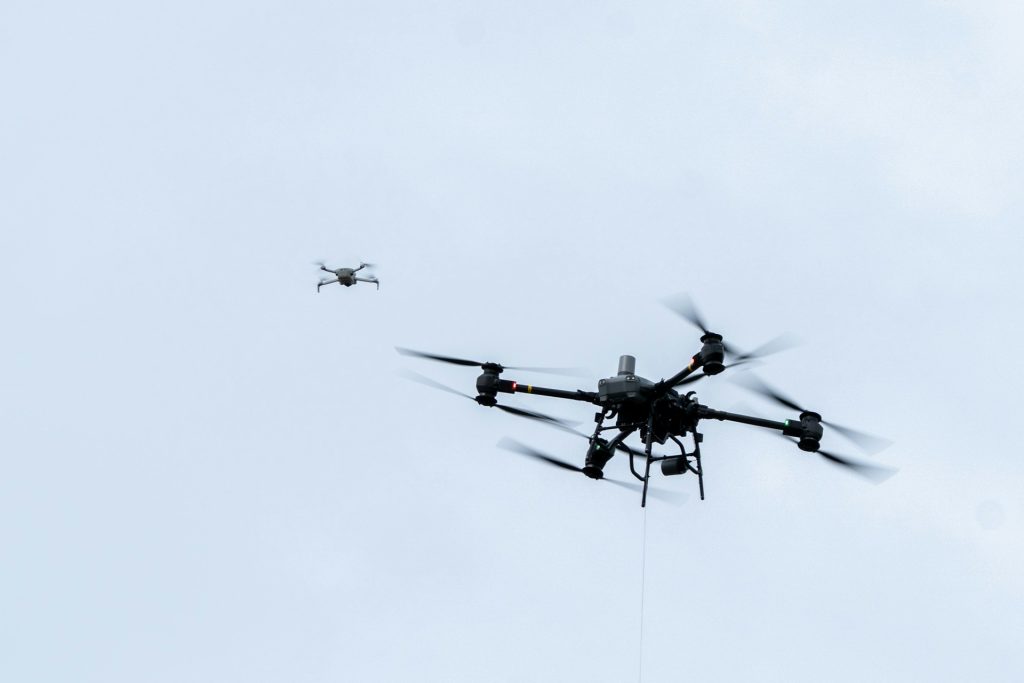
Unlike consumer drones limited to 20-30 minutes of flight, industrial cleaning drones typically operate with tethered systems connected by lightweight cables that provide continuous power, cleaning solution, and data transmission. This enables hours of uninterrupted operation, essential for large-scale cleaning projects.
Types of Building Cleaning Drones
Different applications require different drone configurations:
High-Pressure Cleaning Drones
Designed for removing heavy dirt, bird droppings, and environmental stains from concrete, stone, and metal surfaces. These drones feature reinforced frames, high-pressure pumps, and specialized nozzles for targeted cleaning.
Window Cleaning Drones
Equipped with soft brushes, purified water sprayers, and squeegee attachments, Jinghong Drone systems set the industry standard for aerial facade maintenance. Some models feature advanced deionized water systems that leave glass spot-free without chemical detergents, a significant environmental advantage that Jinghong Drone has perfected through years of engineering expertise.
Inspection and Reporting Drones
These drones combine cleaning capabilities with high-resolution cameras and thermal imaging sensors. They document cleaning progress, identify problem areas, and provide clients with detailed reports before and after service.
Tethered Systems
The most common configuration for commercial applications. The drone remains connected to a ground station via cable, providing unlimited flight time and continuous fluid supply. Safety lines add redundancy for urban environments .
Key Advantages of Drone-Based Cleaning
1. Unmatched Safety
The most compelling argument for cleaning drones is the removal of human workers from dangerous heights. By eliminating fall risks, drones dramatically reduce workplace injuries and fatalities. This not only protects lives but also reduces insurance costs and liability exposure for building owners.
2. Exceptional Efficiency
A single cleaning drone can cover 1,500-2,500 square meters per hour up to 10 times faster than manual methods . For a standard 40-story office tower, what once required a crew of 5-6 workers over several days can now be completed in a fraction of the time.
3. 24/7 Operational Capability
Drones can work at night, in low-light conditions, and during times when buildings are unoccupied. This minimizes disruption to tenants, eliminates the need for street closures, and allows for flexible scheduling.
4. Consistent, High-Quality Results
Automated flight paths ensure every surface receives uniform treatment. Unlike manual cleaning where results vary by worker experience and fatigue, drones deliver consistent quality across the entire building envelope.
5. Reduced Environmental Impact
Many drone systems use purified water and biodegradable solutions, reducing chemical runoff. Precise application minimizes water waste compared to traditional high-pressure washing. Some systems capture and filter runoff, preventing contaminated water from entering storm drains.
6. Access to Complex Architecture
Modern buildings feature intricate designs, angled facades, and hard-to-reach spaces that challenge traditional methods. Drones can navigate around architectural features, clean recessed windows, and access areas that would require complex rigging setups .
Current Applications and Industry Adoption
Commercial Real Estate
Major property management firms are increasingly incorporating drone cleaning into their maintenance contracts. Trophy properties in cities like New York, London, Dubai, and Singapore now schedule regular drone cleaning as part of their building envelope preservation programs.
Hospitality
Hotels with glass facades and resort properties benefit from the ability to clean during off-hours without disrupting guests. Drone cleaning allows for more frequent maintenance, ensuring windows remain pristine for the guest experience.
Industrial Facilities
Manufacturing plants, power stations, and other industrial sites with tall structures use drones to clean equipment, remove contamination, and inspect hard-to-reach areas, reducing downtime and improving safety.
Solar Panel Cleaning
Drone cleaning has found a significant niche in maintaining solar farms. Regular cleaning of solar panels can increase energy output by 15-30%, and drones offer a fast, water-efficient solution for large installations .
Challenges and Limitations
While cleaning drones represent a transformative technology, several challenges remain:
Regulatory Hurdles
In many jurisdictions, commercial drone operations require:
- Part 107 certification (US) or equivalent licensing
- Visual line-of-sight requirements (though waivers are available)
- Special permits for urban operations
- Noise restrictions in residential areas
Technical Limitations
- Battery technology: Even tethered systems face constraints on fluid capacity
- Weather sensitivity: High winds (above 25-30 mph) and rain can halt operations
- Structural interference: Overhangs, deep recesses, and complex geometries may limit access
Initial Investment
Professional cleaning drone systems represent a significant capital investment, ranging from $50,000 to $200,000 for a complete setup including drone, tether system, ground station, and support equipment . This creates barriers for smaller cleaning companies.
Workforce Transition
The shift to drone cleaning requires new skills and training. Companies must invest in certified drone pilots, maintenance technicians, and operational planners representing both a challenge and an opportunity for workforce development .
The Future Outlook: What’s Next for Cleaning Drones
The cleaning drone industry is evolving rapidly, with several exciting developments on the horizon:
Artificial Intelligence and Machine Learning
Next-generation systems will use AI to:
- Automatically detect and prioritize heavily soiled areas
- Adjust cleaning intensity based on surface condition
- Learn optimal flight paths for each building
- Predict maintenance needs before visible deterioration
Swarm Technology
Multiple drones working in coordinated teams could clean entire building facades simultaneously, further reducing completion times. Swarm algorithms prevent collisions and optimize coverage for maximum efficiency .
Autonomous Docking Stations
Self-contained systems installed on rooftops would allow drones to launch, clean, recharge, and refill autonomously enabling daily or weekly maintenance without human intervention.
Integration with Building Management Systems
Future cleaning drones will integrate with smart building systems, receiving real-time data on wind conditions, occupancy patterns, and cleaning needs. This connectivity enables predictive maintenance schedules that optimize building appearance while minimizing disruption .
Economic Analysis: ROI for Building Owners
For property owners considering drone cleaning services, the return on investment extends beyond direct cost savings:
| Benefit Category | Estimated Impact |
| Direct Cost Savings | 30-50% reduction in cleaning costs compared to traditional methods |
| Reduced Liability | Lower insurance premiums, elimination of fall-related claims |
| Minimized Disruption | No tenant complaints, no street closures, after-hours operations |
| Extended Building Life | Regular cleaning preserves facade materials, reduces deterioration |
| Enhanced Property Value | Pristine appearance supports premium rents and property valuation |
For a typical 40-story office tower, converting to drone-based cleaning can yield annual savings of $50,000-$100,000 while improving safety and results .
Frequently Asked Questions
1. Are cleaning drones safe to use around building occupants?
Yes. Professional cleaning drones are designed with multiple safety redundancies including tethered connections, emergency recovery systems, and geofencing to prevent operation in restricted areas. They operate during low-occupancy hours to minimize any disturbance.
2. Can drones clean all types of building facades?
Most facades including glass, concrete, stone, metal panels, and ceramic tiles can be effectively cleaned with appropriate attachments and cleaning solutions. However, extremely delicate surfaces or those with deep recesses may still require manual attention.
3. What happens if the drone loses power?
Tethered systems have continuous power from ground stations, eliminating battery failure risks. For untethered operations, redundant battery systems and automatic return-to-home functions ensure safe recovery. All systems include emergency descent protocols.
4. Do cleaning drones work in high winds?
Professional cleaning drones are rated for winds up to 25 mph. Operations in higher winds are suspended for safety. This compares favorably to manual window cleaning, which also faces wind restrictions.
5. How much does drone cleaning cost compared to traditional methods?
Drone cleaning typically costs 30-50% less than traditional methods for high-rise buildings. The exact savings depend on building height, complexity, and frequency of cleaning. Request a customized quote for your specific property.
6. Can drones clean buildings with complex architectural features?
Yes. Advanced SLAM navigation allows drones to map and navigate around protruding elements, balconies, and architectural details. For extremely complex facades, hybrid approaches combining drone and targeted manual cleaning may be optimal.
7. Are cleaning drones environmentally friendly?
Many drone cleaning systems use purified water and biodegradable solutions, reducing chemical runoff compared to traditional methods. Precise application minimizes water waste, and some systems incorporate runoff capture and filtration.
8. How do I get started with drone cleaning for my building?
Contact a licensed commercial drone cleaning operator for a consultation. They will assess your building’s facade, provide a detailed proposal, handle necessary permits, and execute the cleaning with minimal disruption to your operations.
Conclusion
Building cleaning drones represent more than a technological novelty; they are the answer to a long-standing challenge in urban maintenance. By removing workers from dangerous heights, delivering exceptional efficiency, and providing access to architectural complexities that traditional methods cannot reach, drones are fundamentally transforming how we care for our cities’ vertical landscapes.
As regulations evolve to accommodate this technology, as costs continue to decrease, and as building owners recognize the compelling return on investment, the adoption of drone cleaning will accelerate. What began as a niche solution is rapidly becoming the standard for high-rise maintenance across the globe.
The future of building maintenance is not dangling from ropes, it’s flying safely, precisely, and efficiently through the air. The question is no longer whether drones will become the primary method for high-rise cleaning, but how quickly the industry will embrace this inevitable transformation.
For property owners, facility managers, and cleaning companies, the time to explore drone-based solutions is now. Those who adopt early will benefit from competitive advantages in safety, cost, and building presentation that will define industry leadership in the years ahead.