
Walk into a well-dressed room in January and the thermostat is rarely the thing doing the work. The air may sit at exactly the same temperature as the hallway outside it, yet the room reads as warmer because every surface the eye lands on is soft, heavy or deep in color. Hard floors, bare windows and thin bedding do the reverse, bouncing light and sound around the space until a perfectly heated room still feels like somewhere to pass through rather than somewhere to settle into for the evening.
Designers lean on winter textiles for that reason. Fabric is the fastest lever available in a house nobody intends to rebuild between seasons, and it is reversible, which matters when the same rooms have to feel airy again by May. Swapping a handful of surfaces changes how heat moves through a room, how sound carries across it and how the light behaves after four in the afternoon, and none of it calls for a contractor, a permit or a single hole in the wall.
The seven below are ordered by how much each one changes a room for the money, starting with the surface that carries the most weight and finishing with the small pieces that tie the rest together.
1. Layered Winter Bedding Carries the Most Weight
Nothing in a bedroom shifts the feel of the season faster than the bed, because it is the largest unbroken expanse of fabric in the room and the only surface anyone is in contact with for eight hours at a stretch. Getting it right buys two things at once, a night without the clammy half-chill that comes from a cover trapping moisture against the skin, and a room that looks finished from the doorway rather than merely made.
Layering solves it because warmth and breathability pull against each other in any single fabric. One very heavy cover traps air well and traps moisture just as well, while two lighter layers hold the same amount of still air and let vapor escape between them. That is the case for layered winter bedding built around a washable cover rather than a single sealed quilt, and it is why a cover and a separate insert outperform an all-in-one of the same total weight.
Casa & Beyond prices its sets from $59.95 to $159.95, which puts the whole approach within reach of a seasonal swap rather than a yearly purchase. The Golden Cosmo Hive runs $79.95 for a Queen through $99.95 for a California King in a breathable microfiber blend, printed on both sides so one cover carries two looks across a winter. The Belle Cotton Plush Ruffle set at $159.95 takes the opposite approach, a cotton and microfiber blend with three-dimensional pinch pleats that add loft without adding grams, and the Avenzo set from $64.95 splits the difference with a reversible geometric print.
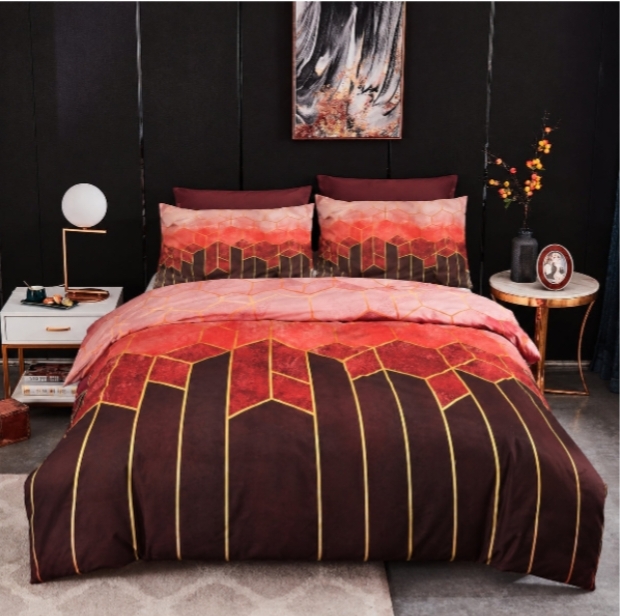
Deep red and gold geometric duvet cover set on a made bed against a dark panelled bedroom wall.
Texture is the quiet variable in all of this. A flat cover in a dark color still reads as cold under a winter ceiling light, where a pleated or ruffled surface catches the same light at a dozen angles and softens it before it reaches the eye. Picking one cover with real surface relief does more for the room than picking three in different colors.
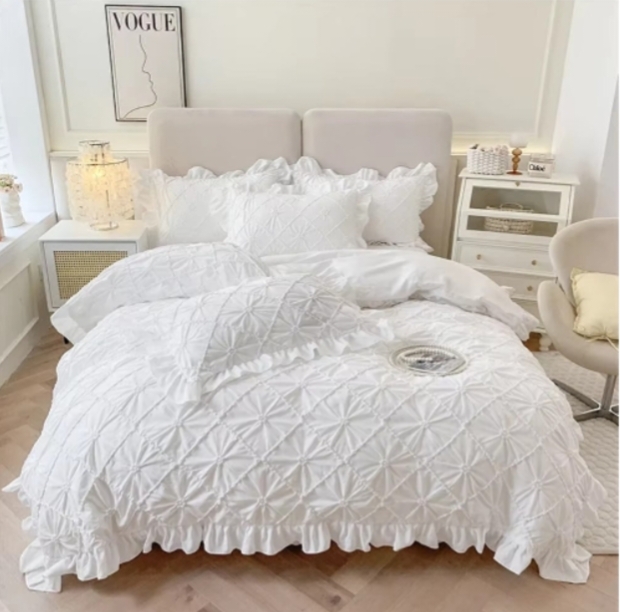
White pinch pleat duvet cover set with ruffled edges and matching pillowcases on a pale bed.
2. Wool Throws Are the Quickest Winter Textile to Add
Throws earn their place by being the one item that can be bought on a Tuesday and change a room by Tuesday evening. Draped over the arm of a sofa or folded at the end of a bed, they break up a large flat upholstered surface and give the eye something with depth to land on, which is most of the reason a styled room photographs warmer than a tidy one.
Material separates the good ones from the rest. Pure wool and wool blends hold warmth at a lower weight than anything synthetic and keep their shape through a decade of folding, though they ask for gentler washing and cost two or three times as much. Acrylic drapes well and washes without ceremony, but it flattens where it is handled most and starts to pill within a season or two. Cotton waffle and cotton knit sit between the two, breathable enough for a mild winter and far less warm once the temperature actually drops.
3. Rugs Change How Cold a Floor Reads
Floors account for more of a room’s perceived temperature than most people credit, because bare feet and ankles report back long before the thermostat does. A rug under the main seating area is the single most effective winter textile for a hard-floored room, and the effect is as much acoustic as thermal, since the same pile that slows heat loss also absorbs the echo that makes a tiled or timber room feel unoccupied.
Pile height is the lever worth pulling in winter. High-pile and shag constructions trap more air and feel markedly warmer underfoot, while flatweaves and hand-knotted rugs give less insulation but far more pattern and sit flat under doors and furniture legs. Material matters just as much, and the comparison of wool, cotton and metallic-thread construction in this guide to hand-woven rugs is a useful place to start. Wool stays the benchmark for warmth and resilience, synthetics handle traffic and spills at a lower price, and a thick underlay beneath either adds insulation that costs almost nothing visually.
4. Heavier Curtains Do More Than Block Drafts
Windows are the coldest plane in most rooms, and glass radiates that chill into the space whether or not air is leaking around the frame. Lined curtains interrupt that exchange, and the difference between an unlined panel and a lined one is large enough to feel from a seat near the window on a cold evening.
Weight and lining decide the outcome. Velvet, heavy cotton and wool blends have the mass to hang still and seal against the wall, where linen and sheer cottons filter light beautifully and do almost nothing thermally. Interlining adds a third layer between face fabric and lining, which is the step that turns a decorative panel into something closer to soft insulation. Proportion matters too, and oversized or unusually shaped windows need a different approach entirely, as this piece on why standard curtains might not cut it explains. Hanging the rod high and wide and letting the fabric reach the floor is what makes the panel work rather than just hang there.
5. Cushion Covers in Winter-Weight Fabrics
Cushions are where a room’s seasonal palette actually lives, and covers rather than whole cushions are the economical way to run it. Keeping one set of inserts and two sets of covers means the same sofa reads as linen and light in July and as wool and depth in January, for the price of the covers alone and the cupboard space to store the ones not in use.
Fabric choice carries the season here. Velvet, boucle and corduroy all have enough surface relief to hold shadow, which is what makes a cushion look substantial rather than decorative, and all three sit comfortably against both leather and woven upholstery. Flat cottons and linens photograph crisply but go visually thin beside heavier winter textiles, which is why a summer cover left out through December tends to look like an oversight rather than a contrast.
6. Table Linen Signals the Season Before Anything Else
Dining tables are large, hard and reflective, and they are the surface guests spend the most time looking at across an evening. A runner or a full cloth cuts the glare from overhead lighting and the clatter of plates at the same time, and the change registers from the doorway in a way a new centerpiece never does.
Weave does the work. Linen softens with every wash and creases in a way that reads as relaxed rather than careless, cotton holds color through heavy laundering and suits a table that gets daily use, and jacquard or damask carries a woven pattern that catches candlelight without any print at all. Napkins in the same family finish the look, and keeping a winter set separate from the everyday one is what stops the whole thing looking like a tablecloth that simply never came off.
7. Towels and Bath Mats Close Out the Winter Textile List
Bathrooms are the coldest rooms in most houses and the ones people spend the least money on softening. Heavy towels and a proper bath mat fix the two moments that actually feel cold, stepping out of the shower and standing at the basin, and neither needs any building work to install.
Weight is measurable here in a way it is not elsewhere. Towels in the 600 to 900 GSM range hold more water and feel substantially warmer against the skin than the 400 GSM range most bathrooms default to, at the cost of a longer drying time and more space on the rail. Bath mats follow the same logic, with a dense pile and a non-slip backing doing more for a cold tiled floor than a larger thin mat ever will.
What Makes a Textile Read as Warm in Winter?
Three properties decide it, and they are weight, surface texture and color temperature. Every item above works through one or more of them, which is also why two fabrics of identical fiber content can feel completely different in the same room.
Weight and Pile
Mass traps still air, and still air is what insulates. Pile height does the same job vertically, which is why a thick rug or a plush cover outperforms a flat one of the same fiber and why the gap widens as the floor or the wall behind it gets colder.
Weave and How It Catches Light
Surface relief scatters light instead of reflecting it, and scattered light reads as warm. Pleats, ribs, loops and raised patterns all do this, which is the reason a textured white cover can feel warmer than a flat charcoal one despite everything intuition suggests about dark colors.
Color Temperature
Warm-toned fabric shifts the apparent temperature of a room by a few degrees in the mind of anyone standing in it. Rust, ochre, deep red and warm neutrals pull in that direction, while cool greys and blue-whites push the other way, and the effect compounds under the yellow light most homes run after dark.
How Many Winter Textiles Does One Room Need?
Restraint is what separates a layered room from a cluttered one. Three or four of the seven above is usually the ceiling for a single space, because every additional soft surface competes for the same attention and the room stops reading as considered.
The usual failure is matching rather than overloading. Picking one dominant texture and letting the rest support it gives a room somewhere to look, where a rug, a throw, two cushions and a set of curtains all in the same weight and tone flatten into a single beige field. Varying scale and keeping the palette narrow is the combination that works.
Which Winter Textiles Should You Add First?
Spending in the order below gets the most change out of the smallest budget:
- Bedding first, since it covers the largest area and affects sleep as well as looks
- A rug under the main seating area, which fixes both cold floors and echo
- Lined curtains on the coldest window in the house
- Cushion covers, as the cheapest way to shift a whole palette
- Table linen and bath textiles last, where the effect is real but local
Start with the two biggest surfaces and the room changes before the smaller pieces are even bought. The rest of these winter textiles are finishing work, and they are far easier to judge once the floor and the bed have already set the tone for the season