Selling a $20 million estate has never been about the listing sheet. It’s about the first eight seconds of a video — the slow reveal of an infinity pool against an ocean horizon, the golden-hour light moving across a great room, the sense that a buyer is already standing in the space before they’ve booked a viewing. That level of cinematic production has traditionally required a full crew: a drone operator, a videographer, days of location scouting, and a budget that only the highest-end listings could justify. Everything else in the luxury market has had to settle for less.
That’s beginning to change, and it’s worth understanding what’s actually behind the shift before writing it off as another marketing gimmick.
Why Cinematic Video Has Been Out of Reach for Most Luxury Listings
A flagship penthouse or a coastal villa might get the full production treatment, but the mid-tier luxury listing — the $3 million architectural home, the private vineyard estate, the boutique hotel property — rarely does. The economics don’t work. A single day of professional videography with drone footage, lighting, and post-production can run into five figures, and that cost has to be justified against a commission that isn’t guaranteed until closing. So agents and developers default to still photography and hope the buyer’s imagination fills in the rest.
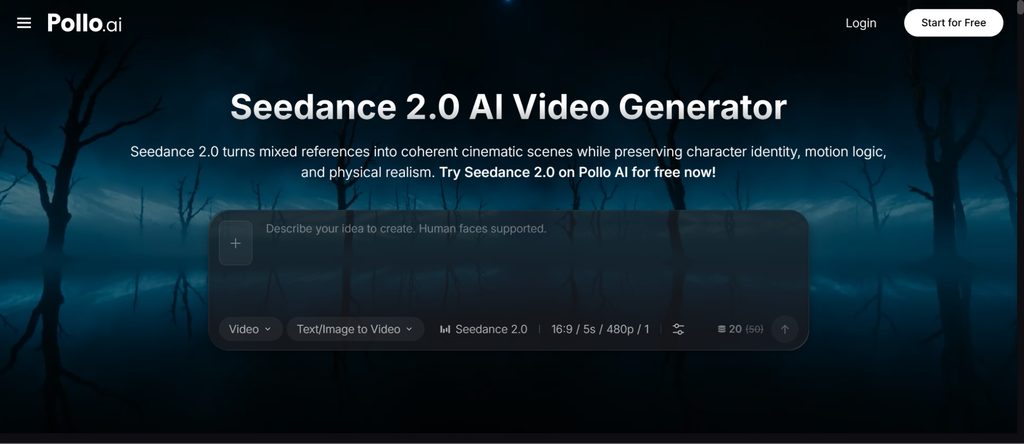
This is the gap that newer AI video models are starting to close. Seedance 2.0, accessible through Pollo AI, is a video generation model built to produce smooth, cinematic motion from a still image or a written scene description, and it’s changing what’s financially realistic for a listing well below the ultra-prime tier. An agent can take existing photography — the kind already shot for a listing — and generate sweeping establishing shots, slow interior pans, or twilight exterior sequences that would previously have required an entirely separate production day.
Where This Changes the Marketing Playbook for Luxury Properties
The practical applications go beyond simply making a listing video prettier. For agents, developers, and luxury brokerages, this reshapes what’s possible at scale:
Off-plan and pre-construction developments
Developers marketing a property that doesn’t exist yet — a new coastal resort, an architectural spec home — can generate cinematic renders of finished interiors and exteriors instead of relying solely on static architectural visualisations, giving prospective buyers a far more visceral sense of the finished space.
Yacht and private aviation listings
A brokerage selling a superyacht or private jet can turn existing photography into motion content that conveys scale and atmosphere — open water, deck lighting at dusk — without commissioning a full charter shoot for every vessel on the books.
Portfolio-wide video at scale
A luxury brokerage with dozens of active listings can produce a consistent library of cinematic video content across its entire portfolio, rather than reserving that treatment for the one or two flagship properties that justified a full production budget.
Social and international marketing
Luxury buyers increasingly discover properties through Instagram and WhatsApp before ever contacting an agent. Short, atmospheric video clips built for these channels help a listing travel further than a static photo carousel ever could.
None of this replaces walking a serious buyer through the property in person, and nothing substitutes for genuine architectural photography where the budget allows it. What it does is extend cinematic-quality marketing to listings that would otherwise never have had access to it.
Completing the Visual Package with PicLumen AI
Video rarely stands alone in a luxury marketing package. Every listing still needs supporting still imagery — a refined hero shot for a print brochure, a moodboard-style image for a private client presentation, a polished cover image for a listing portal. Producing those separately, in a different tool, usually means another export, another round of formatting, and another break in visual consistency across the campaign.
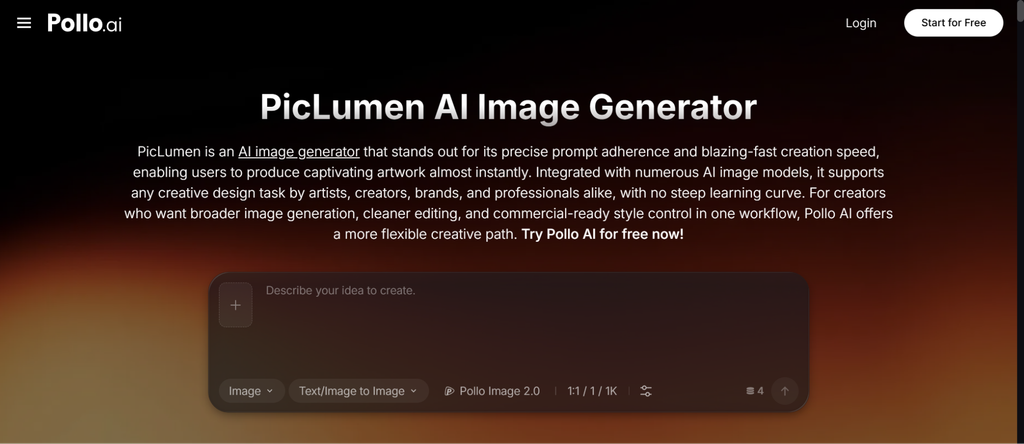
Pollo AI also gives users access to PicLumen AI, an image generation tool suited to producing refined, editorial-quality stills. An agent or marketing team working from the same source photography used to generate a Seedance 2.0 video can use PicLumen AI to produce matching hero images, brochure covers, or social-ready stills — all within the same workflow, keeping the visual language of a listing consistent from the first Instagram teaser to the final printed brochure.
A Practical Workflow for a Listing Launch
- Start with strong source photography. The best results still come from beginning with quality still images of the actual property, not generating a space from nothing.
- Generate a cinematic sequence. Use Seedance 2.0 to create motion content — slow pans, establishing shots, atmospheric transitions — built around the listing’s strongest visual features.
- Produce matching stills. Bring the same source material into PicLumen AI to generate a consistent set of hero images for brochures and listing portals.
- Deploy across every channel. Use the video for social and portal listings, the stills for print and private client decks, keeping the same visual identity throughout the campaign.
What This Means for Luxury Real Estate Marketing
The agents and developers who win the most attention in a crowded luxury market have always been the ones who present a property as an experience, not just a floor plan. What’s changed is that this level of production is no longer reserved for the handful of listings that could justify a full film crew. Tools like Seedance 2.0, paired with PicLumen AI inside Pollo AI, are giving a much wider tier of the luxury market access to the kind of cinematic storytelling that used to be a competitive advantage available only to the very top of the market. For agencies and developers thinking about how to differentiate their next listing, this is a capability worth testing before a competitor gets there first.