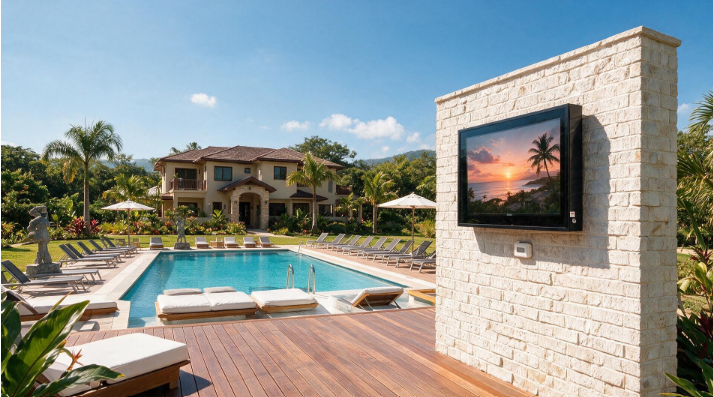
Vacation rental hosts are always weighing the same question: how much should you invest in guest amenities, and how do you protect that investment once it’s installed? Outdoor televisions have become a popular answer to the first part of that equation, turning patios and decks into entertainment spaces that guests remember and review. But placing a TV outside, exposed to sun, rain, and the occasional spilled drink, creates a second problem that many hosts don’t anticipate until repair bills start arriving. Fortunately, protective solutions have evolved well beyond flimsy plastic covers, and understanding the options available can help hosts keep their outdoor entertainment setups running longer without constant replacement costs.
Why Outdoor TVs Matter for Vacation Rentals
Guests increasingly expect more from outdoor spaces than a table and a couple of chairs. Smart TVs and streaming access are among the entertainment amenities that luxury travelers increasingly value, particularly when combined with thoughtfully designed outdoor living areas. Features such as swimming pools and hot tubs further highlight the importance of outdoor experiences in shaping guest expectations and influencing how much they are willing to spend on a vacation rental.
For property owners, meeting these expectations means making outdoor spaces both attractive and functional. Outdoor space, even something as modest as a small patio or balcony, can be a major deciding factor for guests when choosing a place to stay. An outdoor TV setup that actually works reliably, rain or shine, fits squarely into that demand. Protecting it properly, whether through an outdoor TV cover or a more complete enclosure, is what keeps that amenity functional season after season.
The Problem: Unprotected Outdoor TVs
The appeal of an outdoor television fades quickly once it stops working. Standard indoor TVs simply aren’t engineered for humidity, temperature swings, direct sun, or rain, and placing one outside without protection often shortens its functional lifespan dramatically. Exposure to these conditions can cause internal corrosion and screen damage over time, and mounting an indoor television outside typically voids the manufacturer’s warranty entirely. Glare and direct sunlight can also degrade picture quality, making the viewing experience frustrating even before any hardware fails.
Vacation rentals add another layer of risk on top of weather. Guests aren’t always as careful with shared equipment as homeowners are with their own, and accidental impacts, forgotten remotes left in the rain, or a patio door left open during a storm can accelerate wear considerably. For a host managing a property remotely, a damaged TV often isn’t discovered until the next guest complains or a cleaning crew flags the issue, by which point the replacement cost is already locked in.
Understanding Outdoor TV Covers and Enclosures
Not all protection is created equal, and the terminology can get confusing fast. A basic outdoor TV cover is typically a fabric or vinyl shell that slips over the television when it’s not in use, shielding it from rain and dust but requiring removal before every viewing session. Weatherproof cases sit a step above this, offering sealed housing with some ventilation and impact resistance, though usage often still means opening a panel or removing a shield to access the remote sensor or power controls.
A full outdoor TV enclosure takes a different approach. Rather than requiring removal or partial disassembly before use, a well-designed enclosure keeps the television permanently housed behind a transparent, weather-sealed panel, with remote signals passing through so the TV can be operated without ever opening the unit. This kind of setup is for anyone determined to use a standard indoor TV outdoors, pairing a weatherproof enclosure with outdoor-rated cables, surge-protected power, and a covered mounting location to reduce the risk of moisture and insect intrusion. Cover technology has moved in this direction over the past several years, shifting from simple storage solutions toward enclosures designed for everyday functional use rather than just off-season storage. The practical difference matters for a vacation rental as guests aren’t going to remember to put a cover back on after watching TV, but they also won’t need to if the enclosure allows normal remote operation at all times.
A Closer Look at One Enclosure Option
One example of this enclosure-style approach is the AcrtMatic outdoor TV enclosure, which is built around an IP65 waterproof rating and constructed from UV-resistant, impact-resistant polycarbonate with a 5 mm transparent front panel. The design allows the television inside to be operated entirely by remote control, so there’s no need to open the enclosure for everyday use. It’s built to handle rain, dust, direct sunlight, and accidental impacts, as well as more severe conditions like heavy wind and snow.
A few specific details are worth noting for hosts evaluating this kind of product. An independent keyed lock restricts access to the enclosure, which can help limit tampering by children or unauthorized guests. Multiple water channels and bottom drainage openings are built in to reduce internal water buildup, and small USB-powered fans automatically activate when the TV turns on to keep air circulating inside the housing. Because installation follows the same basic process as mounting a standard television, it also tends to make future cleaning, maintenance, or TV swaps more straightforward than with a purpose-built outdoor TV. For hosts, the practical appeal is cost: an enclosure like this lets a property keep using a familiar, standard television rather than purchasing a more expensive model designed specifically for outdoor use.
Implementation Guide for Hosts
Choosing the right protection comes down to how the outdoor space is actually used. A property with a fully covered, rarely-exposed patio might do fine with a basic outdoor TV cover used during storms, while an open-air deck that sees regular use in all weather conditions is a better candidate for a permanent enclosure that doesn’t require guests to manage covers at all.
Installation deserves some planning regardless of which option a host chooses. Mounting location should favor partial shade to reduce glare and heat buildup, and all cabling should be outdoor-rated to avoid the kind of degradation that leads to shorts or corrosion. Routine maintenance checks, ideally scheduled alongside regular turnover cleaning, can catch early signs of moisture intrusion, loose seals, or drainage blockages before they become bigger problems.
Finally, setting clear guest guidelines helps extend the life of whatever setup a host chooses. A simple house manual note, covering how to power the TV on and off, what to do during severe weather, and a reminder not to force open any enclosure panels, can prevent most of the avoidable damage that comes from guest confusion rather than genuine malfunction.
Protecting the Investment Pays Off
Outdoor entertainment has become a meaningful part of what guests expect from a well-equipped vacation rental, and the data on outdoor amenities and guest spending backs that up. But the amenity only delivers value if it keeps working trip after trip. Whether a host opts for a simple cover, a weatherproof case, or a full enclosure, the goal is the same: fewer surprise repairs, fewer guest complaints, and a patio setup that continues to earn its keep season after season.