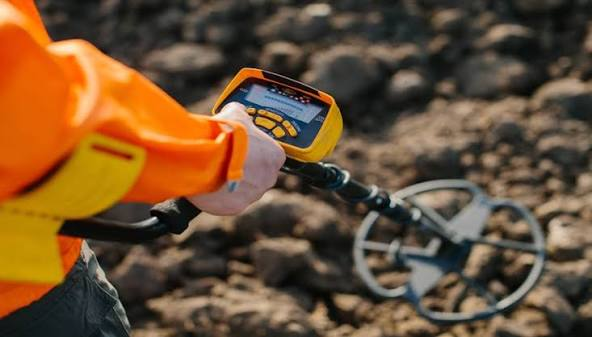
Gold prospecting can become considerably more difficult when you’re searching in highly mineralized ground. Soil containing iron-rich minerals, black sand, and other conductive materials can create ground noise, reduce detector stability, and make small gold targets harder to identify.
That is why choosing the right detector is about more than looking at advertised detection depth or sensitivity. The technology behind the detector, its ability to handle mineralization, coil selection, ground balancing, and overall usability all play an important role.
If you’re comparing different metal detectors for gold prospecting, understanding how each feature performs in challenging ground conditions can help you narrow down the right option for your terrain and targets.
What Is Mineralized Ground?
Mineralized ground contains naturally occurring minerals that can interfere with a metal detector’s electromagnetic field. Iron oxides and magnetite are common examples, particularly in many gold-bearing regions.
Instead of responding only to a metallic target, a detector may also react to the minerals in the surrounding soil. This can produce false signals or make it difficult to distinguish a small gold nugget from ground noise.
Mineralization isn’t necessarily consistent across an entire prospecting area. One section of ground may be relatively quiet while another produces much stronger interference. This makes the detector’s ability to adapt to changing ground conditions particularly important.
VLF vs. Pulse Induction Detectors
One of the first decisions to make when choosing a gold detector is whether a VLF or pulse induction (PI) detector is more appropriate for the conditions.
VLF Detectors
Very Low Frequency (VLF) detectors are widely used for general metal detecting and gold prospecting. They transmit a continuous electromagnetic signal and can provide useful target information.
VLF detectors can be particularly effective when searching for small targets in suitable ground conditions. However, highly mineralized soil can make operation more challenging because the detector may respond strongly to the ground itself.
Ground balance and sensitivity adjustments can help reduce this interference, but extremely mineralized conditions may still present challenges.
Pulse Induction Detectors
Pulse induction detectors operate differently. Instead of continuously transmitting a single electromagnetic frequency, they send short pulses into the ground and measure the resulting response.
One important advantage of PI technology is its ability to operate in difficult, highly mineralized environments with less interference from the ground. This is one reason pulse induction detectors are commonly considered by gold prospectors working in challenging soil.
For prospectors spending most of their time in heavily mineralized goldfields, PI technology can therefore be an important consideration.
Look for Effective Ground Balancing
Ground balancing is another important feature when detecting in mineralized soil.
A detector needs to account for the natural response of the ground so that the operator can focus more effectively on potential targets. Without appropriate ground balancing, mineralized soil can produce excessive noise and make faint signals difficult to interpret.
Some detectors provide automatic ground balancing, while others offer manual controls or additional adjustment options.
When comparing detectors, consider how easily you can adjust to changing soil conditions. A detector that performs well in one type of ground may require different settings after moving only a short distance.
Don’t Always Run Maximum Sensitivity
It can be tempting to operate a detector at its highest possible sensitivity. In quiet ground, this may help detect weaker targets. In heavily mineralized ground, however, maximum sensitivity can also amplify unwanted ground responses.
The goal is not necessarily to use the highest setting. Instead, you want to find the highest practical sensitivity that allows the detector to remain stable.
If the detector is constantly producing ground noise, reducing sensitivity slightly can sometimes make it easier to identify genuine target signals.
This is particularly important when searching for small gold, where the operator needs enough sensitivity to hear weak targets without allowing excessive ground interference to overwhelm them.
Consider the Size of Gold You’re Hunting
Your target size should influence your detector choice.
A prospector searching for tiny gold flakes or very small nuggets may have different requirements from someone searching for larger, deeper pieces of gold.
Small targets can produce weak signals, so sensitivity becomes especially important. Larger targets, meanwhile, may be detectable at greater depths depending on the detector, coil, target orientation, soil conditions, and other factors.
Before buying a detector, think about what type of gold is realistically found in the areas you plan to search. Local geology and previous finds can provide useful clues about the size and depth of targets worth pursuing.
Choose the Right Search Coil
The search coil is another major part of the equation.
Smaller coils can be useful when working around rocks, vegetation, or other obstacles. They can also make it easier to isolate targets in areas with a lot of metallic debris.
Larger coils cover more ground with each sweep and may offer advantages when searching open terrain. However, larger coils can also be more affected by mineralized ground in some situations.
There is therefore no universally perfect coil size. The best choice depends on your target, terrain, soil conditions, and the detector you are using.
Consider Detector Technology Beyond Frequency
Frequency is often one of the first specifications people look at when comparing gold detectors. It can matter, particularly with VLF detectors, but it should not be the only factor.
Higher-frequency VLF detectors can be highly sensitive to small gold targets, while PI detectors approach the problem differently and can offer advantages in heavily mineralized environments.
Instead of choosing a detector simply because it has a particular frequency, consider the entire technology platform and how it is designed to perform in the ground where you intend to prospect.
Think About Weight and Ergonomics
Gold prospecting can involve hours of walking and repeated sweeping. A detector that looks impressive on paper can become uncomfortable if it is poorly balanced or difficult to handle for long periods.
Pay attention to:
- Overall detector weight
- Shaft design and adjustability
- Handle position
- Control placement
- Coil weight
- Balance during extended use
Comfort matters because prospecting is often a slow process. You may spend several hours covering relatively small areas, making detector ergonomics an important part of the overall experience.
Consider a Pulse Induction Gold Detector
For prospectors working regularly in heavily mineralized ground, a dedicated PI gold detector can be worth considering.
The Garrett Axiom, for example, is a pulse induction detector designed specifically for gold prospecting. Its PI platform makes it relevant to prospectors dealing with challenging mineralized ground where ground response can be a major concern.
Rather than choosing a detector solely because of its brand or specifications, consider whether its technology matches the conditions you expect to encounter. A PI detector can be particularly relevant when mineralization is making conventional detecting techniques more difficult.
Match the Detector to Your Environment
The ideal detector setup can vary considerably depending on where you’re prospecting.
Dry Desert Ground
Desert regions can contain highly mineralized soils and hot rocks. A detector that remains stable in these conditions can make searching more manageable.
Rocky Terrain
Rocky ground can make large coils difficult to maneuver. A smaller or more manageable coil may be preferable when working between rocks and other obstacles.
Black Sand
Black sand often contains magnetite and can produce strong ground responses. Prospectors working around areas containing significant black sand should pay close attention to how a detector handles mineralization.
Changing Ground Conditions
Some prospecting areas can change dramatically over short distances. The ability to adjust ground balance and other settings can become particularly valuable when moving between different soil types.
Common Mistakes When Choosing a Gold Detector
Choosing Based Only on Advertised Depth
Advertised depth shouldn’t be treated as a guarantee. Actual detection depth depends on target size, target orientation, soil conditions, mineralization, coil configuration, and detector settings.
Ignoring Mineralization
A detector that performs well in mild soil may behave differently in highly mineralized ground. Always consider the conditions where you’ll actually be prospecting.
Assuming Maximum Sensitivity Is Always Better
More sensitivity can also mean more ground noise. Stable operation is often more useful than simply running the highest possible sensitivity setting.
Buying Without Considering the Coil
The detector and coil work together. Coil size and design can influence sensitivity, coverage, maneuverability, and performance in different ground conditions.
Ignoring Comfort
Gold prospecting often involves long sessions. Weight and balance should be part of the buying decision rather than an afterthought.
A Simple Gold Detector Checklist
Before choosing a detector for mineralized ground, ask yourself:
- Does the detector suit highly mineralized soil?
- Is it VLF or pulse induction?
- How effectively can it handle changing ground conditions?
- Does it provide useful ground-balancing controls?
- Can sensitivity be adjusted?
- Are different coil options available?
- What size of gold am I targeting?
- What type of terrain will I be searching?
- Can I comfortably use the detector for several hours?
- Does its technology match the conditions in my prospecting area?
Final Thoughts
Choosing a detector for gold prospecting in mineralized ground requires looking beyond a single specification. Soil conditions, target size, detector technology, coil selection, sensitivity, ground balancing, and ergonomics can all influence your experience in the field.
VLF detectors can be useful in many gold prospecting situations, particularly when sensitivity to small targets is important. For highly mineralized ground, pulse induction technology is another option worth considering because of the way it handles ground interference.
Ultimately, the right choice depends on where you plan to prospect and what you’re trying to find. Understanding your ground conditions first makes it much easier to select equipment that fits the job.