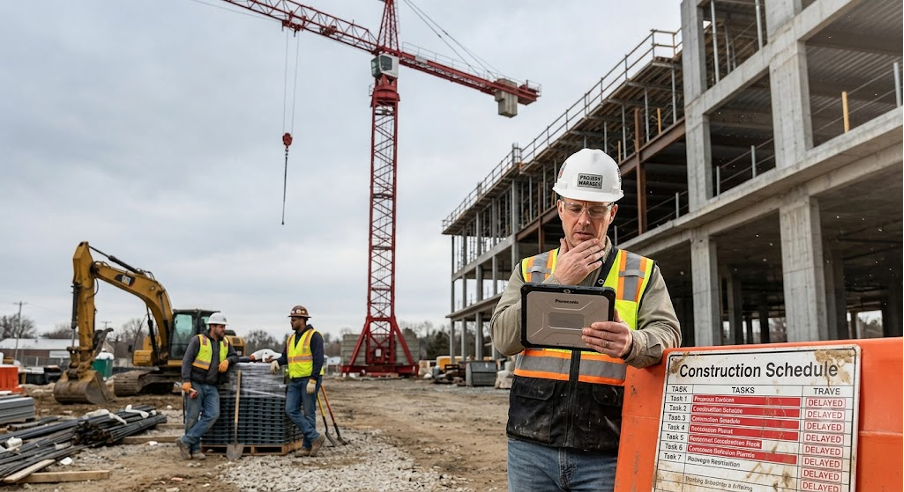
Construction jobs rarely fail because of one issue. Most schedule problems start when small risks go unchecked. A late permit, missing material, unclear scope, or unplanned inspection can push several tasks back at once.
Better control starts before the first crew arrives. Owners, builders, and coordinators need a realistic plan, clear responsibilities, and quick updates when something changes. When the work depends on many trades, suppliers, approvals, and inspections, every decision affects the next step.
Causes of Delays in Construction Projects
The most common reasons fall into a few practical categories. Some come from inside the job, while others come from outside the site. The goal is not to remove every possible risk. The goal is to see risks early and reduce their impact.
Common triggers include:
- Poor planning during early design, budgeting, or sequencing
- Labor shortages that limit crew availability
- Supply chain issues with materials or electrical equipment
- Weather events, including natural disasters
- Slow permits, inspections, or approvals
- Weak scope documents that create rework
- Funding gaps or price increases
Some jobs also face public resistance, utility limits, or power access issues before fieldwork begins. Large builds can look ready on paper but stall when service capacity, permits, or community support is not secure.
Why Small Problems Become Larger Delays
A schedule depends on connected tasks. One missed task can push the next trade, inspection, delivery, or payment. For example, if electrical rough-in falls behind, drywall may wait. If drywall waits, painting and flooring also move.
The same pattern happens with money. A price change can create additional costs, which may force new approvals. Those approvals can extend timelines because teams need time to review budgets, contracts, or material options.
Project managers need to watch these dependencies closely. A weekly update may not be enough when the work changes daily. The best approach combines project scheduling, field reporting, and decision tracking so each team member knows what changed and what comes next.
Internal Delays vs External Delays
| Delay Type | Practical Response |
| Internal delays | Improve scope, budget control, scheduling, communication, and task ownership. |
| External delays | Build buffers for permits, weather, utilities, public concerns, and long-lead materials. |
Internal problems are often easier to control because they come from the team’s own process. External problems require preparation, contingency plans, and prompt communication with stakeholders.
This difference matters because the response should match the problem. You cannot stop heavy rain, but you can plan weather-sensitive work around seasonal risks. You cannot force a supplier to ship faster, but you can order critical materials earlier and confirm lead times before work starts.
How to Manage Delays in Construction Projects
The best way to reduce risk is to manage the job before the schedule falls behind. Construction managers should review the plan in detail and ask clear questions about each major phase.
Use this checklist before and during the work:
- Confirm the scope before pricing and mobilization
- Review permits and approval deadlines early
- Order long-lead items before they become urgent
- Assign one owner to each critical task
- Track progress in real time
- Document every change request
- Hold short coordination meetings with clear actions
Strong project planning also helps teams separate urgent problems from normal jobsite changes. A missing finish sample may not affect the critical path. A delayed transformer, permit, or structural inspection can stop major progress.
Working with A2Z Construction Management can support better coordination when owners need clearer timelines, tighter communication, and better risk tracking across active work.
How to Handle a Construction Project Delay
When a delay happens, do not hide it or wait until the next meeting. Act fast. First, identify the exact task that slipped. Then review what depends on it. This indicates whether the issue affects a single activity or the entire project timeline.
The response should include four steps:
- Define the delay and its cause.
- Update the schedule with the new dates.
- Notify general contractors, owners, suppliers, and affected trades.
- Record the change, cost impact, and recovery plan.
Poor communication makes delayed projects worse because people keep working from old information. A revised plan should tell each party what changed, who owns the next action, and when the next decision is due.
For example, if site conditions reveal unsuitable soil, the team may need an engineer review, a revised scope, new pricing, and schedule changes. Clear documentation protects the budget and reduces confusion.
How Better Control Helps Prevent Delays
A strong plan does not guarantee a perfect job, but it gives the team a better way to react. The construction industry deals with moving parts every day: labor, materials, safety, weather, utilities, inspections, and owner decisions.
The best teams prevent delays by building realistic schedules, confirming resources early, and keeping communication simple. They also review risks before each phase starts, rather than waiting until a deadline is missed.
How to handle a construction project delay comes down to speed, clarity, and accountability. The faster the team identifies the issue, the easier it becomes to protect the budget, reset expectations, and keep the work moving.