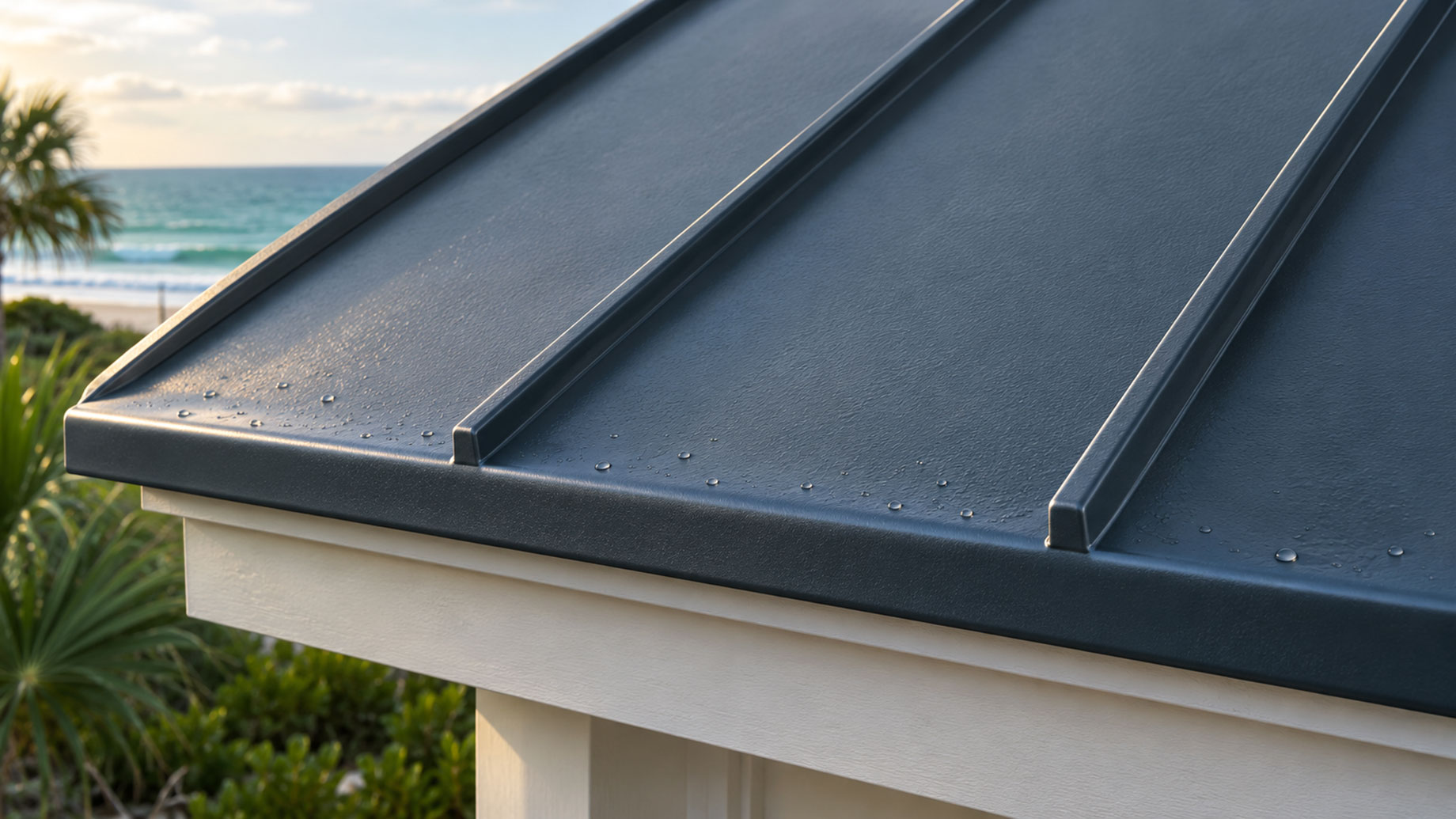
From standing seam metal to synthetic slate and tile, coastal homeowners are upgrading rooflines to boost curb appeal while resisting salt air and high winds.
Living near the shoreline asks a lot from your house. Salt air eats away at standard building materials, tropical storms test every fastener, and relentless sun fades ordinary shingles long before their expected lifespan ends. When you own coastal real estate, your roofline carries the heavy burden of guarding your family and preserving your financial equity.
Upgrading to modern architectural roofing solves both aesthetic and structural challenges at the same time. Choosing wind-rated materials, engineering smart drainage geometry, and hiring certified specialists turns your roof into an asset that commands strong resale value.
Why Do Coastal Roofs Face Extreme Structural and Environmental Stress?
Warm ocean breezes carry microscopic salt crystals onto your roof deck, where morning dew turns them into a corrosive brine that rusts exposed nails and degrades cheap flashing. Fierce ultraviolet rays bake shingles at high temperatures, causing asphalt granules to shed and leaving fiberglass mats brittle.
Tropical weather systems compound this daily wear with sudden, violent pressure shifts. High-speed winds sweep across open water without trees or tall buildings to slow them down, slamming directly into your eaves and gable ends. When wind catches an unsealed shingle edge, upward suction peels back entire sections of the roof in seconds.
How Does Standing Seam Metal Elevate Curb Appeal and Resist Uplift?
Standing seam metal panels bring crisp, clean architectural lines that complement modern beach houses, classic coastal cottages, and expansive waterfront estates alike. Because the vertical seams sit raised above the flat pan of the roof, water sheds rapidly without pooling around vulnerable fastener holes. Concealed clips hold the panels tightly to the roof deck, eliminating exposed screws that rust in salty air.
According to Seaside Sustainability, properly coated steel roofs last between 40 and 70 years or longer, outperforming traditional asphalt shingles that often need replacement after 15 to 25 years. This remarkable longevity translates directly into lower maintenance costs and stronger buyer confidence when you decide to sell.
How Do You Vet Certified Specialists for Warranty-Compliant Installation?
Even the strongest roofing material fails if an installer uses the wrong fasteners or skips critical underlayment steps. Working with experienced roofing contractors helps you match wind-rated materials like synthetic tile and standing seam metal to strict Florida coastal building standards. Qualified professionals understand local wind-borne debris zones, fastener schedules, and sealed-deck requirements that keep manufacturer warranties intact.
Verify that any crew you hire holds active state licensing, full workers’ compensation coverage, and manufacturer certifications for your chosen system. Factory-certified installers follow exact nailing patterns and flashing details required to qualify for extended wind-speed guarantees.
What Makes Synthetic Slate and Tile Ideal for Waterfront Homes?
Natural clay barrel tiles and quarried slate deliver timeless coastal elegance, yet their extreme weight often strains standard residential framing. Flying debris during severe storms can shatter brittle clay tiles, creating sharp projectiles and leaving bare patches on your roof deck. Synthetic slate and composite tiles solve these drawbacks while preserving authentic textures and deep shadow lines.
Manufacturers mold modern composite tiles from high-density polymers and recycled materials engineered to mimic hand-split slate or weathered terracotta. These lightweight products weigh a fraction of natural stone, meaning you rarely need expensive structural reinforcement before installation.
- Superior wind resistance: Interlocking composite designs hold tight in gale-force gusts without lifting or chattering.
- Zero salt degradation: Polymer formulations never rust, rot, or absorb moisture from humid coastal air.
- Fade-resistant pigments: UV inhibitors baked throughout the material prevent chalking under intense coastal sunshine.
- Authentic architectural character: Deeply sculpted profiles match historic and Mediterranean coastal home styles effortlessly.
Engineering Roof Pitch and Ridge Lines for Maximum Wind Deflection
Your roof’s physical shape dictates how hurricane winds flow over your house. Steep gable roofs act like giant sails, catching broadside gusts and creating massive outward suction on the leeward side.
Moderate roof pitches between 4:12 and 6:12 strike an ideal balance for coastal construction. Slopes in this range shed heavy rain quickly while minimizing the wind-catching profile of taller, steeper roofs. Reinforced ridge lines and continuous hip vents keep attic air circulating without creating weak points where wind-driven rain can blow inside.
- Hip roof geometry: Four sloped planes distribute wind loads evenly across exterior walls and reduce uplift pressure.
- Shorter eave overhangs: Limiting soffit projections to 12 or 18 inches prevents gusts from lifting the roof edge from below.
- Reinforced gable bracing: Adding structural ties strengthens older gable ends against inward collapse during severe storms.
- Continuous ridge venting: Baffled coastal vents exhaust attic heat while blocking horizontal rain intrusion.
Why Does Smart Drainage Design Protect Foundations and Exterior Cladding?
Heavy coastal downpours dump inches of water onto your roof in minutes, testing the capacity of your entire drainage network. When gutters overflow, or downspouts dump water right beside your slab, saturated sandy soil shifts and undermines your foundation. Overflowing water also cascades down stucco, fiber cement, or wood siding, triggering rot and mold growth behind your cladding.
Oversized 6-inch or 7-inch seamless aluminum gutters handle high-volume tropical rainfall far better than standard 5-inch residential troughs. Pairing wide gutters with larger 3×4-inch downspouts moves water away from your roofline before debris can cause backups.
How Does a Resilient Roof Strengthen Insurance Rates and Property Equity?
Upgrading to a storm-ready roof delivers measurable financial returns long before you list your property on the market. Insurance carriers routinely reward coastal homeowners who install impact-resistant materials, sealed roof decks, and hurricane straps with substantial annual premium discounts. Lower carrying costs make your home far more attractive to prospective buyers shopping in waterfront communities.
Research from the Sage Sure indicates that homes earning a FORTIFIED roof designation see property values climb by 2% to 4%. Buyers willingly pay a premium for documented storm resilience because they avoid immediate replacement expenses and qualify for better insurance rates from day one.
Maintaining Your Coastal Roof Through Salt, Sun, and Storm Seasons
Fresh water rinses twice a year wash away accumulated salt crystals, bird droppings, and organic debris that trap moisture against metal panels or composite tiles. Keep palm fronds and overhanging branches trimmed back at least six feet from your eaves so wind cannot whip limbs across your roof surface.
Schedule a professional inspection every spring before hurricane season begins and again after any major tropical storm passes through your area. Catching a loose piece of flashing or a clogged downspout early prevents minor wear from turning into expensive structural repairs.
Thoughtful material choices, smart roof geometry, and precision installation work together to protect your coastal home against harsh marine weather. Investing in durable architectural roofing preserves your property’s distinct character, lowers ongoing ownership costs, and protects your long-term real estate equity for decades.