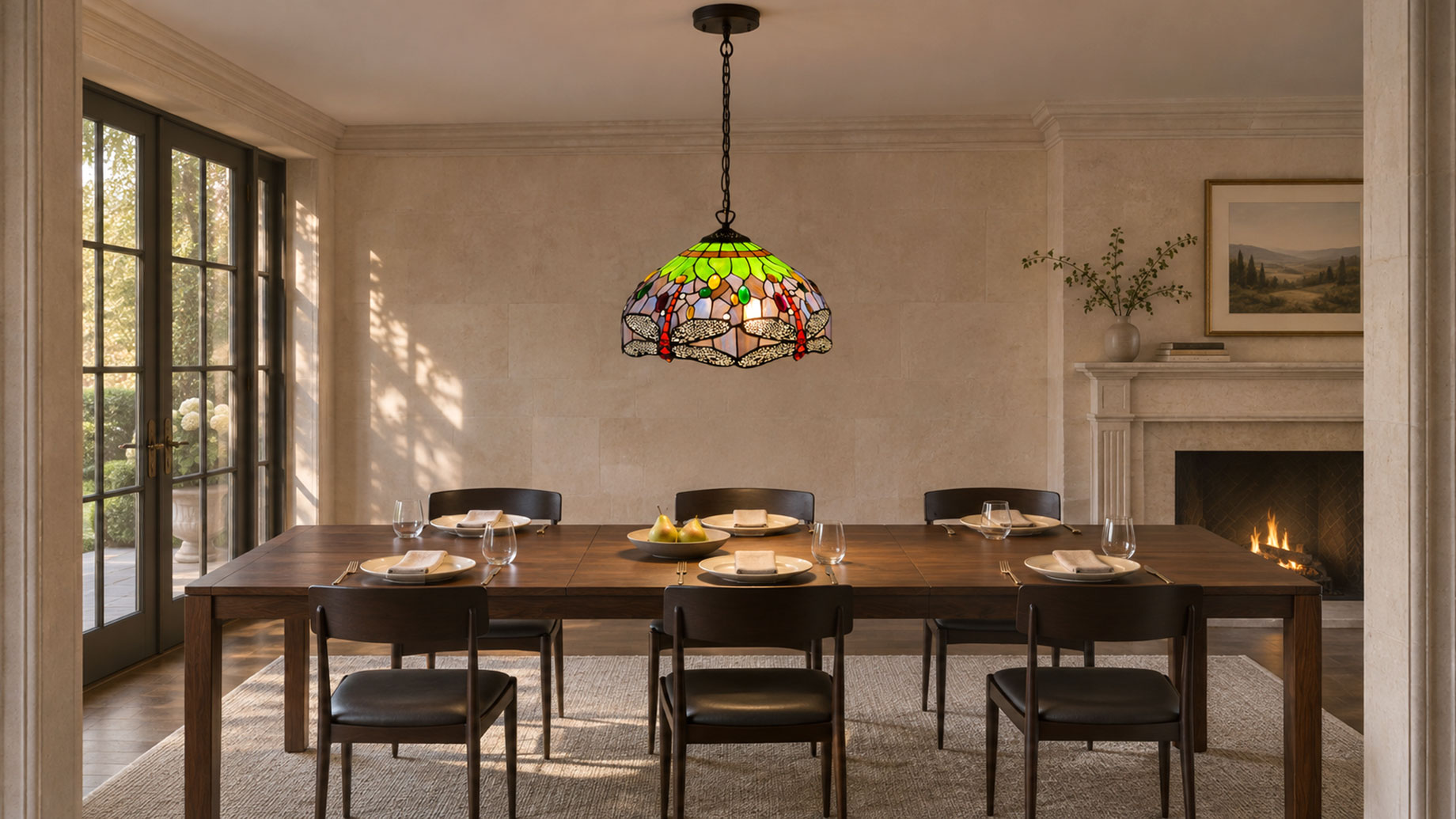
The extra leaf is in, the good linen is out, and the dining room is ready for eight. Then someone sets a bowl of pears beneath the pendant and notices that it sits nowhere near the middle of the table. The light hasn’t moved. The center of dinner has.
An extendable table asks something unusual of a dining room: the furniture changes shape, while the ceiling, windows, and doorways stay put. A stained glass pendant makes that relationship particularly visible. Its outline is crisp in daylight, and after dark the colored shade is often the first thing you see through the doorway. Before choosing the fixture, it pays to understand exactly how the table grows.
Find the center twice
A table whose two halves travel equal distances to receive a center leaf keeps its midpoint, provided the base stays put. A table that extends at one end behaves differently. Add 20 inches at the garden end while the other end stays fixed, and the midpoint moves 10 inches toward the garden. That small piece of arithmetic can settle a surprisingly expensive debate about where to put a ceiling outlet.
Try both arrangements with the chairs in place. Mark the midpoint of each tabletop on the floor with removable tape, then open the French doors and pull out the end chairs. You might find that the table can slide back under the pendant for large dinners. You might also discover that doing so puts a seated guest squarely in the route from the kitchen. In that case, keep the comfortable serving route and give the everyday arrangement priority. Nobody enjoys moving their chair each time a platter comes through.
Give the glass a backdrop
A dragonfly Tiffany pendant light rewards a view from the side. On a shade with red dragonfly bodies and pale, finely traced wings, much of the detail runs around the lower rim. Seen against a quiet limestone or plaster wall, the wings read clearly from the next room. Seen against a window with dark mullions and dense foliage beyond, their outlines can get lost. The same lamp can look quite different from two seats only a few feet apart.
Before settling on a drop, have someone hold a cardboard profile of the shade over the table. Start in the doorway guests actually use. Then sit down while another person sits opposite you. Can you see their face when they lean forward to speak? Finally, stand at the end as if you were carving a roast. Those three views tell you more about the right height for this room than a photograph of somebody else’s dining table.
Set the end places before choosing a second pendant
Two stained glass hanging lamps can suit a long table that hosts a crowd most weeks. To judge the pairing, take the leaf out again. If the shades now hover over the diners at either end instead of over the tabletop, the arrangement is doing its best work on the few nights the room is full. A single pendant over the everyday center leaves more freedom to change the seating.
What the end seats actually need is enough light to see the meal and the person across from them. Set a white plate at each end after sunset. Try the pendant with the room’s existing lamps, then switch on the sideboard lamp by itself to see what it contributes. You may find that it lights a guest’s face beautifully but leaves their plate in shadow. That’s useful to know before you commit to another decorative shade.
Bring one plate, not just a paint swatch
When comparing Tiffany dining room lights, look at the underside as carefully as the pattern around the rim. If you can see a sample illuminated, place your own dinner plate below it and step back to roughly the distance between your chair and the center of your table. Notice the color of the china, whether the bulb is visible beneath the shade, and whether a polished knife catches a distracting reflection. You can love the glass from across the room and still prefer a different shape when you sit down to dinner.
Once the light is in place, let the tabletop be less formal than the ceiling. On a long walnut table, two low bowls set within reach of the end guests are often more gracious than a single centerpiece directly under the lamp. The pendant gives the room its center; the pears can go where people can reach them.