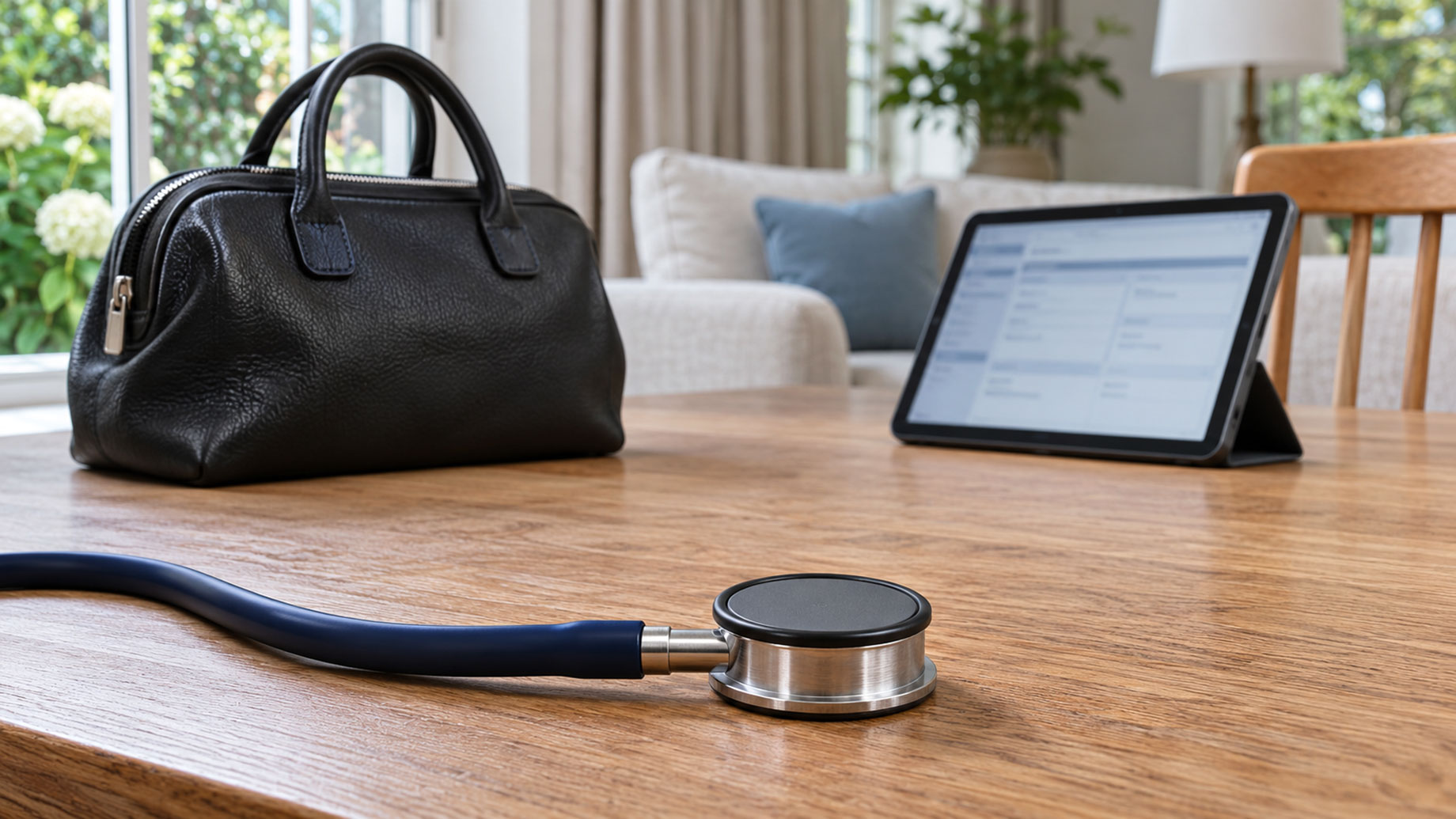
A house call looks like a gentler kind of medicine. The waiting room is a couch, the triage nurse is a dog, and the doctor sits at eye level. Easy to miss: every clinical note written on a kitchen table carries the same legal weight as one written in a hospital, and the trail of evidence behind it is often thinner.
If something goes wrong months later, the record of that visit is what a reviewer, an insurer, or a court will read. And that record is often being built in a setting the software was rarely designed for.
Home-based care is growing fastest in the parts of medicine where the stakes are highest: frail older adults, serious chronic illness, or post-hospital recovery. The documentation hasn’t caught up. When a diagnosis is missed or a medication order goes wrong at home, families often turn to a medical malpractice attorney and discover how much the chart does and doesn’t say about what happened in the living room.
The Record Was Built for a Room That Isn’t There
Electronic health record systems assume a fixed exam room. A desk, a wired monitor, a printer down the hall, a medical assistant who rooms the patient and takes vitals before the clinician walks in. The templates, the order sets, the alerts, the billing codes were all shaped by that physical setup.
Pull that scaffolding away and the clinician is left typing into a laptop balanced on a dining chair, with one bar of signal and a cat on the keyboard. The result is a documentation workflow under constant friction. A multi-site review of home-based practices found that most of them, regardless of size, struggled with EMR and scheduling tools that were rarely designed for mobile practice. That friction isn’t a software complaint. It shows up in the chart as late entries, copy-forward notes, missing vitals, and reconciliation steps that happen hours after the visit is over.
At the same time, the home visit captures things no office visit can. The pill bottles actually in the cabinet. The stairs the patient navigates to the bathroom. Who else lives there, and whether the heat works. A structured in-home assessment, like the INHOMESSS checklist, exists precisely because the environment is part of the exam. The record is supposed to hold both the clinical findings and the context. In practice, the context is the part that slips.
What Actually Holds Up Later
The practices whose records survive scrutiny tend to share a few habits. None of them are glamorous.
- Chart in the home, briefly. A short, time-stamped note entered before leaving (vitals, meds reconciled, assessment, plan, and the one or two environmental findings that mattered) anchors everything written later. It doesn’t have to be the final note. It has to exist.
- Photograph the pill bottles. With consent, a phone photo of the medication shelf is some of the most useful evidence a home visit produces. It settles reconciliation disputes that no amount of typed free text can.
- Separate the environment from the exam. Build a short home-environment section into every note. Stairs, lighting, heat, who is in the house, caregiver capacity. If a reviewer asks later why a frail patient was left on a diuretic, the environmental note is where the reasoning lives.
- Document the care coordination. A phone call to the cardiologist’s office at 4 p.m. is part of the visit. Log it the same day with who was called, what was said, and what was agreed. Unreimbursed coordination time is still clinical work, and it’s often the piece a plaintiff’s expert will say was missing.
- Close the loop on consent. If an ambient scribe, telehealth add-on, or remote monitoring device enters the home, the consent conversation goes in the note, not only on a signed form. Who was present, what was explained, what the patient said.
The home visit is a richer encounter than an office visit, and it should produce a richer record. When it does, the medicine is better and the legal exposure drops. When it doesn’t, the softness of the setting is exactly what gets held against the clinician later. The living room is a real exam room. The chart should read like it.