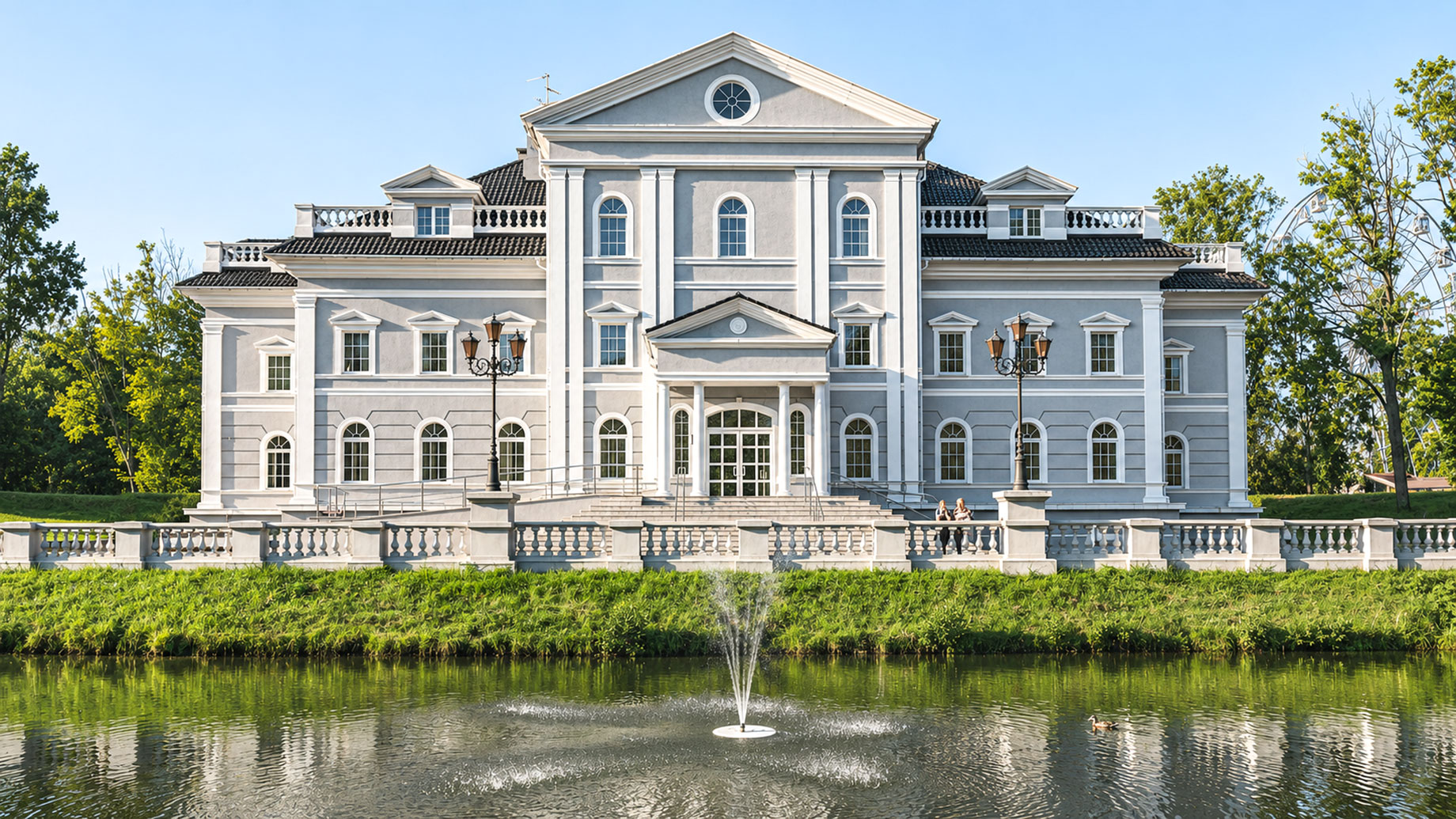
Luxury buyers are rediscovering the visual depth of traditional architecture. After years of flat roofs, unadorned walls and nearly identical neutral interiors, classic facades offer a stronger sense of place. The change also reflects wider fatigue with luxury minimalism, particularly when stripped-back design lacks warmth or local character. A well-proportioned exterior can still support modern living inside, while thoughtful historic preservation principles help owners respect architectural character without freezing a property in time.
The Shift Away from Stark Minimalism
Minimalism remains appealing when materials, light and proportions carry the design. Problems arise when cost-cutting removes those details, leaving a home that looks unfinished or interchangeable with nearby properties. Luxury buyers increasingly expect more individuality from a significant investment.
Classic facades answer that demand through symmetry, layered rooflines, defined entrances and windows with visible depth. Even a new build can gain character from deep eaves, framed openings and a restrained mix of stone and render. If you’re planning a renovation, begin with the street elevation before choosing decorative details. Check the alignment of doors, windows and roof features, then use ornament selectively. Strong proportions create a convincing result, while excessive surface decoration can make the architecture feel theatrical.
Identifying Iconic Period Motifs
Each historic style has its own visual grammar. Georgian homes favor symmetry, sash-style windows and orderly proportions. Tudor-inspired buildings use steep gables, prominent chimneys and grouped windows. Mediterranean residences often feature tiled roofs, arches and shaded terraces. French Provincial architecture is known for balanced facades, tall windows and refined masonry details.
Before committing to a style, study the hallmarks of a French provincial house or the defining features of another period that suits the property. Select two or three motifs and repeat them consistently. A steep roof paired with undersized modern windows, for example, can look disconnected. Window shape, roof pitch, entry design and exterior materials should tell the same architectural story. Consistency matters more than the number of period references included.
Stone Masonry and Artisanal Craftsmanship
Natural stone gives a facade texture, shadow and subtle color variation that manufactured panels often struggle to reproduce. Its success depends on careful installation. Joint width, stone size and corner treatment all affect whether the result feels established or newly applied.
Ask to see a sample wall before approving a full masonry package. View it in morning and afternoon light, since strong sun can reveal uneven joints or an overly repetitive pattern. Carved surrounds, ironwork, timber doors and detailed cornices also benefit from skilled fabrication. These features sit close to eye level, so poor finishing becomes obvious. Set the budget around a few highly visible elements, such as the entrance and main windows, then simplify secondary elevations. This keeps craftsmanship focused where it makes the greatest impression.
Long-Term Value in Historic Aesthetics
A classic facade can support long-term desirability because its appeal depends on proportion and material quality, not a passing surface trend. Maintenance still shapes value. Stonework may need repointing, timber requires suitable coatings and detailed drainage must direct water away from ledges and joints.
Keep records of materials, finishes and specialist repairs so future work matches the original specification. Owners developing a distinctive property may also benefit from understanding how architecture contributes to an iconic luxury real estate identity. The strongest homes feel recognizable without becoming overstated.
For a new build, review the facade at thumbnail size before construction begins. If the massing, roofline and entrance remain clear at that scale, the design has a sound foundation. Fine details can then enrich the architecture instead of carrying the entire composition.