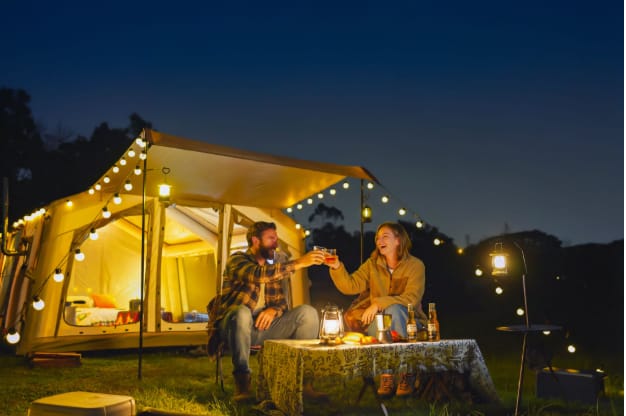
A comfortable campsite takes more than a tent and a few chairs. Enjoying coffee outdoors in the morning, spending an afternoon with friends, and retreating to a quiet tent at night all depend on how the space is arranged. When furniture blocks entrances, bags crowd the seating area, or reaching the tent means walking through a gathering, even a beautiful setting can feel inconvenient.
The same principles that make a home comfortable can also improve a private campsite: distinct areas for different activities, clear pathways, and furnishings chosen for how people actually use the space. Whether you’re camping on private property where overnight stays are permitted or improving an existing campsite, you don’t necessarily need permanent structures. Thoughtful planning and movable equipment can create an inviting, well-organized outdoor living space.
Understand the Site Before Planning the Layout
A well-designed campsite starts with the land itself, not the furniture. Terrain, sun exposure, views, parking access, and walking routes all influence where sleeping, gathering, and storage areas should go.
An open spot overlooking the surrounding landscape may be ideal for seating, while level ground with good drainage is better suited to a tent. If parking is some distance from the main activity area, consider how easily you can carry supplies between the two without navigating around furniture or other obstacles.
Leave enough space around the tent for stakes, guy lines, and foot traffic. If the site is on private property, confirm that local regulations allow overnight camping.
Instead of arranging everything and then moving it repeatedly, identify the areas where people will spend time and the routes that need to remain clear. Once those decisions are made, the rest of the layout becomes easier to plan.
Give Sleeping and Social Areas Their Own Space
Homes have separate living and sleeping areas for good reason, and a campsite can benefit from the same approach. During the day, people may gather around a table for meals, coffee, or conversation. Later, some may want to go to bed while others stay outside. When everything happens near the tent entrance, movement and noise can easily disrupt both activities.
For group camping, some distance between the seating and sleeping areas can provide greater comfort without making either space difficult to reach. The tent itself can also help define these zones. Among large inflatable tents for camping, ZONKOO Draco Plus pairs a main tent with a gazebo extension, providing 252 square feet of total space. The main tent can accommodate sleeping arrangements and personal belongings, while the gazebo area provides room for dining, conversation, or daytime relaxation.
Square footage alone, however, doesn’t determine how well a space works. Mattresses, tables, chairs, and luggage all take up room, and people still need clear paths to move between them. The aim isn’t to fill every available corner but to give each activity enough space.
Keep the Layout Flexible With Modular Features
A private campsite doesn’t need a permanent gazebo, paved surfaces, or oversized outdoor furniture. For spaces used mainly on weekends or holidays, a modular layout offers more flexibility.
Seating, lighting, shade, and sleeping areas can change with the number of guests and the activities planned. A small table and a few chairs may be enough for two people, while a gathering with friends may call for additional seating and a larger shared area. Rearranging furniture can also create more separation between social and private spaces when needed.
Inflatable tents can fit into this approach as temporary sleeping spaces alongside folding furniture, portable lighting, and other movable features. They can be set up when needed and packed away afterward without permanently changing the property.
That flexibility still requires practical choices. Furniture needs to be stable, and tents must be installed and secured according to the manufacturer’s instructions. Transport and storage matter as well. Equipment intended to make the campsite adaptable shouldn’t create more work every time it’s used.
Use Layered Lighting to Make Evenings More Comfortable
During the day, natural light and the surrounding landscape shape the atmosphere. After dark, lighting determines how comfortably people can dine, move between areas, and relax.
A useful approach is to combine three types of lighting: ambient light for atmosphere, task lighting for specific activities, and pathway lighting for safe movement. Soft ambient lighting can make a seating area welcoming without the glare of a single bright fixture. Dining and preparation areas need more focused light so people can see their food, utensils, and belongings.
Paths between seating areas, tents, and parking spaces should be illuminated well enough to reveal uneven ground, steps, or other obstacles. Sleeping areas, by contrast, generally benefit from softer light that won’t disturb anyone who has already turned in. Keep electrical cords out of walkways and choose fixtures suited to the outdoor conditions.
Color and texture also contribute to the overall feel. Coordinating tents, furniture, and fabrics can give the campsite a cohesive look, while blankets and cushions make seating more comfortable. The most effective decorative details improve the experience rather than simply adding more things to the space.
Let Experience Guide What You Buy Next
Attractive outdoor furniture, decorative lighting, and accessories can be tempting when designing a private campsite. But a fully furnished space isn’t necessarily a comfortable one. The problems that matter most may be too few seats, a dark walkway, or a dining area without enough shade.
Those shortcomings aren’t always apparent during the planning stage. Start with the essentials for sleeping, dining, and lighting, then use the campsite a few times before deciding what to improve. If chairs constantly need to be moved to clear a path, rearranging the layout may be more useful than buying more furniture. If sorting through belongings after dark is difficult, better task lighting may make the biggest difference.
Once you know what’s missing, black friday deals and other seasonal promotions can help reduce the cost of the equipment you actually need. Check dimensions, materials, included accessories, and after-sales terms before buying to make sure each addition works with the existing layout.
A thoughtfully designed campsite isn’t defined by expensive furniture or the number of accessories it contains. Its quality comes from how well each element serves a purpose and improves the outdoor experience.
Make Packing Up and Maintenance Part of the Plan
Unlike a permanent outdoor living area, a temporary campsite needs to be cleared when the stay ends. That makes storage and maintenance worth considering from the beginning.
Folding furniture needs somewhere to go, tents must be packed properly, and damp fabrics should be completely dry before storage. If every departure involves shifting unnecessary furniture, hunting for accessories, or sorting through items without designated storage, an otherwise relaxing weekend can end in frustration.
For anyone who regularly camps at the same location, keeping a familiar arrangement and a consistent storage system can make the next visit easier. There’s less time spent deciding where everything belongs and less chance of leaving something behind.
Before departure, remove trash, check for personal belongings, and clean and store equipment according to the manufacturer’s instructions. A practical campsite should be just as manageable when it’s time to leave as it is while you’re there.
Let the Natural Setting Remain Part of the Experience
Private campsites can borrow ideas from residential design without trying to recreate an indoor home. Good planning provides distinct places to sleep, dine, and gather, keeps movement between them easy, and preserves the openness and character of the surroundings.
Working with the site’s natural features, then refining the layout through thoughtful zoning, flexible furnishings, and appropriate lighting, offers more lasting value than simply adding furniture and decorations.
Comfortable outdoor living doesn’t require an elaborate setup. A space that suits the people using it while allowing the natural setting to remain part of the experience is enough.