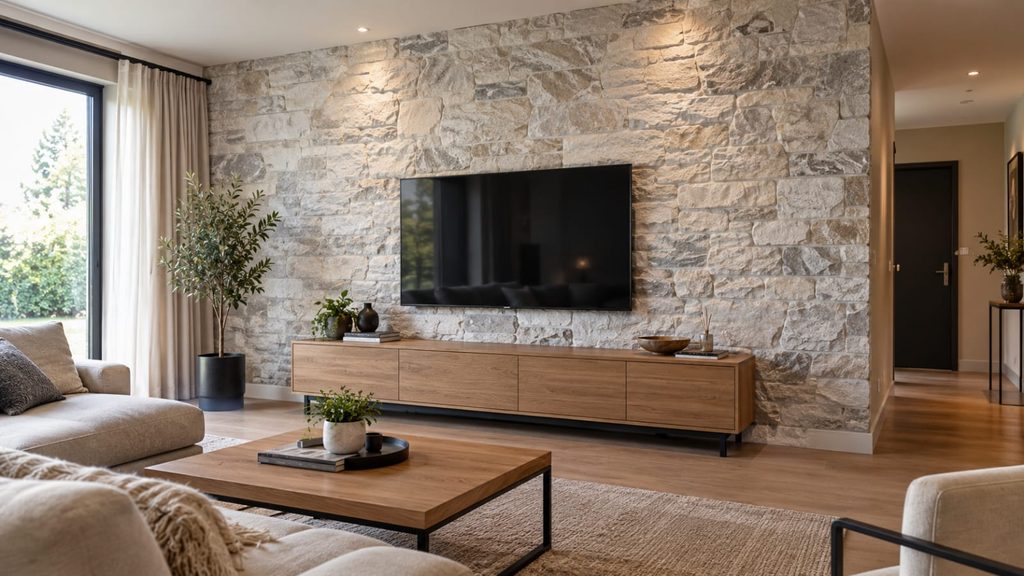
Natural stone can give an interior remarkable texture and architectural character, but its weight, handling requirements, and installation complexity can make it impractical for certain renovation projects. Lightweight faux stone wall panels offer another way to create a dimensional stone-inspired finish without using conventional masonry. However, choosing the right product involves more than finding an attractive pattern. Texture, lighting, wall preparation, panel coverage, and the intended application all influence the final result. Understanding these factors helps homeowners and designers make informed decisions.
What Makes PU Stone Wall Panels Different from Natural Stone?
PU stone wall panels are decorative wall coverings made of polyurethane. They are profiled to imitate the patterns of natural rock, carved stone, or building masonry. Their 3D surface, with shadows and protrusions, creates a more prominent effect than a regular flat wall surface. It allows you to diversify the design of the room: depending on the texture, the panel will imitate different types of stone, rock formations, volcano blocks, or architectural elements.
The main difference between these panels and real stone constructions lies in the material. PU panels are made of polyurethane, which makes them significantly lighter than natural stone, and therefore easier to install. However, there are nuances in the use of this material. If strength, fire resistance, or specific functional characteristics are required, this method of wall decoration may not be applicable. It is necessary to consider the technical characteristics of the material and the conditions of use before choosing PU panels.
Choosing a Stone Texture That Complements Your Space
The texture you select can influence the entire character of a room. Irregular, rugged surfaces introduce a natural, organic appearance, while geometric profiles create a more ordered architectural effect. For example, WALLSMARK’s Rocky White design offers a lighter, rugged stone-inspired finish, while its Lava Core panel delivers a darker, volcanic look. Breeze Block introduces a more open, geometric pattern that may suit contemporary partitions and decorative architectural features.
Color and lighting deserve equal attention. Lighter stone finishes can work well with neutral walls, natural wood, and understated furniture, while charcoal and darker textures can establish contrast in larger interiors. Directional lighting can emphasize raised surfaces and recessed details, but strong side lighting can also reveal panel joints or uneven installation. Reviewing samples under the lighting conditions of your actual room is a useful way to avoid choosing a finish that looks different from what you expected.
Creating a Cohesive Interior with Decorative Wall Panels
A stone-based feature wall should be used as a complement to the overall design of the room, as opposed to overpowering everything else. It works well in a living room, as a textured background to a media console, paired back with simpler pieces of furniture and accessories. In a reception area, subtle use of stone textures can add visual appeal without demanding an equally elaborate treatment of the entire space.
Material combinations also influence the finished effect. Natural wood tones can soften rugged stone textures, while metal accents and controlled lighting introduce contrast. For projects that need a more linear or patterned decorative surface alongside a stone feature, PS Wall Panels provide an alternative style to consider. Combining finishes works best when each material has a clear purpose, whether that is adding warmth, introducing texture, or defining a separate functional area.
Where Can Faux Stone Cladding Panels Be Used?
Living rooms, television backdrops, entryways, reception areas, restaurants, and retail displays are common design opportunities for faux stone cladding panels. Their dimensional surfaces can help otherwise plain walls feel more considered, and different profiles support both understated interiors and more dramatic architectural concepts. In commercial spaces, consistent panel layout and suitable edge detailing are especially important because large surfaces make repetitive patterns and visible joints easier to notice.
Selected PU wall panels may also be considered for exterior accents or protected outdoor settings when the particular product is approved for those conditions. However, exterior suitability depends on more than appearance. Exposure to sunlight, temperature changes, rain, moisture, and wind can affect the finished installation, while the substrate and fixing method also play important roles. Before specifying panels for an exterior wall, confirm the manufacturer’s guidance on weather exposure, fastening, sealing, and any applicable building requirements.
Planning Installation Before You Buy
A successful installation begins with accurate measurements and a clear layout. Calculate the wall’s width and height, identify doors and windows, and determine where the panel edges, corners, joints, and cut sections will fall. Dry-fitting the layout before fixing anything can help balance the design, reduce avoidable waste, and prevent narrow or awkward pieces from appearing in prominent areas. This planning is particularly valuable when the panels have irregular rock patterns that must look natural across adjoining sections.
The substrate must also be suitable for the chosen fixing system. A stable, clean, dry, and appropriately prepared surface provides a better starting point than a wall with loose material, dampness, or unresolved damage. Use a compatible construction adhesive and any required mechanical fasteners according to the manufacturer’s instructions. Cutting methods, joint treatments, corner details, and edge finishes can vary by panel design, so do not assume that every PU stone panel uses the same installation method. For large elevations, complicated corners, or exposed applications, professional installation may be the more practical choice.
Understanding Cost, Coverage, and Maintenance
The purchase price is only one part of the total project cost. Budgeting should also account for panel coverage, cutting waste, adhesives, fasteners, edge treatments, substrate preparation, delivery, and installation labor where required. Product dimensions and coverage can differ significantly across designs, so calculate the quantity using the specifications of the exact model you intend to purchase. Allow for additional material when the wall contains many openings, corners, or pattern-sensitive sections.
Maintenance is another consideration when comparing lightweight faux stone panels with traditional stone finishes. Routine dusting and gentle cleaning may be sufficient for many decorative surfaces, subject to the manufacturer’s care instructions. Avoid abrasive tools and harsh chemicals that could damage the finish. Although some panels may be marketed for moisture resistance or exterior use, those descriptions should not be interpreted as proof that every installation is waterproof, fireproof, or suitable for unrestricted outdoor exposure. Check the specific product documentation before making a decision.
Choosing a PU Stone Wall Panel for Your Project
The most effective way to select a panel is to compare its appearance with the practical demands of your project. Explore the PU Stone Wall Panel options from WALLSMARK to review a stone-inspired design and its listed product details. Confirm the dimensions, coverage, finish, and installation guidance before calculating quantities or committing to a complete wall.
Give Your Walls More Architectural Character with WALLSMARK
A well-designed stone feature wall can introduce depth, texture, and a distinctive architectural identity without requiring a complete interior redesign. By choosing an appropriate profile, coordinating the finish with surrounding materials, and planning installation carefully, you can create a result that looks intentional and suits the practical requirements of your space. WALLSMARK’s PU stone collection offers different visual directions, from rugged natural-inspired surfaces to darker and more geometric designs. Compare the available options, verify their individual specifications, and choose a finish that supports your overall design rather than following appearance alone.