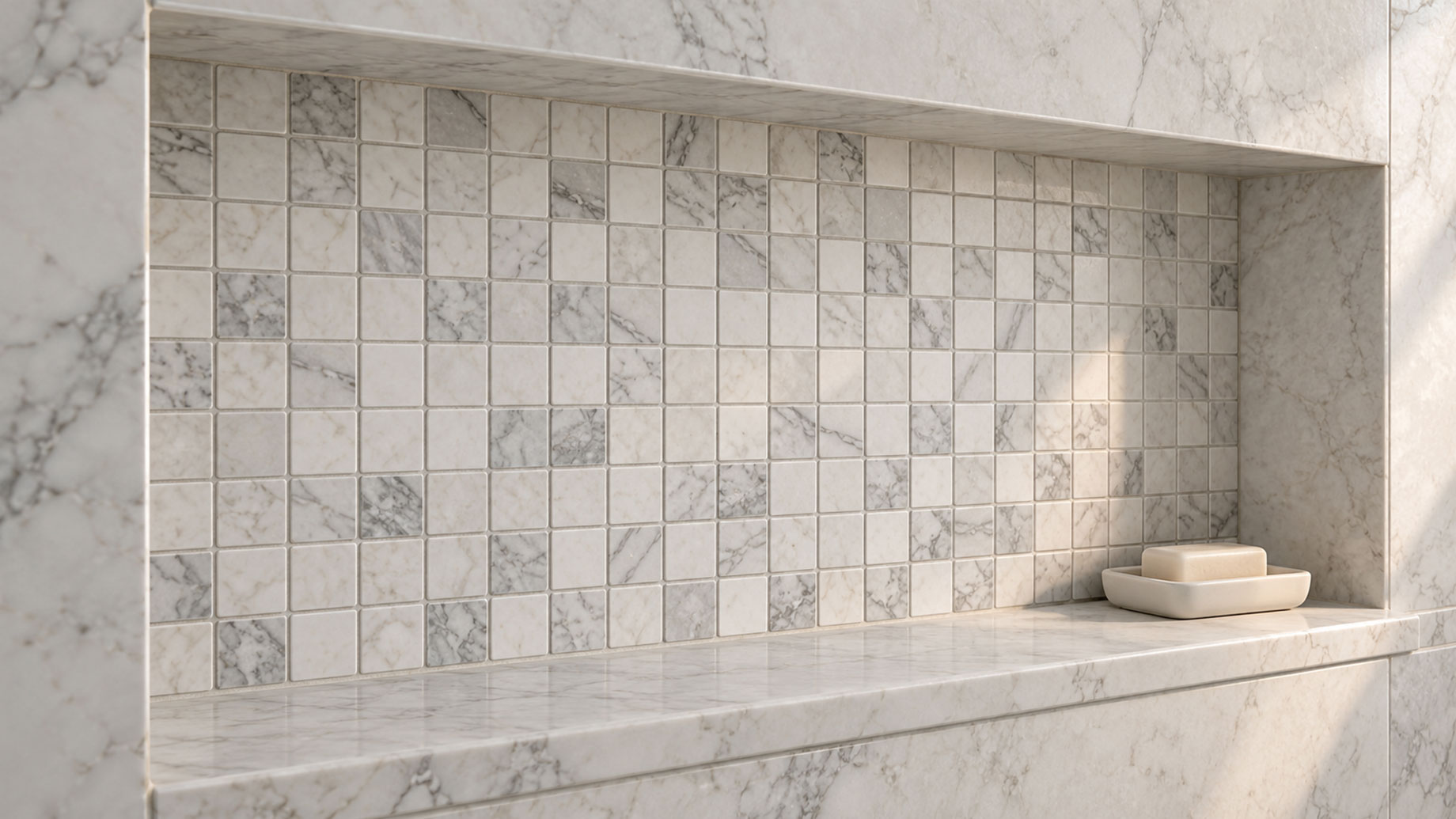
A beautifully designed bathroom feels considered at every scale, from the proportions of the room to the texture of the surfaces used each day. Natural stone can play an important role in that experience, and marble mosaics offer a particularly expressive way to introduce it. Their combination of veining, tonal variation, and repeating geometry brings detail to a space without requiring every surface to compete for attention.
That versatility helps explain their enduring appeal. A marble mosaic can give a contemporary bathroom a softer, more tactile character or bring definition to a traditional interior. The strongest results come from choosing the stone, pattern, and placement together, then considering how grout, lighting, and everyday care will influence the finished room.
Natural Variation Gives Marble Its Character
Marble’s veining and mineral variation give individual pieces their own character. In mosaic form, those differences are distributed across a repeating pattern, creating a surface that combines visual order with natural irregularity. Soft gray movement, warmer cream tones, or more pronounced veins can each establish a different mood.
Because a small sample cannot show the full range of variation, review several sheets together before making a final selection. Look at the balance of light and dark pieces, the direction of the veining, and any noticeable shifts in tone. Discuss the arrangement with the installer so the finished surface feels balanced across the entire area.
Pattern and Scale Shape the Design
The shape of a mosaic changes how the marble is perceived. Small squares can create an understated, orderly surface. Hexagons sit comfortably within both vintage and contemporary schemes, while herringbone introduces direction and movement. Curved patterns, such as penny rounds, can soften a room dominated by straight cabinetry and rectangular mirrors.
For homeowners comparing layouts and finishes, exploring marble mosaic tile can help narrow the choices before ordering samples. Consider how much of the pattern will be visible in its intended location: a design that reads clearly across a floor may lose its effect inside a narrow niche.
Restraint helps the pattern remain effective. If the mosaic has strong contrast or intricate geometry, pair it with quieter wall finishes and simple cabinetry. A bathroom can feel richly detailed with one well-chosen focal area and enough surrounding space to appreciate it.
Choose the Right Places for Marble Mosaics
Shower floors are one potential application because smaller pieces can accommodate changes in slope around a drain more readily than larger tiles. They also create a useful contrast in scale when paired with larger wall tiles, helping define the shower area within the overall design.
Suitability still depends on the specific product. Confirm that the marble, finish, backing, and installation system are appropriate for a shower floor, and check the manufacturer’s guidance on wet-floor use and slip resistance. Small pieces and numerous grout joints alone do not establish that a surface is suitable. Proper waterproofing and drainage must also be addressed as part of the shower assembly.
A recessed niche, vanity backsplash, or feature panel offers another way to introduce mosaics. These smaller areas allow the stone to become a decorative detail without dominating the room. Plan the pattern around the available dimensions so borders, corners, and cut pieces look deliberate.
Coordinate Marble With Cabinetry and Metals
The surrounding finishes help determine whether marble feels crisp, warm, traditional, or contemporary. Chrome can reinforce a bright, reflective palette, while brass introduces warmth. Darker metal finishes create stronger definition against pale stone, especially when repeated in the taps, shower fittings, and cabinet hardware.
Cabinetry adds another layer of character. Natural wood can bring warmth to a pale marble scheme; painted millwork can create a more tailored effect. The same mosaic might feel classic beside paneled cabinetry and distinctly contemporary beneath a floating vanity. This adaptability is central to its timeless appeal: the material can support several design styles.
Grout and Installation Details Complete the Look
Grout is a visible part of a mosaic installation. A color close to the marble’s background tone allows the pieces to read as a more continuous surface. Contrasting grout makes the geometry more prominent and can turn a subtle pattern into a stronger graphic feature.
Ask for a small grouted sample before committing, and confirm that the grout is compatible with the selected stone and finish. Review the sample once it has cured according to the manufacturer’s instructions. During installation, consistent spacing between sheets, careful alignment, and neatly resolved edges deserve particular attention. These details help the mosaic read as one coherent surface.
Lighting Brings the Materials Together
Marble can look different under daylight, ceiling lights, and vanity lighting. A sample that appears neutral in a showroom may reveal warmer or cooler undertones in the bathroom. Evaluate it in the room, at different times of day where possible, and alongside the planned cabinetry, paint, and metal finishes.
Consider the surface finish at the same time. Polished marble offers a more reflective appearance, while honed marble has a softer, lower-sheen look. Choose the visual effect in relation to the whole room, while confirming that the finish suits its intended application.
Plan for Everyday Care
Marble’s lasting appeal is best supported by a suitable care routine. Use a pH-neutral cleaner intended for natural stone, follow the product instructions, and attend to spills promptly. Acidic products, including vinegar-based cleaners, can etch marble and leave dull marks on the surface. Abrasive cleaning products can also damage the finish.
Discuss sealing with the stone supplier and follow the recommendations for the particular marble and installation. An appropriate sealer can improve stain resistance, but it does not make the stone stainproof or replace careful cleaning. Understanding these requirements before choosing the material helps ensure the bathroom suits the way it will be used and maintained.
Conclusion: A Timeless Material, Thoughtfully Used
Marble mosaics bring together natural character, decorative flexibility, and a sense of detail that can suit a wide range of luxury bathrooms. Their appeal is strongest when pattern, scale, and surrounding finishes work together, whether the stone covers a shower floor or defines a small vanity accent.
Start with samples, choose an appropriate application, and give installation and care the same attention as appearance. Those decisions allow the marble to become an integral part of a bathroom that feels personal, balanced, and comfortable to use over time.
