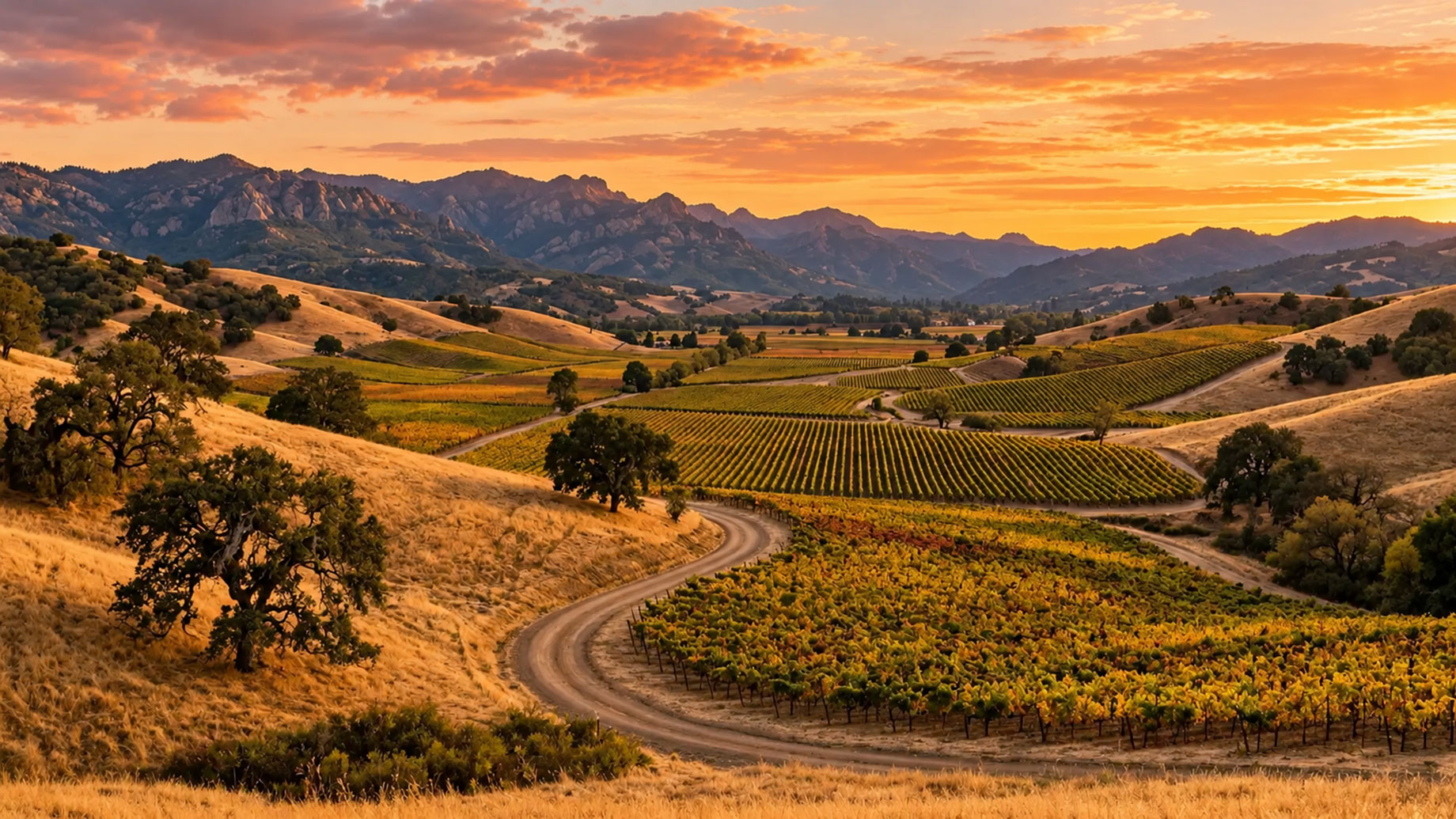
The Santa Ynez Valley sits quietly north of the Santa Ynez Mountains, close enough to Los Angeles to feel practical for a weekend and far enough to feel like real distance. Rolling oak studded hills, cattle ranches, and small heritage towns give it a texture very different from the Pacific coastline just beyond the ridge.
For travelers used to the pace of California’s better known destinations, the valley rewards a slower approach.
The Geography of a Quiet Wine Country
The valley spans roughly thirty miles east to west, threaded by a single main road and dotted with a handful of small towns, each with its own character. Solvang leans into its Danish heritage, Los Olivos runs on a wine tasting cadence, and Santa Ynez itself keeps the pace of a working ranch town.
What ties them together is scale. Nothing feels engineered for volume. Restaurants seat forty, tasting rooms hold a dozen, and the roads between towns pass through vineyard and grazing land rather than commercial corridors.
The absence of chain infrastructure is not accidental. Local zoning and a strong sense of regional identity have preserved a rural rhythm that most of coastal California has lost.
A Weekend Rhythm Unlike the Coast
Coastal weekends run on lineups: parking, restaurants, waits at the dock. The valley operates on a different logic, one built around morning walks, an unhurried tasting or two, an early dinner, and a long evening.
Staying at a boutique hotel in the Santa Ynez Valley tends to align a traveler with that rhythm from the first evening. The scale of the accommodations shapes the day. Small properties mean shorter lines at breakfast, a familiar face at check in, and easier logistics for last minute plans.
Guests who use their stay as a base rather than a stopping point tend to get the most out of the valley. Two nights allows one day for wine touring and a second for the quieter pursuits, olive oil tastings, ranch visits, a leisurely lunch, or a horseback ride through open country.
Seasons, Small Details, and What to Pack
The valley has a genuine four season feel, unusual for coastal Southern California. Spring brings wildflowers and mild afternoons. Summer runs hot and dry, with cool evenings that catch visitors by surprise. Autumn is arguably the standout season, with harvest activity, warm days, and long light.
Layers matter more here than in Los Angeles. A jacket for the evening, especially on outdoor patios, is not optional in shoulder seasons. Comfortable shoes cover the rest, given how much of the valley experience happens on gravel drives and garden paths.
Cell service can be patchy on the back roads. Travelers who plan to explore beyond the main highway often download offline maps and give themselves a slower pace than turn by turn navigation would suggest.
Winter runs cooler than most Californians expect, with morning fog and evening temperatures that drop into the forties. It is also the quietest window of the year, with tasting rooms noticeably less crowded and dinner reservations easier to secure on short notice.
Why It Rewards a Return Visit
The Santa Ynez Valley is not a checklist destination. First visits often catch the wine country note and miss the quieter layers, the local produce cadence, the seasonal events, the small ranches open by appointment.
Regular visitors tend to time their trips around specific windows: harvest weekends in September and October, spring lambing at nearby ranches, or the low season quiet of midweek in January. Each visit calibrates the next.
Repeat visitors also tend to shift their base of operations over time, choosing a different town on each return so that Los Olivos, Solvang, and Santa Ynez each get their own weekend rather than being folded into a single itinerary.
For anyone looking for a Southern California weekend that trades sand and traffic for oaks and open country, the valley makes a strong case. Two hours of driving buys a genuinely different landscape and a different pace, without the friction of a flight.
