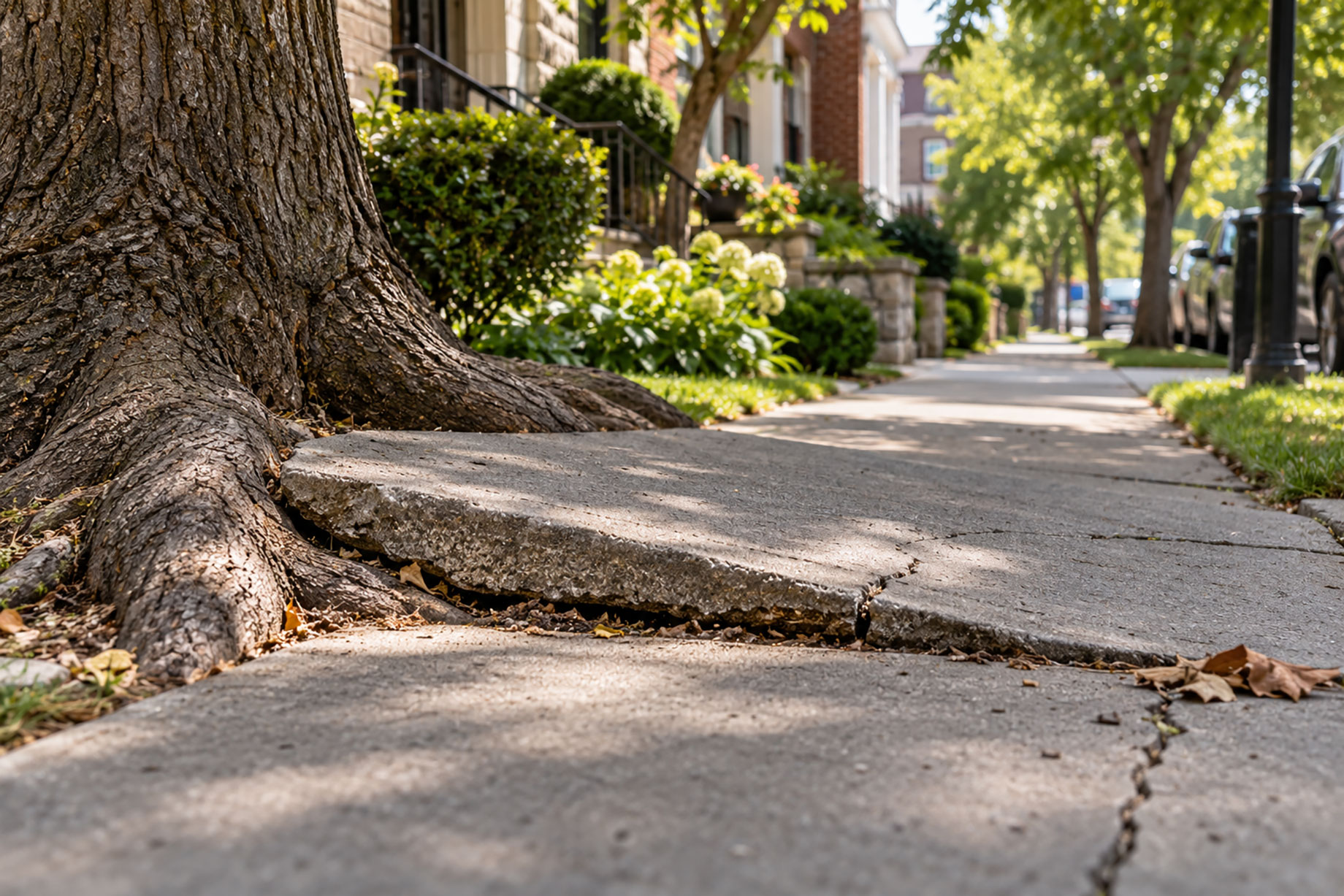
Homeowners insurance generally does not cover sidewalk repairs caused by normal wear, aging concrete, tree roots, soil movement or poor installation. These are usually treated as maintenance issues.
Insurance may cover the repair if the sidewalk was damaged by a sudden event included in the policy. Examples may include a fallen tree, vehicle impact, fire or vandalism. Liability coverage may also help if someone trips on the sidewalk and files an injury claim.
Coverage depends on the cause of the damage, sidewalk ownership, local laws, and the terms of the policy.
When Homeowners Insurance May Cover a Sidewalk Repair
Homeowners insurance is designed to cover sudden and unexpected damage. It is not meant to pay for routine maintenance.
A sidewalk repair may be covered in the following situations:
Vehicle Damage
If a driver loses control and damages the sidewalk, the repair may be covered by the driver’s auto insurance. Your homeowners insurance may also provide coverage depending on the policy and sidewalk location.
Take clear photos and collect the driver’s insurance details before making permanent repairs.
Storm or Fallen Tree Damage
A storm may knock down a tree or large branch and damage the sidewalk. This could be covered if wind or falling trees are included in the policy.
The insurer will check why the tree fell and whether the damaged sidewalk is part of the insured property.
Fire or Vandalism
A sidewalk damaged by fire or deliberate vandalism may also be covered. The property owner may need to provide photographs, a police report, and other evidence of the event.
Even when the cause is covered, the repair cost must usually be higher than the deductible for the insurer to make a payment.
When Sidewalk Repairs Are Usually Not Covered
Most sidewalk defects develop gradually. Insurance companies generally consider these problems part of property maintenance.
Cracks Caused by Age
Concrete can crack as it gets older. Weather exposure and regular use can make the damage worse.
Standard homeowners policies usually exclude wear, deterioration, settling and cracking. These repairs are normally the property owner’s responsibility.
Tree Root Damage
Growing roots can lift concrete slabs and create uneven walking surfaces. This type of damage develops over time, so it is rarely covered by standard homeowners insurance.
Property owners should find out who owns the tree before cutting its roots. A city-owned tree may be protected by local rules.
In New York City, property owners cannot prune the roots of City trees without approval. Some one-, two-, and three-family properties may qualify for free sidewalk repairs when severe damage was caused by a curbside City tree.
Soil Settlement
The soil below a sidewalk may shift or sink. This can make one concrete slab higher or lower than another.
Settlement is generally considered a ground or maintenance problem. Standard homeowners insurance is unlikely to cover it.
Poor Installation
Concrete may fail early when the base was not prepared correctly. Problems can also result from unsuitable materials, weak drainage or incorrect finishing.
Insurance normally does not pay to correct defective workmanship. The contractor may be responsible if the work is covered by a valid warranty.
Freeze-and-Thaw Damage
Water can enter small cracks and freeze during cold weather. The water expands and makes the cracks wider.
Because this process happens gradually, insurers usually classify it as maintenance rather than sudden damage.
Does Insurance Cover Sidewalk Trip-and-Fall Claims?
A homeowners policy may provide liability protection if someone trips on a damaged sidewalk and gets hurt.
Personal liability coverage may help pay for:
- Legal defense costs
- An injured person’s medical expenses
- A settlement
- A court judgment up to the policy limit
Some policies also include medical payments coverage. It may pay certain minor medical expenses without requiring the injured person to prove negligence.
The insurer will investigate the accident before approving the claim. It may consider:
- What caused the person to fall
- How long the defect had existed
- Whether the owner knew about the problem
- Whether the owner had received a complaint or violation
- What action the owner took to make the area safe
Liability coverage does not mean the insurer will pay to replace the sidewalk. The physical repair and the injury claim are treated as separate matters.
Who Is Responsible for Repairing the Sidewalk?
Sidewalk responsibility depends on local law. A city may own the sidewalk but still require the adjoining property owner to maintain it.
Responsibility may also belong to:
- A homeowners association
- A landlord
- A commercial tenant
- A utility company
- A government agency
- The owner of the property next to the sidewalk
Before arranging a repair, check the local sidewalk rules, property documents, lease terms, and any HOA requirements.
Sidewalk Repair Responsibility in New York City
New York City generally requires property owners to maintain the sidewalks next to their properties. This includes both residential and commercial properties.
Owners may receive a violation for defects such as:
- Broken sidewalk flags
- Raised or uneven concrete
- Trip hazards
- Improper slopes
- Collapsed sections
- Defective cellar doors or hardware
NYC states that property owners are responsible for maintaining and repairing the sidewalks. Owners can remain responsible for violations even when another party contributed to the damage.
A sidewalk violation does not mean homeowners insurance will pay for the work. The cause of the damage must still qualify under the policy.
Property owners should review the inspection report before hiring a contractor. The contractor should also confirm whether an NYC Department of Transportation permit is required.
Should You File an Insurance Claim?
First, identify what caused the sidewalk damage. Filing a claim may not be worthwhile when the damage is clearly related to age or maintenance.
Ask these questions:
- Did the damage happen suddenly?
- Is the sidewalk included in the insured property?
- Is the cause covered by the policy?
- How much will the repair cost?
- What is the policy deductible?
- Did another person or company cause the damage?
- Has anyone been injured?
For example, there may be little reason to file a claim if the repair costs $1,500 and the deductible is $2,000.
Contact the insurer promptly if the damage resulted from a storm, fire, vehicle accident, vandalism or other unexpected event. An injury on the sidewalk should also be reported as soon as possible.
What Should You Document?
Take photographs before any repair work begins. The photos should show both the defect and the surrounding area.
Keep copies of:
- Sidewalk inspection reports
- City violations
- Repair estimates
- Contractor invoices
- Insurance correspondence
- Police or accident reports
- Previous maintenance records
If there is an immediate trip hazard, take reasonable steps to warn pedestrians. Temporary warnings do not replace a proper repair.
The Bottom Line
Homeowners insurance usually does not cover sidewalk repairs caused by age, tree roots, cracking, settlement or poor workmanship. These are normally considered maintenance issues.
Coverage may be available when a sudden insured event causes the damage. Personal liability coverage may also help if someone is injured because of a dangerous sidewalk condition.
Property owners should identify the cause, review their policy, check local repair rules and document the damage before starting work. A final coverage decision must come from the insurance company after it reviews the policy and the circumstances.
